English
 русский
 Español
Content
- 1 What Is a Clean Room Sandwich Panel?
- 2 Speed and Efficiency of Installation
- 3 Superior Hygiene and Contamination Control
- 4 Thermal Insulation and Energy Efficiency
- 5 Fire Safety and Regulatory Compliance
- 6 Flexibility and Future-Proofing
- 7 Cost-Effectiveness Over the Full Project Lifecycle
- 8 Industry-Specific Drivers of Growing Demand
What Is a Clean Room Sandwich Panel?
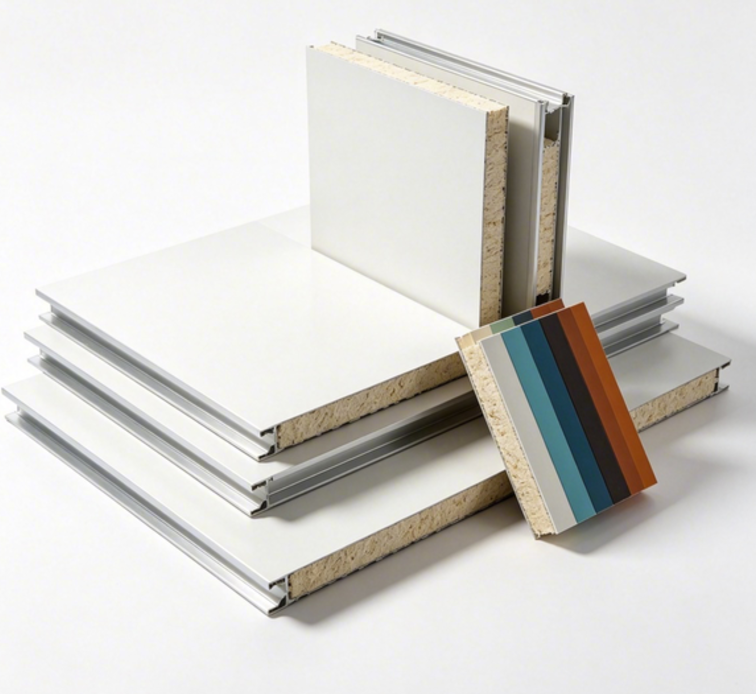
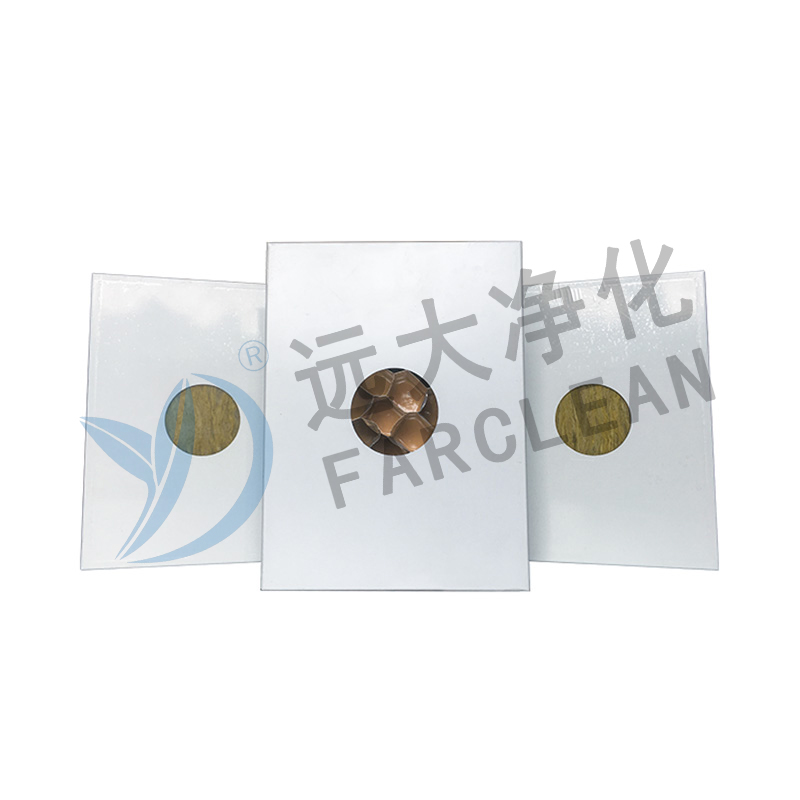
A clean room sandwich panel is a prefabricated building component consisting of two rigid outer face sheets bonded to a lightweight insulating core material. The face sheets are typically made from galvanized steel, stainless steel, or aluminum, while the core is commonly filled with rock wool, polyurethane (PU), polyisocyanurate (PIR), or honeycomb materials. This three-layer "sandwich" construction gives the panel its name and is specifically engineered to meet the strict environmental control requirements of cleanroom facilities—spaces where airborne particles, temperature, humidity, and pressure must be precisely regulated.
Unlike traditional construction methods that rely on wet trades, plastering, and multi-stage finishing, clean room sandwich panels arrive at the construction site as finished, ready-to-install components. Their surfaces are smooth, non-porous, and resistant to microbial growth, making them inherently suitable for pharmaceutical manufacturing, semiconductor fabrication, hospital operating theatres, food processing plants, and aerospace assembly facilities. The growing demand for controlled environments across all of these sectors is one of the primary drivers behind the rising popularity of these panels globally.
Speed and Efficiency of Installation
One of the most compelling reasons why clean room sandwich panels have gained such widespread adoption is the dramatic reduction in construction time they enable. Traditional cleanroom construction using brick, block, plaster, and paint is a sequential, multi-trade process that can take months. Each stage must cure or dry before the next can begin, and achieving the surface smoothness and airtightness required for cleanroom classification is both time-consuming and skill-dependent.
Sandwich panels eliminate most of these delays. Because they are manufactured off-site to precise dimensions and arrive with factory-applied finishes, installation teams can assemble walls, ceilings, and partitions in a fraction of the time. A cleanroom that might take 16 weeks to construct using conventional methods can often be completed in 6 to 8 weeks using a panel system. For pharmaceutical companies launching new products, semiconductor manufacturers scaling capacity, or hospitals expanding surgical facilities, this acceleration in project delivery directly translates into earlier revenue generation and faster return on investment.
Key Installation Advantages
- Dry construction process with no curing or drying time required
- Panels can be cut and fitted on-site to accommodate services and penetrations
- Modular design allows simultaneous installation of multiple sections
- Reduced on-site labor and fewer specialist trades required
- Panels can be disassembled and relocated if facility layouts change
Superior Hygiene and Contamination Control
Contamination control is the fundamental purpose of any cleanroom, and the material properties of sandwich panels make them exceptionally well-suited to this task. The steel or aluminum face sheets used in cleanroom panels are non-porous, meaning they do not harbor bacteria, fungi, or particulate matter in the way that painted plasterboard or concrete surfaces can. The joints between panels are sealed with silicone or specialist gaskets to eliminate gaps where contaminants could accumulate, and the coved internal corners used in panel system installations prevent the dirt traps created by traditional right-angle junctions.
The surfaces are also highly resistant to the aggressive chemical cleaning agents used in pharmaceutical and food production environments—bleach solutions, isopropyl alcohol, hydrogen peroxide vapor, and other disinfectants can be applied repeatedly without degrading the panel surface or compromising its integrity. This chemical resistance extends the usable life of the cleanroom enclosure and reduces maintenance costs over the facility's operational lifetime. In environments classified to ISO 5 or GMP Grade A/B standards, where surface particle counts and microbial contamination limits are extremely strict, the hygienic performance of the wall and ceiling system is not optional—it is regulatory.
Thermal Insulation and Energy Efficiency
Cleanrooms consume enormous amounts of energy to maintain precise temperature and humidity conditions around the clock. HVAC systems in ISO-classified cleanrooms often account for 60 to 70 percent of the facility's total energy consumption. The thermal performance of the building envelope therefore has a direct and significant impact on operating costs. Clean room sandwich panels, particularly those with PIR or PU foam cores, offer excellent thermal insulation values (U-values as low as 0.20 W/m²K), substantially reducing heat transfer through walls and ceilings and allowing HVAC systems to operate more efficiently.
Beyond steady-state insulation, the airtightness achievable with a well-installed panel system reduces uncontrolled air infiltration, which is both a contamination risk and an energy penalty. Every cubic meter of uncontrolled outside air that enters a cleanroom must be filtered, conditioned, and pressurized to specification—a process that consumes significant energy. By minimizing air leakage at the building envelope, sandwich panel systems reduce the load on HVAC infrastructure and contribute directly to lower utility bills and a smaller carbon footprint over the facility's operational life.
Typical Core Materials and Their Thermal Performance
| Core Material | Thermal Conductivity (λ) | Primary Use Case |
| Polyurethane (PU) | 0.022–0.028 W/mK | General cleanroom, cold storage |
| Polyisocyanurate (PIR) | 0.020–0.025 W/mK | High thermal performance, fire-rated |
| Rock Wool (Mineral Wool) | 0.033–0.040 W/mK | Fire resistance priority environments |
| Honeycomb (Aluminum) | Variable | Ultra-lightweight, aerospace cleanrooms |
Fire Safety and Regulatory Compliance
Regulatory frameworks governing cleanroom construction—including GMP guidelines from the FDA and EMA, ISO 14644 standards, and local building codes—impose strict requirements on the materials used in controlled environments. Fire performance is one of the most critical of these requirements. Rock wool and PIR-cored sandwich panels offer Class A or equivalent fire ratings, meaning they will not contribute to flame spread and will maintain structural integrity for defined periods during a fire event, allowing safe evacuation and limiting damage to adjacent areas.
The ability of manufacturers to provide certified test data for their panels—covering fire reaction, surface spread of flame, smoke generation, and structural performance under load—simplifies the regulatory approval process for cleanroom operators. Rather than relying on site-applied finishes whose performance depends on application quality and maintenance, panel systems offer factory-controlled, independently tested performance that can be documented and presented to regulatory inspectors with confidence. This traceability is increasingly valued by pharmaceutical companies operating under 21 CFR Part 211 and similar quality system regulations.
Flexibility and Future-Proofing
The life sciences, semiconductor, and advanced manufacturing industries are characterized by rapid technological change. Production processes evolve, product lines change, and regulatory requirements are updated. A cleanroom facility built using traditional fixed construction may become operationally obsolete before the end of its structural life, requiring expensive and disruptive renovation work to adapt it to new processes or classification requirements.
Clean room sandwich panel systems offer a fundamentally different approach to facility longevity. Because the panels are mechanically fixed rather than bonded with mortar or plaster, they can be dismantled, reconfigured, and reassembled as operational requirements change. Walls can be relocated to resize rooms, additional penetrations for services can be made, and new panel sections can be integrated into existing systems without demolishing the entire enclosure. This adaptability significantly extends the useful life of the investment and reduces the total cost of ownership over a 20- to 30-year facility lifecycle.
Scenarios Where Reconfigurability Adds Value
- Expanding production capacity by subdividing or enlarging existing cleanroom zones
- Upgrading to a higher ISO classification without full facility reconstruction
- Relocating temporary or leased cleanroom facilities to new sites
- Adapting room layouts when new manufacturing equipment is installed
- Responding to changes in product line or regulatory environment
Cost-Effectiveness Over the Full Project Lifecycle
When evaluating the cost of a cleanroom sandwich panel system, it is important to consider the full lifecycle rather than just the initial material price. On a like-for-like basis, the installed cost of a panel system may be comparable to or slightly higher than traditional wet construction. However, the savings generated at every subsequent stage of the project—reduced labor, faster commissioning, lower energy consumption, reduced maintenance, and deferred replacement costs—consistently make panel systems the more economical choice when evaluated over a 10- to 20-year operating horizon.
The reduction in construction waste is also financially significant. Traditional cleanroom construction generates substantial quantities of mixed waste—off-cuts of plasterboard, packaging, chemical containers, and contaminated materials—that must be disposed of at cost. Panel systems generate far less waste, with off-cuts often being reusable and packaging being more manageable. In markets where landfill and hazardous waste disposal costs are high, this reduction in waste generation provides a measurable financial benefit alongside the environmental one.
Industry-Specific Drivers of Growing Demand
The rising global demand for clean room sandwich panels is not driven by a single factor but by converging trends across multiple industries simultaneously. In pharmaceuticals, the expansion of biologics manufacturing and cell and gene therapy production requires cleanrooms that meet GMP Grade A and B classifications, driving demand for the highest-performance panel systems. In semiconductors, the relentless progression of chip miniaturization requires ever-cleaner manufacturing environments, pushing fabrication facilities toward ISO Class 3 and 4 specifications where every material surface must be optimized for particle control.
In food and beverage processing, tightening hygiene regulations and consumer expectations for product safety are pushing manufacturers to upgrade facilities to standards that sandwich panel construction can reliably meet. In healthcare, the post-pandemic expansion of hospital infrastructure and the growth of modular operating theatre solutions has created strong demand for rapid-build, validated cleanroom enclosures. Across all of these sectors, the combination of performance, speed, compliance, and cost efficiency that clean room sandwich panels deliver is proving to be exactly what the market needs—which is precisely why their popularity continues to grow.