English
 русский
 Español
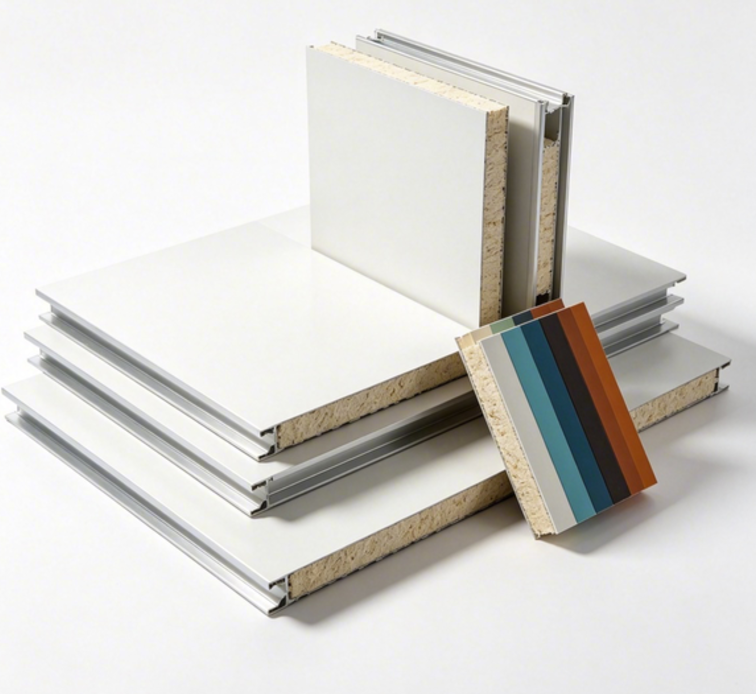
Clean room sandwich panel is widely used in controlled environments where stability matters more than appearance alone. At first glance, they look like standard wall or ceiling materials. In practice, they influence how a controlled space behaves day after day.

These environments rely on balance. Air movement, surface condition, and cleaning routines all interact with the building structure. When the surface system is not stable, everything else becomes harder to control.
That is where clean room sandwich panels quietly take their role.
Content
- 1 Why do controlled environments depend on stable wall systems?
- 2 How do these panels influence cleanliness over time?
- 3 What role do joints play in real performance?
- 4 Why does surface behavior matter in daily operation?
- 5 How do environmental conditions affect panel performance?
- 6 What happens when small surface changes build up?
- 7 Why is installation accuracy so important?
- 8 What role does maintenance play in controlled environments?
- 9 How do clean room sandwich panels support overall stability?
- 10 Surface Behavior Overview
- 11 Why are these panels considered a core structural element?
Why do controlled environments depend on stable wall systems?
A controlled environment is sensitive to small changes. Even slight differences in surface condition can affect how air and particles move inside the space.
Walls and ceilings are not just boundaries. They are part of the working environment. If the surface is uneven or difficult to clean, it creates small variations in daily operation.
Sandwich panels reduce that variation. Their structure helps create a more uniform interior surface. This makes the space easier to manage over time.
The result is not about perfection. It is about predictability.
How do these panels influence cleanliness over time?
Cleanliness inside a controlled environment is not a one-time result. It depends on repeated cleaning and stable surfaces.
When the surface is smooth and consistent, dust and residue have fewer places to stay. Cleaning becomes more even across the entire room.
If surfaces vary, cleaning behavior changes from one area to another. Some sections need more effort, while others remain easier to maintain.
Clean room sandwich panels help reduce this imbalance. They create a surface that responds in a more consistent way during cleaning cycles.
What role do joints play in real performance?
The connection between panels is often where long-term behavior changes begin.
If joints stay aligned, the surface works as one continuous system. If they shift slightly over time, small gaps or uneven lines may appear.
These changes are not always visible at the beginning. They develop slowly through use, cleaning, and environmental exposure.
Once joints become inconsistent, airflow patterns and surface behavior can also shift. That is why joint quality and alignment matter just as much as the panel surface itself.
Why does surface behavior matter in daily operation?
Controlled environments are active spaces. People move inside them. Equipment runs. Cleaning happens regularly.
Every action interacts with the wall surface in some way.
If the surface is uneven, cleaning patterns become less consistent. Some areas may collect residue more easily. Others remain relatively clean.
Sandwich panels help reduce these differences. The surface stays more uniform, so daily routines remain stable.
This makes long-term operation easier to manage.
How do environmental conditions affect panel performance?
No workspace stays perfectly steady, even when you try to regulate it. Temperatures rise and fall, and humidity levels shift day after day.
These small ongoing shifts slowly alter the way panel materials act. The surface stretches or shrinks a little bit each time, and tiny imperfections build up after months of use.
Sandwich panels built for clean rooms adjust slowly to these shifts. You won't see drastic changes pop up out of nowhere.
This gentle, gradual adjustment keeps uneven marks from showing across the panel faces.
What happens when small surface changes build up?
No material stays completely unchanged over long use. The same applies here.
Small surface changes may appear after repeated cleaning and continuous exposure. These changes are usually subtle at first.
They may show as slight differences in texture or surface reflection. Over time, these differences can become more noticeable.
Sandwich panels are designed to slow down this process. The goal is not to stop change completely, but to keep it even across the entire surface.
When aging is uniform, the environment stays visually and functionally balanced.
Why is installation accuracy so important?
Top-grade panels won't deliver their full potential if you fit them unevenly.
When panels aren't lined up right, faint gaps and jagged seams start to form. These flaws look trivial when first installed.
As time goes by, they make regular cleaning harder and break the smooth look of the whole wall. Air circulation also acts erratic around any uneven joints.
Accurate fitting makes all panels operate as one unified barrier, not disconnected individual boards.
This advantage grows far more noticeable after years of use.
What role does maintenance play in controlled environments?
Maintenance in controlled environments is not limited to cleaning. It also includes observation and early detection of changes.
Clean room sandwich panels benefit from regular surface checks. These checks help identify early signs of wear or joint movement.
Maintenance routines often include:
- Surface cleaning to maintain consistency
- Joint inspection for alignment changes
- Observation of surface texture over time
- Monitoring of cleaning response patterns
- Early detection of minor irregularities
These steps help maintain stable conditions without major intervention.
Maintenance is part of the environment's long-term structure, not just a reaction to issues.
How do clean room sandwich panels support overall stability?
A controlled environment depends on many small factors working together. Air control systems, cleaning routines, and structural surfaces all influence performance.
Sandwich panels support this system by keeping the physical structure steady.
When the surface behaves consistently, other systems do not need to compensate for irregularities. This creates a more balanced environment.
The role of these panels is simple but important. They help keep conditions steady so the space can function without constant adjustment.
Surface Behavior Overview
| Area of Influence | Early Observation | Long-Term Effect |
|---|---|---|
| Surface consistency | Even appearance | Stable cleaning behavior |
| Joint alignment | Tight connection | Reduced surface variation |
| Environmental response | Slight adjustment | Gradual uniform change |
| Cleaning interaction | Predictable results | Consistent maintenance flow |
| Installation quality | Stable structure | Long-term balance retention |
Why are these panels considered a core structural element?
Clean room sandwich panels are not active equipment, but they shape how the environment behaves.
They define boundaries. They influence cleaning patterns. They support internal stability without drawing attention.
When the surface system is stable, everything inside the space becomes easier to manage.
That is why they are often treated as a core part of controlled environment construction, even if they appear simple from the outside.