English
 русский
 Español
In many controlled environments, movement is constant. Materials arrive, leave, and circulate between zones with different cleanliness levels. Each transfer carries a small risk. Dust, fibers, and particles can travel with surfaces that look clean to the eye.
Cleanrooms are built to reduce that risk. Airflow is controlled. Surfaces are managed. Entry points are limited. Yet the moment goods move from one area to another, the balance can shift.
This is where cargo air showers come into view. They sit at the boundary between spaces, acting as a transition point rather than a barrier. Their role is not complicated, but it is often misunderstood.
Content
- 1 What Is A Cargo Air Shower In A Cleanroom Setting?
- 2 Why Do Cleanrooms Need Cargo Air Showers?
- 3 How Does A Cargo Air Shower Work During Material Transfer?
- 4 What Types Of Materials Pass Through A Cargo Air Shower?
- 5 How Is A Cargo Air Shower Different From A Personnel Air Shower?
- 6 What Factors Influence The Effectiveness Of A Cargo Air Shower?
- 7 How Does A Cargo Air Shower Fit Into Cleanroom Workflow?
- 8 What Challenges Appear In Daily Use?
- 9 How Do Cargo Air Showers Support Contamination Control Over Time?
- 10 What Should Be Observed When Using A Cargo Air Shower?
What Is A Cargo Air Shower In A Cleanroom Setting?
A air shower is an enclosed space designed for moving materials into or out of a controlled area. It is built to handle carts, containers, and larger items that cannot pass through smaller entry systems.
Inside this space, air is directed across the surfaces of the items being transferred. The goal is to dislodge particles that may be attached during handling or transport.
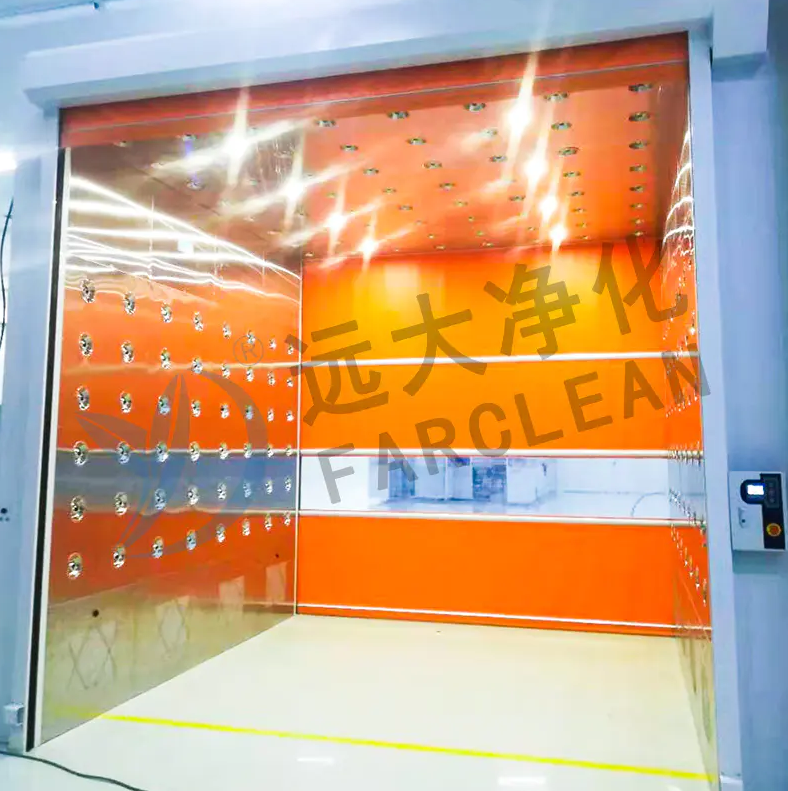
The process takes place over a short period. Once completed, the items continue into the next area. The air shower does not replace cleaning. It acts as an added step that reduces the load carried into the clean zone.
The structure itself is simple in appearance. Doors on both sides, enclosed walls, and an internal airflow system. What matters is not the design alone, but how it is used within the overall process.
Why Do Cleanrooms Need Cargo Air Showers?
Cleanrooms rely on control. Every surface, movement, and airflow path is managed to limit contamination.
When materials are introduced from outside or from less controlled zones, they bring uncertainty. Even if items appear clean, they may carry small particles from previous environments.
Air showers address this moment of transition. They create a pause between zones. During this pause, surfaces are exposed to airflow that helps remove loose contamination.
This step does not guarantee complete removal. It reduces the amount of material entering the clean space. Over time, this reduction supports a more stable environment.
Without such measures, contamination can accumulate gradually. It may not be visible at once, but it affects consistency.
How Does A Cargo Air Shower Work During Material Transfer?
The process begins when materials are placed inside the chamber. Doors close to isolate the space. Airflow starts and moves across the surfaces of the items.
The direction and movement of air are designed to reach exposed areas. Particles that are not firmly attached are lifted and carried away from the surface.
After the cycle ends, the exit door opens, and the items move forward. The chamber is then ready for the next transfer.
This sequence may seem routine, but timing and consistency matter. If the cycle is shortened or skipped, the benefit is reduced. If the chamber is overloaded, airflow may not reach all surfaces.
The system works better when it is treated as part of the workflow rather than an optional step.
What Types Of Materials Pass Through A Cargo Air Shower?
Air showers are used for a wide range of materials.
They often handle:
- Sealed containers arriving from storage
- Equipment being moved between rooms
- Carts carrying multiple items
- Supplies entering preparation areas
- Components prepared outside the clean zone
The variety is wide. What these items share is exposure to environments with different cleanliness levels.
Some items may already be packaged. Others may be open but handled carefully. The air shower does not change the condition of the item itself. It focuses on the outer surface.
This makes it suitable for situations where full cleaning is not practical during transfer.
How Is A Cargo Air Shower Different From A Personnel Air Shower?
The principle is similar. Both use airflow to remove particles from surfaces.
The difference lies in scale and use.
Personnel air showers are designed for people entering controlled areas. They are smaller and shaped for human movement. The airflow is directed toward clothing and exposed surfaces.
Clean Room Air Shower are larger. They are built to accommodate equipment and materials. The internal space must allow for movement of carts or bulky items.
Another difference is handling behavior. People can turn, raise arms, and adjust position during the process. Materials remain static. This means airflow design must compensate for limited movement.
Both systems support the same goal. They simply address different types of entry into the cleanroom.
What Factors Influence The Effectiveness Of A Cargo Air Shower?
Effectiveness is not determined by the chamber alone. It depends on several interacting factors.
Surface Condition Of Materials
Smooth surfaces release particles more easily than rough ones. Irregular shapes can create hidden areas where airflow is less effective.
Loading Method
If items are packed too closely, airflow cannot reach all surfaces. Proper spacing allows better exposure.
Handling Before Entry
Materials that have been handled carefully carry less contamination into the chamber. This reduces the burden on the air shower.
Workflow Discipline
Skipping cycles or rushing the process weakens the overall system. Consistency matters more than speed.
Environmental Differences Between Zones
The greater the difference between two areas, the more important the transition step becomes.
These factors are not always visible during operation. They reveal themselves over time through patterns in cleanliness and maintenance.
How Does A Cargo Air Shower Fit Into Cleanroom Workflow?
A air shower is not a standalone solution. It sits within a sequence of steps.
Materials move from storage or preparation areas toward the cleanroom. Before entering, they pass through the air shower. Afterward, they continue into controlled space.
This sequence creates a buffer. It separates environments without stopping movement.
In some workflows, the air shower is placed near loading zones. In others, it is integrated deeper into the facility layout. The placement depends on how materials flow through the space.
The key idea is alignment. The air shower must match the pace and direction of movement. If it slows down the process too much, users may try to bypass it. If it fits naturally, it becomes part of routine behavior.
What Challenges Appear In Daily Use?
Many practical drawbacks of air showers only show up during daily operation, rather than in theoretical planning stages.
Overloading is one of the frequent problems. When users place too many items inside the air shower, internal airflow gets blocked and fails to circulate normally. This undermines the purification effect, yet the issue is hard to spot at a glance.
Irregular operation is another common pain point. During peak busy hours, staff may skip or rush through standard procedures, which greatly compromises the system's overall reliability.
Routine maintenance also makes a big difference. The air shower traps dust and fine particles from cleaned items. If these residues are not cleaned up regularly, accumulated debris will gradually drag down the equipment's performance.
Human behavior is also a key factor. Many staff see the air shower process as a time-consuming interruption instead of a necessary protective measure. This mindset leads to careless, non-compliant operation.
Thankfully, these daily operational issues can usually be resolved with simple tweaks and standardized management, instead of large-scale equipment upgrades or overhauls.
How Do Cargo Air Showers Support Contamination Control Over Time?
Contamination control is not a single action. It is a continuous effort made up of many small steps.
Air showers contribute by reducing what enters the cleanroom at each transfer point. The effect may seem minor in one cycle. Over repeated use, it becomes more noticeable.
Instead of relying on one strong barrier, cleanrooms use multiple layers of control. Air showers are one of these layers.
They do not eliminate risk. They lower it in a way that supports stability.
This approach reflects how cleanrooms operate as a system. Each part plays a role, even if it appears simple on its own.
What Should Be Observed When Using A Cargo Air Shower?
Observation helps refine how the system is used.
How materials are loaded. How long the cycle runs. How often the chamber is used. How items look after passing through.
These details build a picture of how well the process fits the environment.
Over time, adjustments may be made. Items may be spaced differently. Handling may become more careful. The process may become smoother without formal changes.
Cargo air showers do not change the nature of cleanroom work. They shape how transitions are handled within it.