English
 русский
 Español
Content
- 1 Why Are Utilities Critical in Clean Rooms?
- 2 How Can HVAC Systems Maintain Clean Room Standards?
- 3 How Do Water and Gas Systems Affect Clean Room Operations?
- 4 Can Power and Electrical Utilities Be Fully Reliable?
- 5 How Do Monitoring and Control Systems Improve Utility Performance?
- 6 What Are the Risks of Poor Utility Maintenance?
- 7 How Can Energy Efficiency Be Integrated into Clean Room Utilities?
- 8 What Are Best Practices for Maintaining Clean Room Utilities?
Why Are Utilities Critical in Clean Rooms?
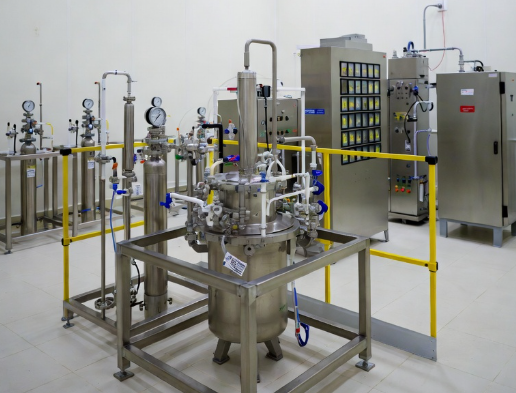
Clean rooms exist to provide tightly controlled conditions where airborne particles, temperature, humidity, pressure, and other environmental factors must stay within narrow, predefined limits. The utilities serving these spaces are not secondary support systems—they are active, essential components that directly determine whether the clean room can fulfill its purpose.
- Air Handling and HVAC Systems These systems control directional airflow, maintain required pressure cascades (positive or negative), deliver HEPA- or ULPA-filtered air, and hold temperature and relative humidity steady. If any part of the air system underperforms—even for a short time—contaminants can enter controlled zones, particles can settle on critical surfaces, or classification limits can be breached.
- Electrical Power Clean rooms run sensitive instruments, continuous monitoring equipment, lights, safety interlocks, and process tools that cannot tolerate interruptions or voltage instability. A power glitch can stop production, disable environmental controls, corrupt data, damage expensive equipment, or create hazardous conditions. For this reason, clean rooms almost always incorporate uninterruptible power supplies and emergency generators with automatic transfer capability.
- Pure Water and Process Gases Manufacturing, research, and testing processes inside clean rooms frequently demand ultrapure water (often 18 MΩ·cm resistivity or better) and high-purity gases (such as nitrogen, oxygen, argon, or specialty mixtures) supplied at stable pressure, flow, and quality levels. Any fluctuation, contamination, or supply interruption can immediately ruin wafers, compromise experiments, contaminate products, or force a line shutdown.
Utilities form the non-negotiable foundation that keeps a clean room viable. Because tolerances are so strict and the cost of failure is so high (lost batches, regulatory violations, equipment damage, delayed shipments), utility systems receive extraordinary attention during design, are built with redundancy where practical, and are subjected to rigorous preventive maintenance and real-time monitoring. A clean room without dependable utilities is simply not a clean room in any meaningful sense.
How Can HVAC Systems Maintain Clean Room Standards?
The HVAC system in a clean room is the core environmental control mechanism. It must consistently deliver air that meets or exceeds the required ISO, FED-STD-209E (or equivalent), or GMP cleanliness grade by controlling particle counts, airflow direction, pressure relationships, temperature stability, and humidity levels—all within very narrow tolerances.
- High-Efficiency Filtration Terminal filtration—almost always HEPA filters or ULPA filters (even higher efficiency at smaller particles)—is positioned at the point of air delivery into the room. These filters physically remove airborne particulates before the air reaches critical zones. Differential pressure gauges or sensors across pre-filters, intermediate filters, and final HEPA/ULPA stages provide early warning of loading, while periodic challenge testing (aerosol injection and scanning) verifies there are no leaks, bypasses, or damage that could allow unfiltered air to enter.
- Controlled Airflow and Pressure Management The system is engineered to produce specific airflow patterns: unidirectional (vertical laminar flow) for the strictest classes (ISO 1–5) or non-unidirectional (turbulent/mixed) for less stringent classes. High air change rates—often 20–600+ changes per hour—combined with low-level returns create a sweeping effect that flushes particles downward and away from work surfaces. Positive pressure is maintained in cleaner zones relative to adjacent areas (typically 10–15 Pa or more), ensuring contaminants cannot infiltrate through doors, gaps, or leaks. Airflow volume, velocity, and balance are dynamically adjusted via variable frequency drives on fans, modulating dampers, and real-time feedback from pressure and velocity sensors.
- Stable Temperature and Humidity Regulation Temperature is held tightly (commonly ±0.5 °C to ±1 °C) to minimize thermal gradients, prevent material expansion/contraction issues, and reduce static electricity risks. Relative humidity is controlled within a defined range to inhibit microbial growth, avoid condensation on cold surfaces, and prevent ESD (electrostatic discharge) events in electronics manufacturing. This is accomplished through cooling coils, reheat coils, humidifiers (steam preferred for purity), and dehumidification devices, all coordinated by a building management system or dedicated clean room controller.
Key Maintenance Activities to Preserve Performance Because the HVAC is mission-critical, maintenance is proactive, documented, and performed under strict change-control procedures:
- Regular integrity testing and replacement of HEPA/ULPA filters based on pressure drop trends and validated test results.
- Cleaning of supply plenums, ductwork interiors, and return air paths to remove accumulated residues.
- Inspection and lubrication of fans, motors, belts, and bearings; vibration monitoring to catch impending failures.
- Calibration of all critical sensors (temperature, humidity, differential pressure, airflow velocity).
- Periodic airflow pattern verification using smoke, fog, or anemometer mapping to confirm design intent is maintained.
Any deviation—whether from a failing filter, unbalanced airflow, sensor drift, or fan underperformance—can quickly push particle counts above limits, allow ingress of contaminants, or create conditions that promote viable (microbial) contamination. For these reasons, HVAC systems in clean rooms incorporate redundancy (spare fans, backup air handlers, dual power feeds), continuous environmental monitoring with alarming, and rapid-response protocols. The system is not a background utility; it is the active guardian of the clean room's classification and the processes that depend on it.
How Do Water and Gas Systems Affect Clean Room Operations?
Cleanrooms depend on stable, high-purity water and gas supplies for critical processes. Any inconsistency in quality, pressure, or delivery can cause contamination, process drift, or complete production halts.
Water Purity Ultrapure water used in manufacturing must stay virtually free of particles, bacteria, organics, and ions. Even small contamination events can ruin sensitive products. Regular line flushing, frequent testing (conductivity, TOC, microbial counts, particulates), and immediate response to out-of-spec results are essential to keep water acceptable.
Gas Reliability Process gases require constant pressure, consistent flow, and maintained high purity from source to point of use. Pressure instability, moisture ingress, particulates, or small leaks can spoil thin-film deposition, wafer etching, chamber purging, or inert blanketing. Such issues frequently trigger immediate process alarms or safety interlocks.
Delivery Infrastructure Piping, valves, regulators, filters, pumps, and distribution manifolds must remain leak-tight, corrosion-free, and free of stagnant zones. Routine visual checks, pressure testing, leak detection, and preventive replacement of wear-prone components help ensure uninterrupted, clean delivery.
Consistent preventive maintenance schedules, instrument calibration, trend monitoring, and trained rapid-response procedures greatly reduce the chance of surprise failures, thereby protecting both product quality and cleanroom safety.
Can Power and Electrical Utilities Be Fully Reliable?
Cleanrooms require flawless, uninterrupted electrical power to support precision tools, air handling, lighting, and monitoring systems. Even brief outages, voltage sags, spikes, or transients can instantly stop production, corrupt data, damage wafers or components, and risk contamination from HVAC failure.
Redundant Power Sources Uninterruptible Power Supplies (UPS) deliver seamless, instantaneous power during short disturbances or until generators start. Diesel or alternative generators handle extended outages, keeping essential loads (process equipment, fans, controls) running without interruption when utility power is lost.
Continuous Power Quality Oversight Dedicated monitoring equipment tracks voltage stability, frequency, harmonics, transients, surges, and sags in real time. When anomalies are detected, systems can isolate affected circuits, shed non-critical loads, or initiate controlled shutdowns to shield expensive, sensitive electronics from harm.
Optimized Electrical Distribution Redundant feeders, properly sized transformers, switchgear, and branch circuits minimize voltage drops and imbalance. Smart load management prevents overloads, reduces thermal stress on cabling and equipment, and extends the operational life of motors, drives, and control systems.
Unplanned power events threaten both immediate process continuity and long-term equipment integrity. Regular preventive practices—full-load testing of UPS and generators, battery condition checks, thermal imaging of connections, breaker maintenance, and periodic simulated failure drills—are vital to verify system dependability and reduce failure risk to the practical level.
How Do Monitoring and Control Systems Improve Utility Performance?
Advanced monitoring and automation transform utility management from reactive troubleshooting to proactive prevention, improving reliability, reducing downtime, and maintaining stricter environmental control.
Real-Time Deviation Detection Distributed sensors continuously measure critical parameters—such as differential pressure, airflow velocity, supply/return air volumes, temperature, relative humidity, particle counts, and gas/liquid pressures. When any value drifts outside predefined limits, instant alerts (audible, visual, email, or SMS) notify personnel, enabling immediate investigation and correction before product impact or contamination occurs.
Comprehensive Data Logging and Trend Analysis All monitored parameters are automatically recorded with high-resolution timestamps. Long-term historical data allows engineers to spot gradual degradation (filter loading, pump wear, valve drift), seasonal patterns, or correlations between variables. This insight supports predictive maintenance, root-cause analysis of past excursions, and optimization of setpoints to avoid recurring problems.
Centralized Remote Oversight and Control Modern SCADA-style dashboards or building management interfaces consolidate data from HVAC, process utilities, power distribution, and environmental systems into a single view. Authorized staff can monitor performance, adjust parameters, acknowledge alarms, override controls, or initiate sequences remotely—reducing response time and minimizing on-site interventions in controlled zones.
By minimizing reliance on manual checks, these intelligent systems drastically cut human error, sustain tighter tolerances, and deliver a more consistent, contamination-controlled environment with fewer unplanned interruptions.
What Are the Risks of Poor Utility Maintenance?
Neglecting essential utilities can have immediate and long-term consequences.
- Contamination: Air, water, or gas inconsistencies increase the risk of particles or microbes entering the clean room.
- Equipment Damage: Irregular power or humidity can damage machinery and electronics.
- Operational Delays: Downtime from utility failure leads to production losses and delays.
A table illustrates common risks and preventive measures:
| Utility Type | Risk of Neglect | Preventive Action |
|---|---|---|
| HVAC | Particle intrusion, pressure issues | Filter replacement, airflow checks |
| Water Supply | Microbial contamination, flow issues | Flushing, quality monitoring |
| Gas Supply | Pressure drops, contamination | Leak detection, system checks |
| Power Supply | Outages, equipment damage | Backup generators, voltage monitoring |
Regular inspections and maintenance protocols mitigate these risks efficiently.
How Can Energy Efficiency Be Integrated into Clean Room Utilities?
Clean rooms rely heavily on utilities (mainly air handling, filtration, temperature/humidity control, and lighting), which typically represent the largest energy consumers in these facilities. Improving utility efficiency cuts operating expenses and lowers environmental impact without risking cleanliness standards.
Practical approaches include:
- Demand-based airflow control Equip fans with variable frequency drives (VFDs) to adjust fan speed according to real-time conditions—such as particle levels, differential pressure, or actual occupancy—instead of constant output.
- Sensor-driven lighting & climate systems Use motion/occupancy sensors to switch off or dim LED lights in unoccupied zones. Pair this with smart thermostats and humidity sensors that allow tighter, dynamic setpoints rather than fixed conservative values.
- Heat / energy recovery Install recovery devices (e.g., plate heat exchangers, rotary thermal wheels, or run-around loops) to transfer energy from exhaust air back into incoming supply air, reducing the load on heating, cooling, and dehumidification equipment.
These improvements become far more effective when supported by consistent preventive maintenance: clean filters, properly tensioned belts, calibrated sensors, and leak-free ductwork all help systems run closer to their designed efficiency rather than degraded performance.
What Are Best Practices for Maintaining Clean Room Utilities?
Reliable operation of clean room utilities—HVAC/air handlers, filtration, climate control, lighting, and power systems—depends on a rigorous, preventive maintenance program to uphold classification, safeguard product quality, and prevent avoidable downtime.
Core practices:
- Routine Scheduled Inspections Perform consistent, time-based visual and performance checks (daily, weekly, monthly, quarterly) to spot early trouble: rising differential pressure, overloaded filters, excessive vibration/noise, overflowing condensate pans, drifting sensors, or any visible contamination buildup.
- Structured Preventive Maintenance Use a customized, interval-based schedule driven by equipment specifications, actual run hours, and trend history. Cover essential tasks including HEPA/ULPA filter replacement and integrity/leak testing, cleaning of coils, drains, and plenums, bearing greasing, belt tension and alignment checks, calibration of sensors and controls, damper function verification, and leak inspections of ducts and enclosures.
- Thorough & Traceable Documentation Log every inspection, service, calibration, repair, deviation, and key metric in a clear, auditable system. Regularly review trends in differential pressure, airborne particle counts, temperature/humidity stability, and energy draw to identify creeping issues and adjust maintenance frequencies accordingly.
- Ongoing Staff Training Provide regular, recorded training for technicians on system fundamentals, clean room gowning and behavior rules, SOP compliance, alarm response procedures, safe work methods, and basic fault-finding. Emphasize the direct link between maintenance actions and maintaining required environmental classification and process reliability.
A proactive, well-documented preventive maintenance program—prioritizing prevention over reaction—protects clean room integrity, ensures compliance with GMP and ISO 14644 standards, reduces unplanned interruptions, and generates long-term savings in energy, repair expenses, and production losses.