English
 русский
 Español
Content
Introduction to Inorganic Fabric Fire Roller Shutter Doors
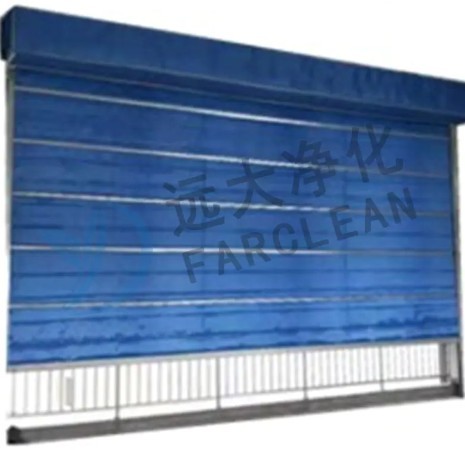
Inorganic fabric fire roller shutter doors are an advanced solution for fire safety in commercial, industrial, and residential buildings. They are designed to prevent the spread of fire and smoke through door openings, acting as a fire barrier while maintaining space efficiency. Their composition and configuration play a critical role in their effectiveness.
The key advantage of these doors is their ability to combine lightweight materials with high fire resistance. Unlike traditional steel fire doors, inorganic fabric rollers offer rapid deployment, minimal mechanical stress on the building structure, and excellent insulation from heat and flames.
Material Composition and Fire-Resistant Mechanisms
Inorganic Fabric Layers
The main component of fire roller shutter doors is inorganic fiber fabric, often made from fiberglass, ceramic fibers, or silica fibers. These materials are inherently non-combustible and maintain structural integrity at extremely high temperatures. The layered construction of the fabric provides additional insulation, reducing heat transfer and delaying ignition.
Fire-Resistant Coatings
Some designs incorporate intumescent coatings or fire-retardant paints on the fabric surface. When exposed to high temperatures, these coatings expand and form a protective char layer that blocks heat and slows flame penetration. This significantly increases the door’s fire-resistance rating.
Thermal Barrier and Smoke Sealing
The door’s configuration often includes thermal insulation layers and smoke seals at edges and bottom edges. These barriers prevent the transfer of radiant heat and smoke infiltration, ensuring safe evacuation routes and minimizing property damage.
Operational Principles
Automatic Deployment
In the event of a fire, the roller shutter is automatically triggered by heat-sensitive elements or fire alarm systems. Springs or motorized systems allow the door to descend rapidly, closing the opening and forming a continuous fire barrier. Rapid deployment is critical to prevent fire spread and protect adjacent areas.
Manual Operation
For maintenance or emergencies where automatic systems fail, manual operation ensures the door can still be closed. A manual crank or chain system allows controlled lowering, providing redundancy and ensuring fire protection even during power outages.
Integration with Building Safety Systems
These doors are often integrated with smoke detectors, sprinklers, and fire alarm systems. When a fire is detected, all connected doors can close simultaneously, isolating affected zones and guiding smoke flow to designated exhaust areas. Integration enhances building-wide safety coordination.
Configuration Necessities and Design Considerations
Roller Drum and Axle Design
The roller drum must be engineered to support the weight of the inorganic fabric without sagging or deformation. Steel or high-strength aluminum drums are commonly used. Proper drum alignment ensures smooth operation and prevents fabric damage during repeated deployments.
Guidance Tracks and Edge Seals
Vertical side tracks guide the fabric during descent. Edge seals maintain tight contact with walls and frames, preventing smoke and heat leakage. High-quality seals are necessary for achieving certified fire ratings.
Counterweights and Springs
Counterweights or spring mechanisms balance the door weight, ensuring smooth and rapid movement. They also reduce motor strain and allow for safe manual operation if required. Proper calibration of these components is essential for both safety and longevity.
Performance Evaluation and Standards
Fire-Resistance Ratings
Inorganic fabric fire roller doors are tested according to international standards such as UL 10B, EN 1634, or ASTM E119. Ratings specify the duration the door can withstand direct fire exposure while maintaining integrity and insulation, typically ranging from 60 minutes to 4 hours depending on material and construction.
Durability and Maintenance
The inorganic fabric is resistant to corrosion, UV, and moisture, ensuring minimal maintenance. Routine inspection focuses on mechanical components like rollers, springs, and seals to maintain operational reliability over years of service.
Advantages over Traditional Fire Doors
- Lightweight design reduces structural load
- Rapid deployment for immediate fire protection
- Flexible installation for openings of varying sizes
- Superior insulation from heat and smoke
- Lower maintenance compared to heavy steel doors
- Integration with modern fire detection and alarm systems
Conclusion
Inorganic fabric fire roller shutter doors achieve fire resistance through the combination of non-combustible materials, layered fabric construction, thermal insulation, and rapid deployment mechanisms. Their configuration—including roller drums, guidance tracks, edge seals, and counterweights—is essential for effective performance.
Proper design, installation, and integration with building safety systems ensure these doors provide reliable fire protection, prevent smoke infiltration, and help safeguard both occupants and property during emergencies.