English
 русский
 Español
Electric sliding glass doors are increasingly common in modern buildings. From office complexes to retail spaces, they offer convenience, accessibility, and aesthetic appeal. Yet, beyond these visible benefits, these doors play a significant role in enhancing building security. The interplay of technology, design, and human behavior contributes to a more controlled and safe environment. Understanding how glass doors function in security terms provides insights for building managers, architects, and occupants alike.
Content
- 1 What Makes Electric Sliding Glass Doors Secure?
- 2 How Do Sensors Contribute to Security?
- 3 Can Remote Access Control Improve Safety?
- 4 How Do Electric Doors Reduce Human Error?
- 5 What Role Does Visibility Play in Security?
- 6 Are Electric Sliding Doors Resistant to Forced Entry?
- 7 How Does Integration With Other Security Systems Help?
- 8 Can Electric Sliding Doors Adapt to Different Security Needs?
- 9 How Do Maintenance and Monitoring Affect Security?
What Makes Electric Sliding Glass Doors Secure?
Glass doors are built tougher and smarter than regular manual ones when it comes to keeping things secure.
They've got automatic locks built right in that you can control from anywhere—no need to be standing there. The person running the building can lock everything down or let someone in with the push of a button on their phone or computer.
The sliding part makes a big difference too. These doors don't swing open like hinged ones; they just glide straight back and forth on solid tracks with sensors watching every move. That straight-line motion leaves almost no room for anyone to jam something in or force it open.
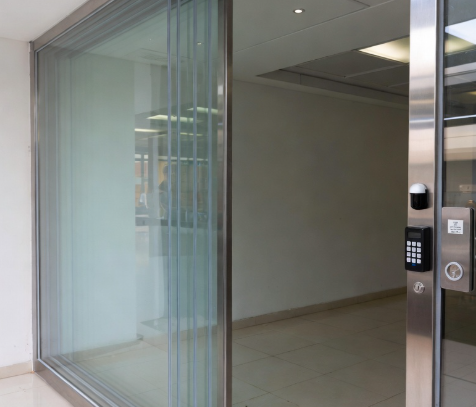
They also plug straight into real access control setups. Think key cards, fingerprint scanners, or a simple code pad. Only the people who are supposed to be there can make the door open, which is for offices, hospitals, or anywhere you need tight control.
Normal doors are stuck with just a regular key that anyone can copy. These electric ones layer the heavy physical build with digital checks, so breaking in becomes a whole lot harder.
How Do Sensors Contribute to Security?
Sensors are a key part of what keeps doors safe and under control.
Motion sensors are always on the lookout. As soon as someone walks up, they spot the movement, open the door smoothly, and log the entry attempt. In smarter setups, these sensors can actually tell the difference between one person walking through and someone trying to slip in right behind them—that's called tailgating. When that happens, the system instantly sends an alert to security so they can check it out.
You can also add glass-break sensors for extra protection. These little devices feel any hard hit or weird vibration on the glass panels and set off an alarm right away. The second that alarm trips, it can call security or even notify the police.
Just having these sensors in place makes a big difference. Would-be intruders know the door is watching and ready to react, so of them think twice and walk away.
Can Remote Access Control Improve Safety?
Remote access control allows administrators to monitor and regulate door operations from anywhere. Security personnel can lock or unlock doors in real time, adjust access schedules, and review entry logs. This capability is particularly useful for buildings with multiple entry points or large campuses.
Remote systems also facilitate rapid response to security incidents. If an unauthorized individual is detected, doors can be locked to prevent access while authorities are notified. This flexibility is difficult to achieve with traditional doors, which require physical keys or manual intervention.
| Feature | Benefit |
|---|---|
| Remote locking | Immediate control over access |
| Entry logs | Track who enters and when |
| Adjustable schedules | Restrict access during off-hours |
| Integration with alarms | Automated response to suspicious activity |
How Do Electric Doors Reduce Human Error?
Human error is behind a lot of security slip-ups. People forget to lock up at the end of the day, keys go missing, or someone gets waved through without the right checks. Doors take those manual habits out of the equation. The system locks everything down automatically and every single time, while digital credentials are way harder to lose, duplicate, or casually hand over to the wrong person.
A lot of these doors also use temporary codes or passes that simply stop working after a set time. No more worrying about an old key still floating around or getting copied and shared forever. Everything stays tight and on a timer. By handling the locking, the verification, and the expiry automatically, electric doors quietly remove of the spots where a simple mistake could put safety in jeopardy.
What Role Does Visibility Play in Security?
Glass doors bring a real advantage to any security setup because they naturally boost visibility in ways that traditional doors simply can't match. Security personnel get a clear, unobstructed view of everything happening right in front of the entrance as well as deeper inside the entryway itself. There's no need to open anything or step outside—just a quick glance through the transparent panels lets them watch people approaching, waiting, or moving through the space. This kind of openness makes it much easier to pick up on anything unusual right away, whether it's someone lingering too long, acting nervously, or showing signs of potential trouble before it even gets close.
When you pair that built-in visibility with the controlled access features of electric doors, you end up with a smarter, layered kind of protection that works on two levels at once. Guards or monitoring staff can see exactly what's going on in real time, so they're able to spot anyone trying to slip past authentication, tailgate behind another person, or behave in a suspicious way that might not trigger the access system alone. It's this combination of physical barriers that only open for the right credentials plus constant visual oversight that creates an extra safety net. Solid doors might keep things locked, but they hide what's happening on the other side and leave you relying only on sensors or cameras. Glass doors, on the other hand, let you actively monitor and respond faster, turning the entrance into a more secure and watchful point that feels both welcoming and well-protected at the same time.
Are Electric Sliding Doors Resistant to Forced Entry?
Electric sliding doors are built tough from the ground up, and that physical design really helps them stand up to attempts at forced entry. The heavy-duty tracks, smooth-rolling mechanisms, and reinforced frames are all engineered to make prying or pulling the panels apart a serious challenge. Add in the automated locking systems that snap into place on their own, and suddenly any intruder has a much harder time getting anywhere—even if they try to tamper with the hardware directly. The doors'solid structure and precise alignment create a natural kind of resistance that doesn't give way easily under pressure.
Many installations take it one step further by using laminated or tempered glass, which adds real durability and makes the panels far less likely to shatter or break. Of course, no door is completely impossible to get through if someone is determined enough, but the combination of smart design and reliable technology raises the bar significantly. It takes more time, more tools, and way more noise and risk to force entry, and that alone often works as a powerful deterrent. Most would-be intruders quickly realize it's simply not worth the effort when there are easier targets around.
How Does Integration With Other Security Systems Help?
Electric sliding glass doors are effective when integrated with broader security systems. Cameras, alarm systems, and access control platforms work together to create a comprehensive security network. When a door is opened or tampered with, alerts can trigger multiple responses simultaneously.
Integration also supports data collection and analysis. Security teams can review patterns of movement, identify unusual activity, and adjust protocols accordingly. Over time, this data-driven approach helps optimize building safety, reducing vulnerability and improving response strategies.
| Integration Example | Security Advantage |
|---|---|
| CCTV monitoring | Real-time visual tracking |
| Intrusion alarms | Immediate notification of threats |
| Biometric authentication | Accurate verification of authorized users |
| Visitor management systems | Controlled temporary access |
Can Electric Sliding Doors Adapt to Different Security Needs?
Every building comes with its own set of security requirements, and electric sliding doors are built to adjust easily to whatever level of protection is needed. Instead of a one-size-fits-all approach, you can fine-tune entry permissions for each group of people who use the space. Employees might get full, everyday access while contractors receive limited windows of time, visitors are granted short-term entry, and delivery personnel get quick, controlled passes that fit their schedules. All of this can be set up and changed as the building's needs evolve, without replacing hardware or starting over.
Many of these doors also support several authentication methods at the same time, so you can combine key cards, PIN codes, and biometric readers in whatever mix works for your situation. One entrance can feel relaxed for daily staff yet stay tightly controlled for guests or outside workers. This kind of flexibility lets the same electric sliding doors meet low-key office needs one day and stricter security demands the next, always staying perfectly matched to the specific protection level your building requires.
How Do Maintenance and Monitoring Affect Security?
The strongest electric sliding doors in the world still depend on consistent care to keep performing securely year after year. Quick, regular check-ups make sure the locks click solidly, the sensors detect movement accurately, and the motors glide without hesitation—so small wear or drift doesn't quietly turn into a real vulnerability. When something starts to go off track, catching it early through these inspections prevents bigger problems down the line.
On top of hands-on checks, modern systems include built-in monitoring software that watches everything in the background. The second a sensor acts up, a lock hesitates, or the motor draws unusual power, it fires off an immediate notification to the people in charge. That kind of early warning lets teams fix issues long before they could ever weaken the entrance or create an opening for trouble.
Keeping up with scheduled maintenance and applying software updates isn't optional—it's what keeps the whole system reliable and sharp. Ignore those basics, and even top-tier hardware can gradually lose its edge. True security comes from pairing solid engineering and smart automation with steady, everyday attention. When all three work together, the doors stay dependable, the building stays protected, and unauthorized access remains consistently hard to pull off.
Electric sliding glass doors are more than convenient entryways; they form an integral part of modern building security. Their combination of automation, access control, visibility, and integration with broader security systems provides layered protection. They help prevent unauthorized entry, reduce human error, and adapt to a variety of security needs. With thoughtful design, installation, and maintenance, these doors contribute to a safer, more controlled environment while maintaining openness and accessibility.