English
 русский
 Español
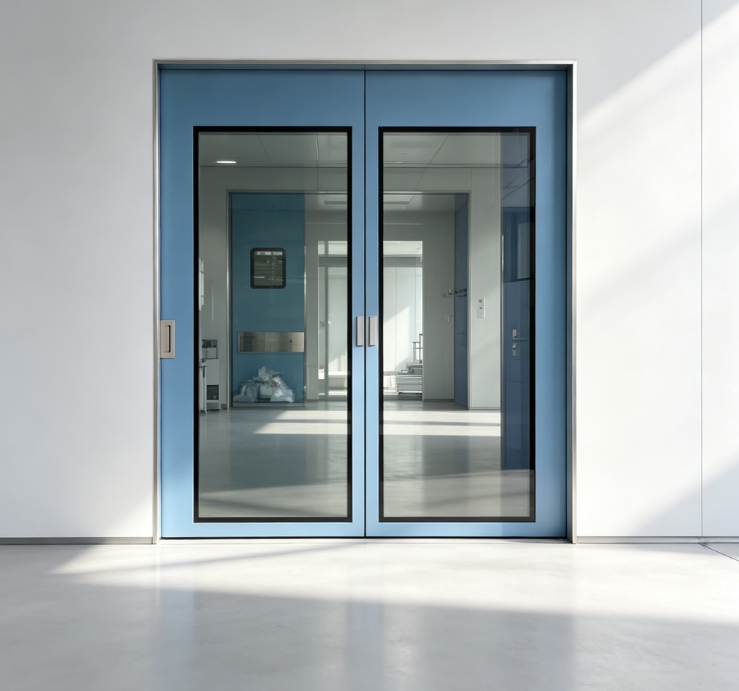
Controlled environments rely on precision. Walls define boundaries. Windows provide visibility. When these two elements meet, the connection must be smooth, stable, and sealed. The integration of clean room window with wall panels is not only a design detail. It shapes hygiene control, workflow clarity, and long-term durability.
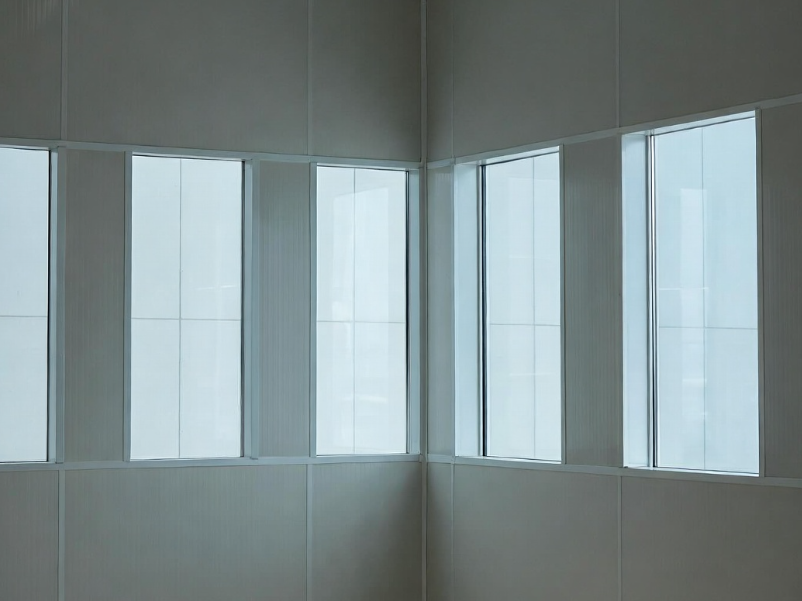
In modern facilities, windows are no longer added as afterthoughts. They are designed as part of the wall system. Their structure, placement, and installation method are coordinated from the early planning stage. This approach reduces gaps, uneven surfaces, and contamination risks.A seamless connection is both visual and structural. It allows walls and windows to function as one unit rather than separate components.
Content
- 1 Why Is Seamless Integration So Important?
- 2 How Does Structural Design Support Integration?
- 3 What Role Do Sealing Methods Play?
- 4 How Do Materials Influence Seamless Appearance?
- 5 Can Modular Systems Improve Installation Accuracy?
- 6 How Does Integration Affect Airflow Control?
- 7 How Do Clean Room Windows Enhance Visual Management?
- 8 What Maintenance Factors Must Be Considered?
- 9 How Does Design Planning Influence Seamless Results?
- 10 How Do Clean Room Windows Contribute to Spatial Cohesion?
Why Is Seamless Integration So Important?
Cleanrooms demand near-perfect control, and even small design flaws can become major liabilities. Tiny gaps between wall sections or around window frames can trap dust, particles, and residues over time. Protruding edges or uneven joints create surfaces that are hard to wipe down completely and consistently. Poorly aligned components can interfere with laminar airflow, pressure stability, or the ability to maintain clear visual oversight between zones.
When transparent panels or observation windows are truly seamlessly integrated into the modular partition system, the wall plane stays perfectly flush and uninterrupted. There are no lips, recesses, shadow lines, or exposed fasteners where contaminants could settle or hide. This clean, continuous surface eliminates hidden pockets that would otherwise require special cleaning tools, extended decontamination cycles, or increased validation effort.
Seamless integration also delivers meaningful operational improvements:
- Team members can reliably observe adjacent clean zones or support areas without crossing boundaries, dramatically cutting down on unnecessary gowning, airlock traffic, and entries/exits.
- Reduced movement through classified spaces helps preserve tightly controlled environmental parameters—particle counts, differential pressure, temperature, and humidity remain steadier with fewer disturbances.
- Direct, high-quality visual access supports faster awareness and response without physical intrusion.
This level of integration impacts several essential performance dimensions at the same time:
- Surface continuity and smoothness — resulting in a monolithic, easy-to-sanitize plane with zero particle-trapping features.
- Reliable airtight sealing — delivering consistent, leak-free joints that protect pressure cascades and directional airflow integrity.
- Long-term structural alignment — ensuring the assembly stays rigid, plumb, and vibration-resistant during years of use.
- Superior visual performance — providing crystal-clear, undistorted sightlines for precise, real-time observation across boundaries.
- Simplified maintenance and cleaning — removing complex seams, hidden crevices, or difficult-to-reach areas that complicate routine upkeep.
When these aspects are properly addressed through thoughtful, seamless design, the cleanroom achieves both uncompromising contamination control and genuinely efficient day-to-day operation. The environment becomes easier to sustain at the required classification, workflows flow more naturally, and the overall risk profile improves noticeably.
How Does Structural Design Support Integration?
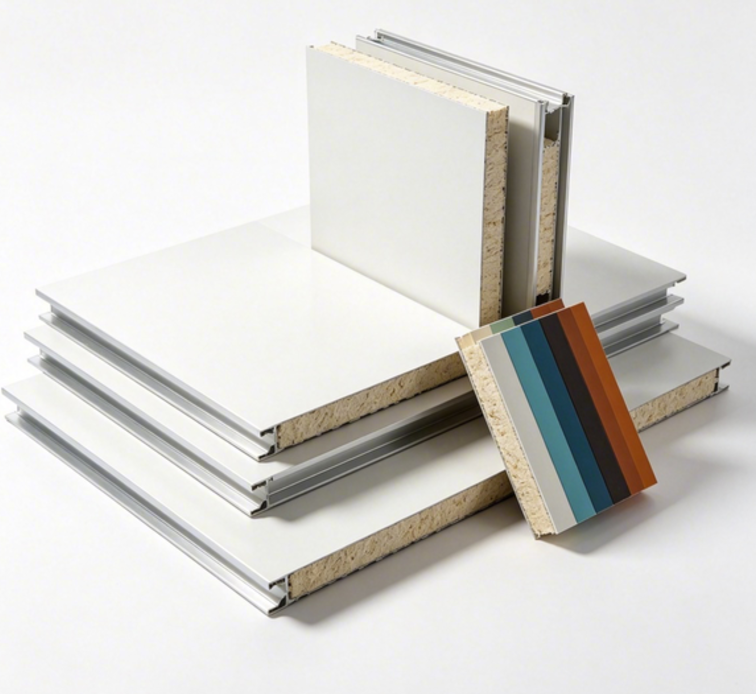
Integration begins with structural planning. Wall panels are often modular. Windows are manufactured to match the panel dimensions and framing system.
Rather than cutting openings on site, many systems are pre-designed to include window modules. The window frame aligns with the panel frame. This reduces misalignment and simplifies installation.
Flush mounting is widely adopted. The window surface sits level with the wall panel. No raised edges. No recessed gaps.
| Integration Element | Purpose | Result in Clean Room Environment |
|---|---|---|
| Matching panel frame | Consistent connection | Stable wall-window alignment |
| Flush surface design | Smooth exterior | Easier cleaning |
| Embedded sealing layers | Controlled boundary | Reduced contamination risk |
| Modular assembly | Simplified installation | Efficient layout adjustment |
A coordinated structural approach prevents weak points from forming.
What Role Do Sealing Methods Play?
In cleanroom wall systems, proper sealing is the cornerstone of maintaining environmental integrity. It blocks unintended airflow paths and stops particles, microbes, or moisture from crossing through joints—especially at the sensitive junction where a transparent panel meets the surrounding partition. The seal must remain consistently effective and compression-tight throughout the facility's operational life, resisting gradual relaxation, thermal cycling, minor structural shifts, or repeated mechanical stresses.
Advanced sealing typically uses multi-layer or composite gasket arrangements positioned strategically between the panel edge and the frame profile. These resilient materials are engineered to flex slightly under load, compensate for small tolerances or movements, and sustain uniform, positive contact pressure along the entire contact line. The seal has to be fully continuous around the complete perimeter—any break, overlap inconsistency, or localized compression failure can open microscopic leak paths, compromise directional airflow, allow pressure bleed, or create persistent cleaning blind spots where residues linger.
Critical elements that determine sealing reliability include:
- Uniform pressure application — achieving even compression distribution all around the frame so every segment of the seal performs equally, preventing localized over-compression (which flattens gaskets prematurely) or under-compression (which allows gaps).
- Material endurance over time — choosing formulations that hold their physical properties—elasticity, memory, and recovery—despite years of exposure to temperature swings, humidity changes, occasional UV, and mechanical vibration.
- Surface compatibility — ensuring the sealant or gasket material chemically and physically bonds appropriately (or remains inert) with the contacting substrates, whether they are glass, polycarbonate, acrylic, powder-coated metal, anodized aluminum, or stainless steel.
- Chemical resistance to decontamination — guaranteeing the seal withstands aggressive cleanroom sanitizers—hydrogen peroxide vapor, peracetic acid, bleach solutions, IPA wipes, quaternary ammonium compounds, and sporicidal fogging—without hardening, cracking, swelling, leaching, or losing sealing force.
When sealing is executed with precision and the right materials, the transparent section no longer behaves like a separate add-on piece. It merges completely into the wall assembly, functioning as a fully integrated, monolithic segment of the barrier. This seamless union supports predictable airflow, stable pressure zones, straightforward surface decontamination, and sustained classification compliance—making the entire system more dependable and easier to operate long-term.
How Do Materials Influence Seamless Appearance?
The right materials and how they work together are what ultimately make a cleanroom wall system look and feel truly seamless. When the finish on the solid panels matches the finish on the frames or profiles surrounding the transparent sections—using coordinated anodizing, matching powder coats, brushed stainless detailing, or compatible high-grade polymer surfaces—the junctions lose their visual sharpness. Subtle alignment in tone, reflectivity (whether high gloss, satin, or low-sheen matte), and fine surface texture cuts down contrast dramatically. Harsh edges, shadow lines, and obvious material breaks disappear, letting the wall appear as one unbroken, uniform surface instead of a collection of separate pieces.
Uniform smoothness across both the glazing and the adjoining panels is just as important for day-to-day use. When surfaces share the same low-drag, consistent finish, cleaning wipes, pads, and tools slide across the entire plane without catching, dragging, or creating uneven streaks at the transitions. Matching reflectivity levels prevents spotty glare or distracting light patterns that can make tiny alignment variations stand out under different lighting conditions or during visual inspections—keeping verification of cleanliness straightforward and reliable.
Durability over the long haul is essential to keep that seamless look intact year after year. The clear material—whether polycarbonate, tempered or laminated glass, or acrylic—has to hold up to constant exposure to strong disinfectants, repeated wiping pressure, abrasion, and chemical attack without fogging, fine scratching, cracking, yellowing, or surface dulling. The surrounding panel material and its edge detailing must match that resilience exactly, so the interface never develops mismatched wear: no localized fading, powdering, edge curling, or differential erosion that would slowly reveal the joint and ruin the continuous effect.
Strategic material coordination delivers multiple connected advantages:
- Visual unity — creating interfaces so well blended that the eye glides across the wall without pausing at material changes.
- Cleaning effectiveness — supporting fast, uniform decontamination with everyday tools and methods, reducing effort needed at junctions or risk of leftover residues.
- Enduring quality — preserving both mechanical strength and visual consistency through countless cleaning rounds, environmental swings, and extended service life.
- Balanced resistance — making sure every exposed surface handles humidity changes, temperature cycles, chemical contact, and physical stress with equal performance.
When materials are chosen and finished for true compatibility, the wall system takes on a monolithic quality that feels inherent rather than assembled. The line between opaque and transparent areas recedes completely, giving the cleanroom not just contamination control but also a quiet, integrated, high-quality atmosphere that boosts concentration, trust in the environment, and overall pride in the facility's standards.
Can Modular Systems Improve Installation Accuracy?
Modular construction reduces variability. When windows are designed as standard modules within the panel system, alignment becomes more predictable.
On-site cutting introduces risk. Dimensional variation can uneven edges. Pre-configured modules reduce this uncertainty.
Installation teams benefit from guided assembly methods. Clear positioning points and integrated framing simplify placement.
| Installation Method | Potential Challenge | Integration Advantage |
|---|---|---|
| On-site cut opening | Dimensional inconsistency | Reduced accuracy |
| Separate frame mounting | Alignment variation | Complex adjustment |
| Modular pre-designed unit | Coordinated structure | Consistent integration |
Modular systems support efficiency while preserving precision.
How Does Integration Affect Airflow Control?
Effective airflow is the foundation of cleanroom performance. Partition walls are engineered to channel and direct air movement—typically maintaining unidirectional laminar flow in critical process areas and controlled extraction elsewhere. Any disruption to the wall's surface geometry can create turbulence, recirculation zones, or uneven velocity profiles that reduce particle sweep-away efficiency and raise contamination risks.
When transparent panels are flush-integrated with zero protrusion or recess relative to the surrounding wall, the boundary presented to the moving air stays perfectly smooth. Air flows across the surface without sudden changes in contour, minimizing boundary layer separation, eddy formation, or localized acceleration that could stir up particles or create stagnant pockets. This level of surface alignment preserves the designed airflow pattern and supports consistent particle control right up to the wall plane.
The quality of the perimeter seal is equally critical for pressure management. A continuous, hermetic connection around the window prevents any unintended leakage between adjacent zones or rooms. Even minor gaps can cause pressure short-circuiting, reverse flow, infiltration of lower-grade air, or loss of directional stability in the pressure cascade. Precise integration keeps leakage paths effectively eliminated, ensuring differential pressures remain stable and airflow directions stay predictable.
Integration factors that directly influence airflow performance are:
- Surface flatness and continuity — maintaining an uninterrupted, flush plane so air encounters no geometric interruptions that could induce turbulence or flow detachment.
- Complete perimeter sealing — delivering an airtight barrier that upholds intended pressure differentials and prevents cross-flow or bypass leakage.
- Resistance to deflection under load — engineering the assembly to remain rigid and dimensionally stable when subjected to sustained pressure differences (commonly 5–15 Pa between zones), avoiding bowing, flexing, or gap formation that could compromise airflow over time.
Properly integrated windows do not fight against the cleanroom's environmental control system—they reinforce it. The result is more reliable laminar flow, tighter particle count control, easier achievement and maintenance of ISO classifications, reduced validation effort for airflow patterns, and greater overall assurance that the facility consistently protects sensitive operations and product integrity.
How Do Clean Room Windows Enhance Visual Management?
Visibility improves supervision. Transparent sections allow monitoring without physical entry. This reduces contamination risk and unnecessary movement.
When windows are integrated seamlessly, they align with sightlines. Their placement corresponds to workflow zones.
Observation benefits include:
- Process monitoring
- Safety supervision
- Communication between rooms
- Reduced door usage
A well-positioned window becomes part of operational design, not just architectural structure.
What Maintenance Factors Must Be Considered?
Cleanrooms require disciplined, ongoing maintenance to hold classification, protect product integrity, and keep production running smoothly. Every surface—including integrated transparent panels—undergoes frequent, methodical cleaning with approved wipes, sporicidal agents, and validated procedures. Modular wall designs mean panels or sections can be periodically removed, repositioned, or swapped out, and equipment moves or process updates can introduce small mechanical stresses or settling. All these factors place real demands on how windows are integrated, so the design must anticipate practical, long-term care from day one.
Core design features that make maintenance manageable include:
- Completely accessible perimeter zones — no concealed grooves, shadowed channels, undercut edges, or trapped recesses around the transparent panel that could collect disinfectant residue, moisture, or microbial films. Every part of the interface must be fully reachable with standard cleaning tools for thorough, uniform coverage.
- Elimination of exposed hardware — no visible screw heads, rivets, clips, or protruding fixings that attract particles or create wiping obstacles. Fasteners, when needed, must be fully flush, covered with caps, or hidden behind smooth, continuous surfaces.
- Seamless, flowing transitions — interfaces engineered so cleaning proceeds naturally and evenly across the whole plane, without requiring angled tools, prolonged contact time, or concern over missed areas at the joints.
For reliable performance across many years:
- Fatigue-proof, chemically stable connections — adhesives, gaskets, or mechanical joints that hold their strength and compression through endless cycles of temperature fluctuation, humidity variation, vibration from HVAC or machinery, and direct exposure to harsh decontamination chemicals.
- High-rigidity framing profiles — supports and extrusions chosen for exceptional stiffness, low creep, and resistance to distortion under sustained pressure loads, minor foundation shifts, or operational vibration—keeping seals properly loaded and preventing gradual gap formation.
Practical maintenance planning usually centers on these priorities:
- Low-effort, high-effectiveness cleaning surfaces — flush, smooth, low-friction transitions that let routine decontamination happen quickly and consistently with minimal extra attention at the edges.
- Enduring perimeter seals — gasket systems and sealing compounds built for slow degradation, simple visual inspection during walkthroughs, and dependable sealing behavior after thousands of cleaning and sterilization events.
- Modular or replaceable elements — thoughtful inclusion of components like gaskets, seal strips, or even complete window cassettes that can be swapped out or renewed with limited disruption—no need for large-scale wall demolition or broad revalidation.
- Persistent structural stability — robust construction (with sensible access for periodic checks) that keeps everything square, level, and aligned over time, so progressive bowing, twisting, or settling never threatens seal integrity or airflow patterns.
How Does Design Planning Influence Seamless Results?
Seamless integration does not happen during installation alone. It begins in the design phase.
Architects and engineers coordinate window placement with panel grids. They consider lighting alignment and equipment layout. They define heights that support monitoring without compromising privacy.
Early planning avoids structural conflicts. It also ensures that integration details are standardized across the facility.
Design alignment includes:
- Matching panel dimensions
- Coordinated framing depth
- Planned observation zones
- Balanced visual symmetry
When planning is deliberate, the finished wall appears unified.
How Do Clean Room Windows Contribute to Spatial Cohesion?
A cohesive environment feels structured and intentional. Seamless windows maintain visual order. Panels align evenly. Light flows through spaces without interruption.This cohesion improves morale and clarity. Workers move confidently within defined zones. Supervisors observe without intrusion.
When windows and panels operate as a unified system, the clean room environment appears balanced and controlled. Integration is not only a technical solution. It shapes the character of the space itself.