English
 русский
 Español
The structure of controlled environments is changing. Production lines shift more often. Research teams expand and reorganize. Regulations evolve. In this context, space can no longer remain static. Clean room partition are playing a quiet but decisive role in how facilities adapt to these shifts.
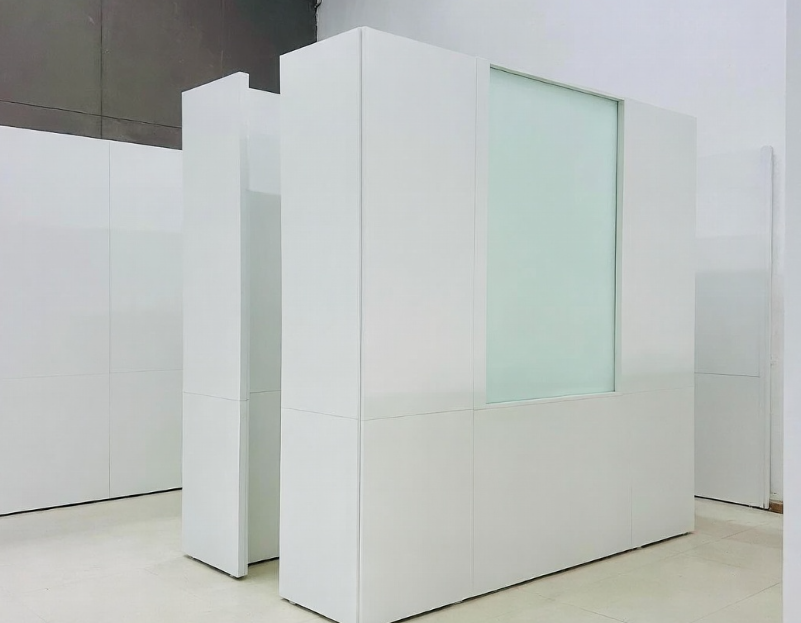
Traditional construction methods relied on fixed walls. They offered strength, yet limited adjustment. Today, manufacturers and laboratories need layouts that respond to process updates without long interruptions. Modular partition systems answer that demand. They shape clean zones while allowing reconfiguration with less disruption.Flexible layout design is no longer a design trend. It has become part of operational planning.
Content
- 1 Why Is Spatial Flexibility Important in Controlled Environments?
- 2 How Do Modular Systems Support Reconfiguration?
- 3 Can Clean Room Partitions Support Different Functional Zones?
- 4 How Do Partitions Improve Workflow Efficiency?
- 5 What Role Do Materials Play in Flexible Design?
- 6 How Do Partitions Integrate with Mechanical Systems?
- 7 How Do Clean Room Partitions Reduce Downtime During Changes?
- 8 What Design Trends Influence Flexible Clean Room Layouts?
- 9 How Does Flexibility Support Regulatory Compliance?
- 10 How Do Partitions Influence Collaboration and Visibility?
- 11 How Does Flexible Layout Design Contribute to Sustainability?
- 12 What Should Facility Planners Consider When Designing Flexible Layouts?
Why Is Spatial Flexibility Important in Controlled Environments?
Clean rooms support critical industries—such as electronics, pharmaceuticals, biotechnology, food production, and precision manufacturing—where even tiny amounts of contamination can ruin products or processes. These environments are deliberately divided into distinct zones, each with its own requirements for airflow direction and velocity, gowning procedures, personnel movement, material flow, and equipment layout.
Production needs evolve constantly. A new product line might need an isolated assembly space. A process change could require stricter separation between upstream and downstream steps, such as keeping raw material handling physically distant from final packaging. Regulatory updates, customer specifications, or quality investigations often force workflow adjustments.
When boundaries are created with permanent walls, gypsum board, or poured concrete, every modification turns into a major construction project: demolition, new construction, extended qualification and validation, re-certification, and weeks or months of downtime. Costs escalate quickly, and production continuity suffers.
Modular or movable partitions change that equation. They let teams redefine internal zones—creating, merging, or relocating controlled areas—without tearing apart the building shell. Expansion into adjacent space, downsizing during low demand, or segmenting a single room into classified sub-zones can all happen with comparatively minimal disruption.
Spatial flexibility turns the cleanroom layout from a fixed constraint into an adaptable asset. It allows the facility to keep pace with changing products, processes, and business priorities while protecting product quality, minimizing downtime, and controlling long-term operating costs.
How Do Modular Systems Support Reconfiguration?
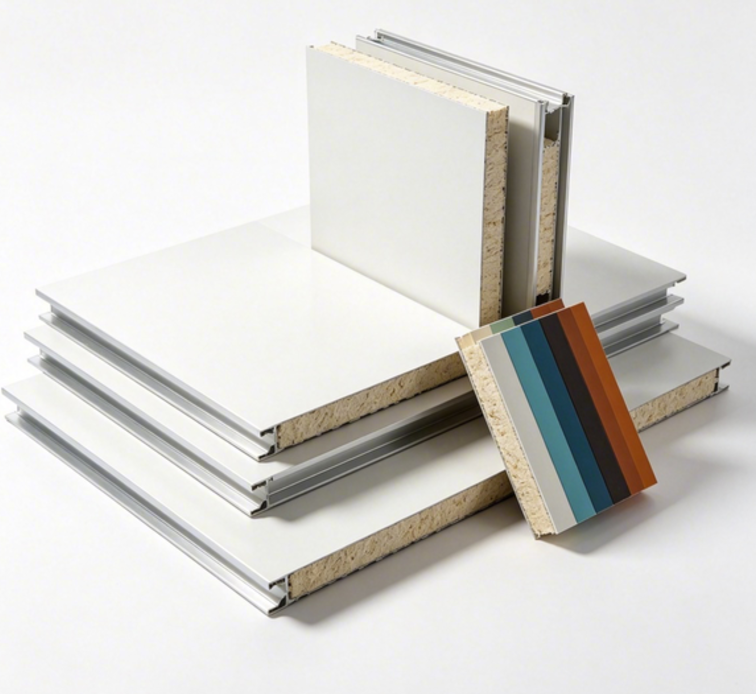
Modular partitions are designed as assembled systems. Panels connect through structured frames. They can be installed, removed, or repositioned with planning and care.
Unlike permanent masonry walls, modular panels are engineered for adjustment. Sections can be detached and relocated. Doors and viewing panels can be inserted or replaced. This approach supports gradual layout transformation rather than full reconstruction.
Key characteristics that enable flexibility include:
- Demountable panel structures
- Standardized connection interfaces
- Integrated doors and window modules
- Compatibility with ceiling and floor systems
These features allow facilities to reshape internal zones while preserving the overall integrity of the controlled environment.
Can Clean Room Partitions Support Different Functional Zones?
A modern facility often includes multiple activity areas. Each area serves a distinct purpose. Some require stricter separation. Others prioritize open collaboration.
partitions help define:
- Production areas
- Testing rooms
- Buffer zones
- Storage spaces
- Personnel entry and exit points
The ability to divide space without permanent construction allows planners to allocate zones based on workflow. When a process changes, the partition system can be adjusted to match the new sequence.
| Functional Area | Layout Requirement | Partition Contribution |
|---|---|---|
| Assembly Zone | Clear separation | Enclosed panels with sealed joints |
| Inspection Area | Visibility and isolation | Integrated viewing sections |
| Material Transfer | Controlled passage | Door modules with secure framing |
| Storage Section | Defined boundaries | Flexible panel placement |
| Personnel Corridor | Guided movement | Configurable wall alignment |
This adaptability supports both safety and operational clarity.
How Do Partitions Improve Workflow Efficiency?
Cleanroom and controlled-environment operations rely on consistent, frictionless movement of personnel, raw materials, intermediates, and finished goods. When layouts are permanent, any process tweak—repositioning a filler, adding a labeler, or shifting a sampling point—can unintentionally squeeze pathways, lengthen travel distances, or force clean and gowning-area traffic to cross unnecessarily. Over time, these small misalignments accumulate into chronic bottlenecks, extended operator travel, frequent pauses, increased chance of mix-ups or procedural deviations, and lower overall output per shift.
Modular partitions give teams the practical ability to reshape internal traffic flows on short notice and with targeted precision. By relocating walls, they can:
- Expand primary corridors to handle peak-period two-way movement of carts, pallet jacks, and personnel without crowding
- Narrow or reroute secondary passages to discourage non-essential foot traffic through high-classification cores
- Establish strict unidirectional material corridors that separate incoming components from outgoing finished goods
- Introduce independent personnel routes (entry gowning → core → exit decon) so contaminated and clean flows remain physically segregated
- Carve out buffered zones around manual or operator-intensive stations—such as weighing booths, visual inspection benches, or assembly pods—to shield high-throughput automated lines from frequent interruptions
These intentional layout changes produce concrete improvements in daily performance:
- Robust zoning between cleanliness grades — Brief, single-direction handoffs from lower- to higher-class areas minimize contamination carryover while allowing clean-side activities to proceed without pauses.
- Straightforward, low-cognitive-load pathways — Clearly marked and physically enforced routes reduce decision fatigue, eliminate retracing steps, and decrease the need for constant verbal guidance from leads.
- Enhanced line-of-sight supervision — Transparent or partially glazed panels enable supervisors, QA inspectors, and technicians to monitor material staging, in-process checks, and operator compliance across several zones without repeated gowning/de-gowning cycles, accelerating response to deviations.
- Near-term adaptability to production shifts — Introduction of new tools, changes in batch volume, added in-process controls, or transfer to a different product family can be physically supported within days rather than waiting through lengthy construction and requalification, keeping downtime and restoring rated capacity quickly.
Partitions transform the built environment from a passive constraint into an active enabler of workflow. Operators expend less energy on navigation, materials follow shorter and more secure routes, oversight happens faster and with less intrusion, and the facility maintains a smooth, reliable cadence—even when product mix, demand patterns, or compliance requirements continue to change.
What Role Do Materials Play in Flexible Design?
In cleanrooms and other controlled spaces, the choice of materials for partitions and wall systems determines how truly flexible—and therefore usable—the design can be. Materials that prioritize only contamination control can lock a facility into a rigid configuration, while those engineered for both hygiene and mobility turn frequent layout changes into routine, low-disruption tasks.
Lightweight yet rigid panel systems are far easier and safer to relocate than heavy gypsum-board walls or metal-stud constructions. Teams can disassemble, move, and reassemble sections using standard hand tools and minimal labor, often without shutting down adjacent areas for extended periods. The reduced weight also lowers risk during handling and eliminates the need for specialized rigging or structural reinforcements in many cases.
Smooth, non-porous surfaces remain essential after every relocation. Materials that resist scratching, staining, or harboring residues allow rapid post-move cleaning and wipe-down validation, so the reconfigured zone can return to classified service quickly—sometimes within hours rather than days.
Modular panel designs rely on mechanical interlocking or clip-based connections rather than adhesives, sealants, or permanent fasteners. This approach preserves structural integrity and air-tightness during normal use while making complete disassembly straightforward and non-destructive—no jackhammers, no debris, no lengthy surface repairs.
Key material attributes that enable practical flexibility include:
- Surface durability — Hard, abrasion-resistant finishes that withstand repeated handling, cart impacts, and frequent cleaning without degrading or generating particles
- Ease of cleaning and decontamination — Seamless or minimally seamed surfaces compatible with standard cleanroom disinfectants, steam, or vaporized hydrogen peroxide, with low surface energy to discourage microbial adhesion
- Resistance to environmental stress — Stability under temperature fluctuations, humidity cycling, positive/negative pressure differentials, and exposure to cleaning agents without warping, cracking, delamination, or outgassing
- Compatibility with sealing and gasket systems — Profiles and edge details that accept replaceable, cleanable gaskets or compression seals to maintain required pressure cascades and cleanliness integrity after each reconfiguration
How Do Partitions Integrate with Mechanical Systems?
Flexible space design must align with ventilation and lighting systems. Clean rooms rely on controlled airflow. Any structural change must respect that balance.
Modern partition systems are developed to integrate with ceilings and service channels. Panels can align with air supply grids. Lighting fixtures can connect through coordinated openings.
This coordination allows spatial changes without fully redesigning the environmental system. The relationship between partitions and overhead infrastructure is essential.
| System Element | Coordination Method | Benefit to Layout Flexibility |
|---|---|---|
| Air Distribution | Aligned ceiling interface | Maintains airflow consistency |
| Lighting | Modular ceiling connection | Allows repositioning of panels |
| Electrical Lines | Concealed routing channels | Supports reconfiguration |
| Monitoring Panels | Pre-designed mounting sections | Simplifies relocation |
Integration ensures that layout adjustments do not compromise environmental stability.
How Do Clean Room Partitions Reduce Downtime During Changes?
Facility modifications in controlled environments frequently translate into lost production time. Traditional permanent-wall systems demand aggressive demolition: cutting, breaking, or tearing out materials generates dust, fibers, construction particulates, and mechanical vibration that can jeopardize nearby clean zones. Protecting active areas requires full isolation, temporary barriers, extensive HEPA safeguards, multi-stage decontamination, rigorous post-work particle and microbial monitoring, and complete requalification of airflow, pressure differentials, and classification status. These activities commonly force plant-wide or large-section shutdowns lasting weeks to several months, disrupting schedules, delaying deliveries, increasing backlog, and eroding profitability.
Modular partition systems are specifically built to sidestep of this collateral damage. Wall sections detach individually or in small modules using tool-accessible mechanical joints, clips, or cam-lock mechanisms—no destructive cutting or grinding involved. Teams remove only the panels needed for the change, leaving surrounding areas intact and operational. Reinstallation follows a phased sequence: one segment completed and cleaned before the next begins, often confined to planned low-activity windows such as third shifts, weekends, or between production runs. Temporary containment curtains, portable airlocks, or maintained pressure staging keep classification intact in adjacent spaces during the work.
Hygiene stays under control at every step. Panels use non-particulating, sealed-edge construction that avoids shedding during disassembly or transport. Surfaces clean quickly with standard agents, and many systems allow wipe-down validation immediately after reassembly. This enables rapid return-to-service testing—often limited to the modified footprint—so requalification data accumulates faster and certification is restored in days instead of extended cycles.
The resulting downtime reductions deliver clear operational gains:
- Uninterrupted output from unaffected areas — Most of the cleanroom continues producing while only the reconfigured zone is offline, protecting overall throughput and revenue flow.
- Contained risk of process-wide disruption — Any potential contamination, pressure loss, or monitoring excursion remains localized, avoiding chain-reaction halts across the facility.
- Scheduled, predictable change windows — Adjustments fit into existing production calendars rather than forcing unplanned, emergency stoppages.
- Quicker resumption of full-rate manufacturing — Smaller modification scopes shorten environmental stabilization, sampling, and approval timelines, getting the updated layout back into qualified service with minimal production gaps.
What Design Trends Influence Flexible Clean Room Layouts?
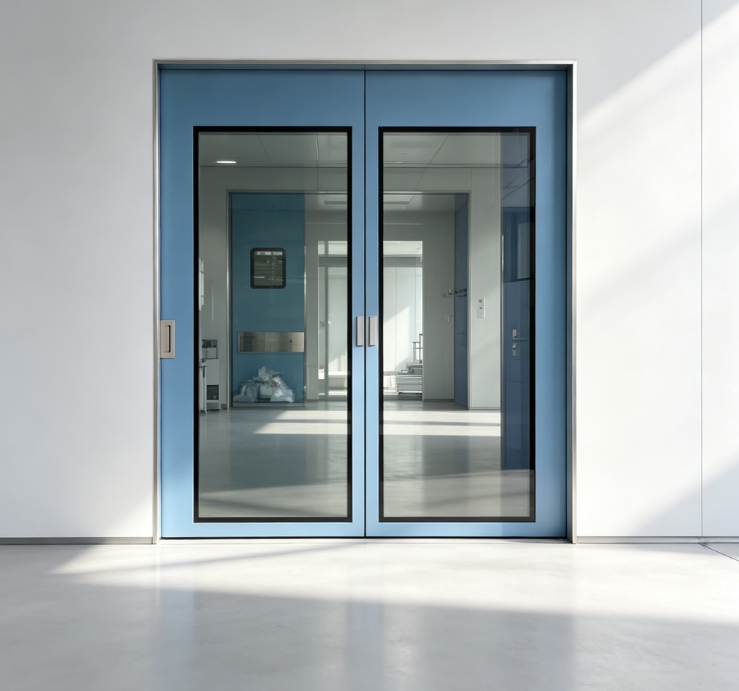
Design priorities are shifting. Transparency is increasingly valued. Viewing panels allow monitoring without entering controlled areas. This supports efficiency and safety.
Minimal structural footprints help maximize usable floor space. Slim panel profiles contribute to open interiors while maintaining enclosure.
Customization also plays a role. Facilities may require partitions with specific heights, finishes, or integrated access points. Tailored configurations allow alignment with brand identity and workflow demands.
| Trend Focus | Layout Impact | Partition Response |
|---|---|---|
| Transparency | Improved supervision | Glass or viewing panel integration |
| Modularity | Easier reconfiguration | Demountable panel systems |
| Space Optimization | Increased usable area | Slim structural framing |
| Functional Zoning | Clear workflow segmentation | Adjustable wall positioning |
These trends reflect the growing expectation that clean room environments remain adaptable.
How Does Flexibility Support Regulatory Compliance?
Cleanroom operations must continuously align with shifting regulatory expectations. Agencies regularly issue updated interpretations, revised annexes, or new risk-based guidance covering critical aspects such as contamination control strategy (CCS), physical and procedural segregation of processes, mandatory unidirectional personnel and material flows, dedicated areas for high-risk activities, defined transitions between cleanliness grades, and justified zoning decisions. A single inspection observation, an evolving product classification, or the introduction of a stricter guidance document can transform a previously acceptable layout into one that no longer meets current standards—often necessitating immediate physical changes to separate activities, add protective barriers, enforce one-way paths, or isolate sensitive operations.
Modular partition systems enable rapid, low-impact responses to these demands. Facility teams can implement required adjustments by:
- Repositioning panels to establish new classification interfaces, create additional pressure differentials, or form the exact Grade separations now mandated—all within the existing building shell
- Adding required transition or support spaces (material pass-through airlocks, personnel decontamination corridors, anteroom-style buffers) to strengthen flow discipline and reduce contamination risk
- Redesigning internal pathways to deliver compliant unidirectional movement, remove bidirectional crossings between classified and support zones, or fully separate process streams that must no longer share common corridors
- Creating clearly bounded, auditable enclosures around individual high-risk operations—such as aseptic filling suites, handling of cytotoxic compounds, or advanced therapy manufacturing cells—without invasive structural work
Since modifications involve only the relocation or addition of modular wall sections, the facility sidesteps major disruptions: no demolition dust, no new roof/wall/floor penetrations, no large-scale HVAC duct rerouting, and no need to vacate entire suites or buildings. Requalification efforts stay focused and proportionate—environmental monitoring, smoke studies, differential pressure verification, and particle/microbial sampling are limited to the reconfigured areas, allowing faster data collection, fewer test interruptions, and condensed approval timelines.
This targeted, modular method provides tangible advantages for staying compliant:
- Swift corrective and proactive action — Changes can be executed and verified before regulatory deadlines or follow-up inspections, sharply reducing the window of potential non-compliance.
- More efficient qualification packages — Incremental scope means shorter protocols, reduced risk of execution deviations, and quicker review/approval cycles than those required for full-area reconstruction.
- Minimized waste and sustainability benefits — Reusable components (panels, framing, seals, glazing) cut down on discarded materials, landfill contributions, and the embodied carbon tied to repeated heavy construction.
- Clearer, more convincing audit evidence — Visible, physically enforced boundaries—especially when combined with transparent panels—make it easy for inspectors to verify segregation logic, flow directionality, and barrier effectiveness on-site.
How Do Partitions Influence Collaboration and Visibility?
In cleanrooms and controlled manufacturing floors, work doesn't stop at one team's edge—engineers, QA, mechanics, stock handlers, and operators all have to sync up. The walls stay up to keep contaminants out and procedures intact, but if they're too opaque, messages lag, fixes drag, and everyone ends up guessing what the other side is doing.
A smart fix is to build those walls in sections: solid where you need privacy, glass or plastic where a glance is worth more than a walk-through. Here's what that lets people do:
- Supervisors spot a jam or an operator struggling without suiting up and breaking the air balance.
- Mechanics peek at a pump or valve from the hallway, decide if it's worth the full entry, and save everyone time.
- Trainers and auditors watch a new hire or a validation run without freezing the line or risking a footprint.
- Warehouse folks confirm a pallet or batch label through the panel instead of cracking a door and letting dust in.
The result isn't fancy—it's just less friction. Deviations get caught early, hand signals replace radios, whiteboards stay visible, and the whole place feels less like separate boxes. Cameras and screens are still there, but nothing beats seeing it yourself.
How Does Flexible Layout Design Contribute to Sustainability?
Adaptable interiors reduce material waste. When walls can be reused or relocated, fewer resources are discarded during renovation.
Reconfigurable systems also extend the lifecycle of interior structures. Instead of demolition, panels can serve new configurations.
Sustainable practice includes:
- Reusable structural components
- Reduced renovation debris
- Extended material lifespan
- Adaptation without full reconstruction
Flexibility supports responsible facility management.
What Should Facility Planners Consider When Designing Flexible Layouts?
Planning requires foresight. Even modular systems need structured layout mapping. Designers must consider airflow patterns, personnel routes, and equipment size.
Points to evaluate include:
- Future expansion possibilities
- Anticipated workflow changes
- Integration with ceiling and floor systems
- Maintenance access
- Visibility needs
Strategic planning ensures that partitions truly enhance flexibility rather than complicate adjustments.
Clean room partitions have moved beyond simple enclosure systems. They shape how controlled environments evolve. Through modular design, material coordination, and integration with infrastructure, they allow facilities to redefine space without halting progress. In industries where precision and adaptability intersect, spatial flexibility has become part of operational resilience.