English
 русский
 Español
If you have ever worked in a pharmaceutical plant, semiconductor cleanroom, hospital compounding pharmacy, biosafety laboratory, or even a high-end food-production facility, you have almost certainly used or walked past a pass through box. To the uninitiated, it looks like a stainless-steel cabinet built into a wall with two interlocked doors. To the people who depend on it every day, it is an essential contamination-control device that keeps clean environments clean while still allowing materials to move in and out.
How do you transfer objects between two worlds—one sterile, one not—without ever letting those worlds touch?
That's the quiet, everyday miracle performed by an unassuming stainless-steel box built into the wall, and the reason you're about to discover why the humble pass-through box is one of the most important pieces of equipment in modern controlled environments.
Content
- 1 What Exactly Is a Pass Through Box?
- 2 Why Pass Through Boxes Exist
- 3 How the Interlock System Works
- 4 Types of Pass-Through Boxes
- 5 Key Features You Will Encounter
- 6 Installation Considerations
- 7 Validation and Qualification
- 8 Cleaning and Maintenance
- 9 Common Mistakes
- 10 Choosing the Right Internal Size for Your Pass-Through Box
What Exactly Is a Pass Through Box?
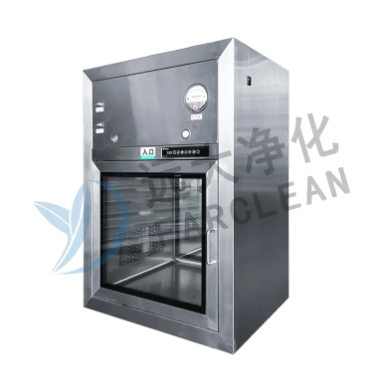
A pass-through box is a sealed, double-door chamber built through a wall that separates two areas of different cleanliness grades, pressure regimes, or hazard levels.
It consists of:
- One door opening into the higher-grade side
- One door opening into the lower-grade or lower-grade side
- A reliable interlock system that guarantees both doors can never be open simultaneously
- A transparent viewing window and internal shelving
- Optional features such as HEPA/ULPA filtration, UV-C lamps, or hydrogen-peroxide decontamination
The sole purpose: allow safe, controlled transfer of materials while maintaining the integrity of air pressure cascades, particle counts, and biosafety/containment barriers.
Why Pass Through Boxes Exist
The fundamental problem they solve is simple: You have a high-cleanliness space and you need to transfer items into or remove waste without compromising the cleanliness or biosafety level of that space.
Opening a normal door between a dirty corridor and a cleanroom would immediately destroy the pressure cascade and allow thousands of particles and microbes to rush in. A gowning room helps, but even fully gowned personnel are still the largest source of contamination. The pass-through box is a mechanical solution that lets materials move while people stay on their respective sides.
How the Interlock System Works
The majority of pass-through boxes use a purely mechanical interlock — no electricity, no software, virtually zero failure rate over decades of 24/7 operation.
When one door is opened, a steel flag or rocker arm physically blocks the opposite latch. Only when the first door is fully closed and latched does the interlock release the second door. Electromagnetic, pneumatic, and smart interlocks are available for specialized applications, but mechanical remains the gold standard for GMP facilities.
Materials & Finishes That Meet Regulatory Expectations
- 316L stainless steel – mandatory for aggressive sporicidal agents and potent/hazardous drugs
- 304 stainless steel – suitable for standard pharmaceutical and hospital pharmacy use
- Electropolished interior surfaces – easier cleaning and reduced particle adhesion
- ESD-safe and powder-coated options for electronics and non-GMP areas
Main Applications
- Pharmaceutical and biotech cleanrooms (filling lines, aseptic processing)
- Microelectronics and semiconductor manufacturing
- Hospital sterile compounding pharmacies
- Nanotechnology labs
- Vivariums and animal facilities
- Biosafety Level 2, 3, and 4 laboratories
- Nuclear facilities (glovebox pass-throughs)
- High-containment food and cosmetic production
- Forensic labs
- Aerospace clean assembly areas
Types of Pass-Through Boxes
A. By Interlock Type
- Mechanical interlock
- Electromagnetic interlock
- Pneumatic interlock
B. By Airflow & Filtration
- Passive (no fan or filter – relies on room pressure cascade)
- Active / Fan-powered with HEPA or ULPA filtration on supply and/or exhaust
- Laminar-flow pass-throughs (vertical or horizontal LAF inside the chamber)
- Bio-decontamination pass-throughs (integrated H₂O₂ or UV-C systems)
C. By Door Configuration
- Standard two-door (most common)
- Cart pass-throughs (floor-level, large enough for carts or pallets)
- Floor-mounted or "tunnel" style for heavy equipment
- Fire-rated pass-throughs (1–3 hour rating)
- Double-walled with interstitial space for sterilization gas
D. By Material
- 304 or 316L stainless steel (pharma standard)
- Powder-coated cold-rolled steel (lower cost, non-GMP areas)
- ESD-safe versions for electronics
- Acrylic or tempered glass for low-budget or visual monitoring
E. Specialized Versions
- UV pass-throughs (built-in UV-C lamps for surface decontamination)
- Hydrogen Peroxide (VHP) pass-throughs
- Rapid Transfer Port (RTP) systems
- Weighing pass-throughs with integrated precision balance
- Refrigerated pass-throughs
Key Features You Will Encounter
- Interlock system with visual/audible indicators
- 270° or 180° door swing (270° allows door to fold flat against wall and eases cleaning)
- Tempered glass or polycarbonate viewing window
- LED or fluorescent internal lighting
- Stainless steel shelves (fixed or removable)
- Door status sensors and alarm outputs to BMS
- HEPA filter leak test ports
- Magnehelic or digital pressure gauges
- Push-button or touchless (infrared) door release
- Fire damper option
- Grounding studs (ESD models)
Installation Considerations
- Wall cut-out must be precise (usually framed with stainless angle
- Positive-pressure cleanrooms usually place the supply HEPA in the higher-grade side
- Negative-pressure containment suites place exhaust HEPA on the dirty side
- Sealant between frame and wall must be silicone and continuously welded on the clean side
- Electrical interlocks usually 24 V DC for safety
- Cart pass-throughs often require reinforced floor or ramp
Validation and Qualification
Typical tests:
- Interlock function verification
- Door seal integrity
- HEPA filter installation leak test
- Airflow velocity and uniformity
- Particle counting inside chamber with both doors closed
- Recovery test
- UV dose mapping
- VHP cycle development and biological indicator kill
Cleaning and Maintenance
- Daily: wipe interior with 70 % IPA or approved disinfectant
- Weekly/monthly: remove shelves and clean behind
- Every 6–12 months: HEPA filter integrity test and gasket inspection
- Replace UV lamps every 9 000–12 000 hours
- Lubricate mechanical interlock pivots sparingly with food-grade grease
Common Mistakes
- Undersizing the chamber → items get stuck → personnel force doors → interlock damage
- Installing a passive box between two rooms with identical classification → unnecessary bottleneck
- Forgetting to specify 316L stainless for corrosive cleaners or acid-handling areas
- No viewing window → users open both doors to "see" if something is inside
- Locating the pass box in a high-traffic corridor → constant banging and denting
Choosing the Right Internal Size for Your Pass-Through Box
In real-world facilities, the internal dimensions you"ll encounter most often fall into three practical categories:
- Small: 300 × 300 × 300 mm to 450 × 450 × 450 mm Perfect for syringes, small vials, stoppers, documents, or lab samples.
- Medium / Standard: 600 × 600 × 600 mm Easily accommodates sterile trays, tool kits, IV bags, and small instruments without wasting floor space.
- Large / Cart types: 900 × 900 × 900 mm and larger, up to 1200 × 1200 × 2000 mm or more Designed for rolling carts, 800 × 600 mm or 1000 × 800 mm, crash carts, or even small isolator pallets.
Practical rule we always give to facility managers and architects: Add at least 150–200 mm of free space in every direction (width, depth, and height) around the largest item or heaviest item you expect to transfer on a routine basis. This extra clearance ensures:
- Doors close smoothly even when an operator places the item slightly off-center
- Air can circulate properly in active or laminar-flow units
- Shelves can be removed for cleaning without fighting the load
- You won't damage seals or scratch expensive components
Following this simple 150–200 mm buffer rule almost completely eliminates the daily frustration (and eventual interlock damage) that comes from an undersized chamber.
A pass-through box is one of those devices that is boring until you don't have one — then it becomes the single biggest contamination risk in your facility. When properly specified, installed, and maintained, it is an inexpensive, reliable, and regulation-compliant way to move materials between cleanliness zones without ever breaking containment or pressure cascade.
Whether you are designing a new cleanroom, upgrading an existing pharmacy, or simply trying to understand why that stainless cabinet in the wall won't let you open both doors at once, you now know essentially everything worth knowing about pass-through boxes.