English
 русский
 Español
Content
- 1 What Makes a Door Suitable for a Clean Room: The Direct Answer
- 2 Why Standard Doors Cannot Be Used in Clean Rooms
- 3 Clean Room Door Panel Materials: Steel vs HPL
- 4 Clean Room Door Seals: The Most Critical Component
- 5 Clean Room Sliding Doors: When and Why to Choose Them
- 6 Automatic Clean Room Doors: Reducing Contamination from Human Interaction
- 7 Selecting the Right Door for Your Clean Room Classification
- 8 Installation, Maintenance, and Seal Replacement
What Makes a Door Suitable for a Clean Room: The Direct Answer
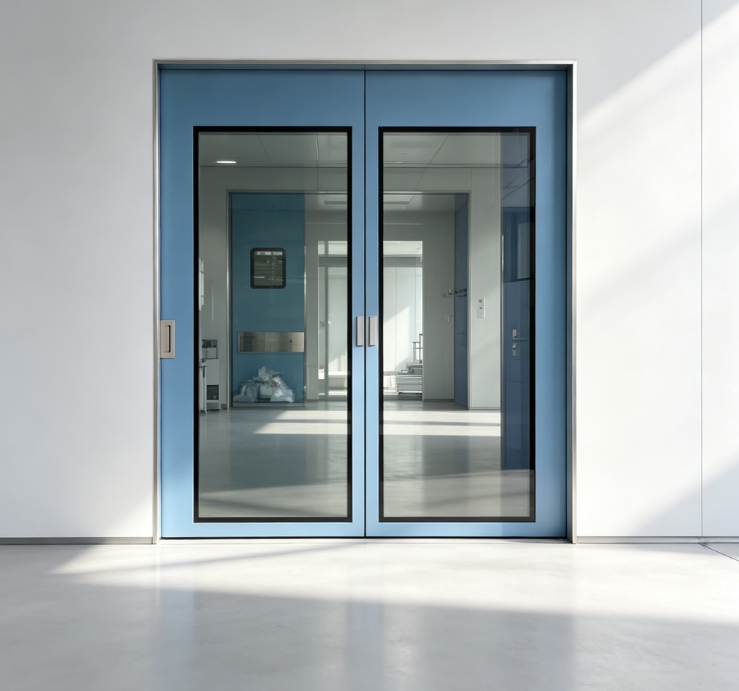
A clean room door must maintain the pressure differential between zones, generate zero particle contamination during operation, and provide a verifiable airtight seal every time it closes. Standard commercial doors fail all three requirements. Clean room doors are purpose-engineered enclosures — typically built from smooth, non-shedding panel materials such as HPL (High Pressure Laminate) or powder-coated steel, fitted with continuous perimeter seals, and optionally automated to eliminate human contact with door surfaces.
The right door specification depends on your ISO cleanliness classification (ISO 1 through ISO 9 per ISO 14644-1), the pressure cascade your facility uses, traffic volume, and material compatibility with your cleaning regime. This article covers every major clean room door type, material, seal system, and automation option to help you make an informed specification decision.
Why Standard Doors Cannot Be Used in Clean Rooms
Conventional interior doors fail in cleanroom environments for several interconnected reasons. Timber-core doors shed wood fibers and harbor microbes in porous surfaces. Standard door frames allow air to bypass between zones. Hinged swing doors generate turbulence as they open, sweeping unfiltered corridor air into the controlled space. Door hardware — hinges, latches, and handles — creates particle-generating friction points with every use.
Consider the stakes: an ISO Class 5 clean room permits a maximum of 3,520 particles ≥0.5 µm per cubic meter. A single swing of a poorly specified door can temporarily spike particle counts by orders of magnitude, triggering a non-conformance event. In pharmaceutical manufacturing, such an event can place an entire batch — potentially worth millions of dollars — under quarantine.
Clean room doors must satisfy these core performance requirements:
- Air tightness: Maintain pressure differential (typically 10–15 Pa between adjacent zones) when closed.
- Non-particle-generating surfaces: All exposed materials must be smooth, non-porous, and non-shedding.
- Chemical resistance: Surfaces must withstand repeated disinfection with isopropyl alcohol (IPA), hydrogen peroxide vapor (HPV), bleach solutions, and quaternary ammonium compounds.
- Flush construction: No exposed grooves, ledges, or recesses where particles or microorganisms can accumulate.
- Vision panel integrity: Any glazing must be flush-mounted and sealed, not recessed in a frame that creates a particle trap.
Clean Room Door Panel Materials: Steel vs HPL
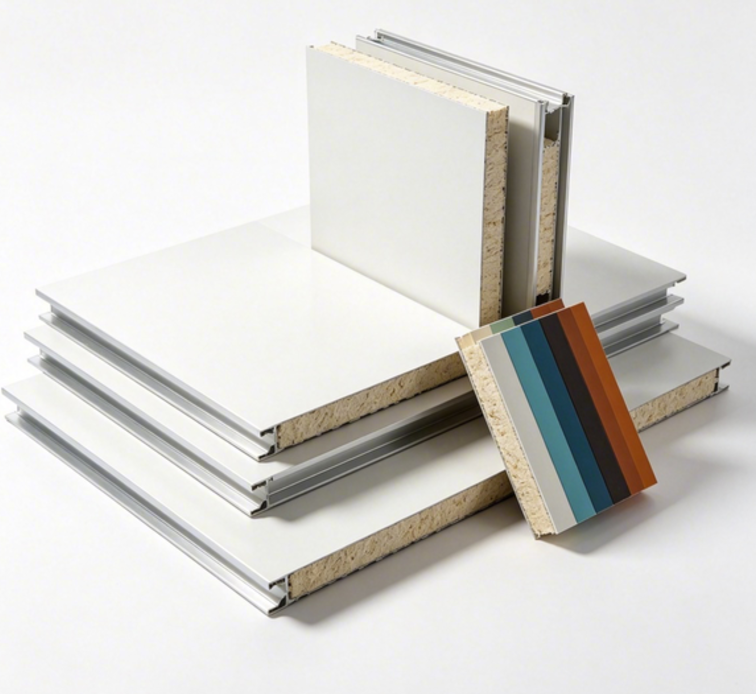
The door panel is the primary surface interface with the clean room environment. Two materials dominate clean room door construction: powder-coated steel and High Pressure Laminate (HPL). Each has distinct performance, cost, and application profiles.
Clean Room Steel Doors
Steel clean room doors use a cold-rolled steel skin (typically 0.8–1.2 mm gauge) over a honeycomb or mineral wool core. The steel is powder-coated with an epoxy or polyester coating applied electrostatically and cured at 180–200°C, producing a hard, impermeable surface with a typical thickness of 60–100 µm.
Advantages of clean room steel doors:
- High impact resistance — suited to areas with forklift or trolley traffic
- Can be specified with fire ratings (EI30, EI60, EI120) without compromising clean room performance
- Compatible with ionizing radiation environments (nuclear or radiopharmaceutical facilities)
- Can integrate lead lining for X-ray shielding
- Long service life with minimal surface degradation under repeated chemical cleaning
Limitations: powder coating can chip at edges if impacted, exposing bare steel to corrosion. In high-humidity environments (above 80% RH continuously), surface condensation may become a concern without stainless steel specification.
Clean Room HPL Doors
HPL (High Pressure Laminate) is manufactured by pressing layers of resin-impregnated kraft paper under pressures of 70–100 bar at 150°C, producing a dense, non-porous sheet with exceptional surface hardness (Brinell hardness ~25–35 N/mm²). For clean room doors, HPL panels are bonded to a structural core — typically aluminum honeycomb or extruded aluminum frame — using solvent-free adhesives.
Advantages of clean room HPL doors:
- Superior chemical resistance — HPL withstands a broader range of aggressive disinfectants including undiluted bleach and peracetic acid without surface degradation
- Available in a wide range of colors, including white and light gray standard in pharmaceutical and semiconductor facilities
- Non-conductive surface — preferred in ESD-sensitive semiconductor clean rooms (though anti-static HPL grades are available)
- Lighter weight than steel equivalent — reducing load on automatic door operators
- Scratch resistance higher than powder-coated steel in standard grades
Limitations: HPL doors are not inherently fire-rated and require intumescent core materials to achieve fire classification. They are also less impact-resistant at panel edges compared to steel-skinned doors.
| Property | Steel Door | HPL Door |
|---|---|---|
| Surface hardness | High (steel substrate) | Very high (Brinell ~25–35) |
| Chemical resistance | Good (coating-dependent) | Excellent |
| Impact resistance | Excellent | Good (edge vulnerable) |
| Fire rating available | Yes (EI30–EI120) | Yes (with intumescent core) |
| Weight (typical 2100×1000mm) | 50–80 kg | 30–55 kg |
| ESD suitability | Requires grounding | Non-conductive / ESD grades available |
| Typical application | Pharma, nuclear, high-traffic | Semiconductor, biotech, food |
Clean Room Door Seals: The Most Critical Component
The seal system is arguably more important than the door panel material. A premium HPL door with a poorly specified seal will leak air and contaminate the space. Clean room door seals perform two simultaneous functions: maintaining the pressure differential between zones and preventing particle or microorganism infiltration through the door perimeter gap.
Perimeter Seal Types
Clean room door perimeter seals are typically made from EPDM (Ethylene Propylene Diene Monomer) or silicone elastomers, both of which offer low particle generation, broad chemical compatibility, and temperature stability from –40°C to +150°C. Common configurations include:
- Compression seals (bulb or D-profile): Mounted on the door frame; compress as the door closes to form a continuous perimeter seal. Suitable for ISO Class 6–8 applications.
- Magnetic seals: A flexible magnetic strip embedded in the door edge attracts to a steel striker plate, providing consistent closure force and seal compression independent of latch mechanism. Common in pharmaceutical ISO Class 5–7 applications.
- Inflatable seals: An air bladder integrated into the door frame inflates to seal the perimeter after the door closes, then deflates to allow opening. Used in the most demanding ISO Class 3–5 environments and in isolator-connected pass-throughs.
Automatic Drop-Down Bottom Seal
The floor gap is the most problematic area for clean room door air tightness. A fixed threshold creates a trip hazard and a cleaning obstruction; no threshold leaves an air path of typically 8–15 mm under the door. The solution is an automatic drop-down bottom seal (automatic door bottom): a spring-loaded or cam-activated bar that drops to contact the floor when the door closes and retracts when the door opens. This eliminates the floor gap without creating a permanent obstruction. Drop-down seals in clean room applications use EPDM or silicone blades rated to withstand IPA and hydrogen peroxide cleaning.
A complete clean room door seal system — perimeter compression or magnetic seal plus drop-down bottom seal — can achieve air leakage rates of less than 1 m³/h at 10 Pa differential pressure, sufficient for ISO Class 5–7 zone boundary doors in pharmaceutical manufacturing.
Clean Room Sliding Doors: When and Why to Choose Them
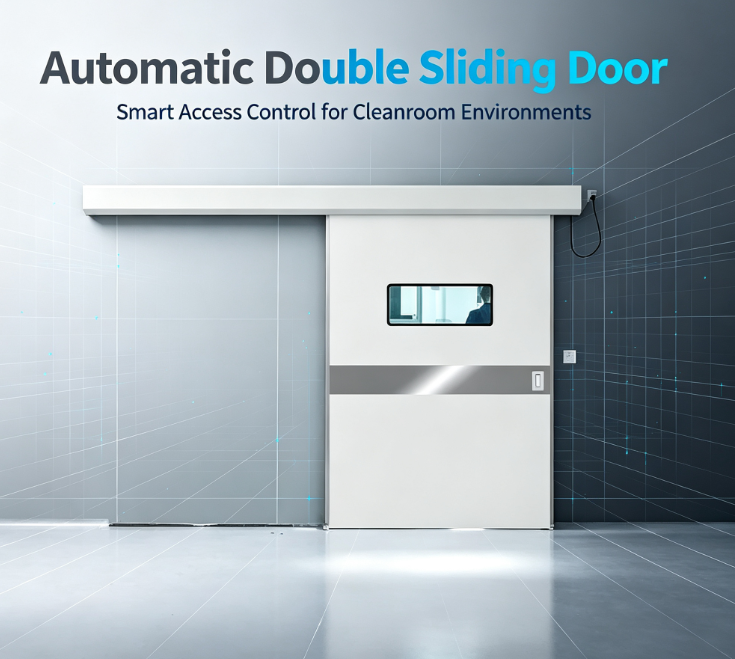
Clean room sliding doors eliminate the air displacement and turbulence generated by swinging doors, making them the preferred choice in high-traffic corridors, ISO Class 5 and below environments, and wherever floor space on either side of the door is limited. A swing door of 1,000 mm width sweeps approximately 0.79 m² of floor area — space that in a clean room may be occupied by equipment or personnel.
Sliding Door Configurations
- Single sliding: One panel slides to one side. Requires a wall pocket or surface-mount track of at least door width. Most common configuration for personnel doors up to 1,200 mm wide.
- Bi-parting sliding: Two panels slide apart in opposite directions. Provides a wider clear opening (up to 2,400 mm or more) for equipment transfer without requiring as much adjacent wall length as a single slider. Common at airlocks and material transfer areas.
- Telescopic sliding: Two or more panels slide in the same direction using a telescopic track, folding into a compact stack. Used where wall space is constrained on the slide-away side.
Sealing Challenges with Sliding Doors
Sliding doors present a more complex sealing challenge than swing doors because there is no frame-to-frame compression on closure. Instead, they rely on precision track alignment and edge seals that contact the frame at the leading edge and compression seals at the top and bottom. High-performance clean room sliding doors use motorized compression mechanisms that push the panel against perimeter seals after it reaches the closed position — functioning like a sliding door that also provides a swing-door-quality seal. These systems can maintain 15–20 Pa pressure differentials reliably in ISO Class 5–6 applications.
Automatic Clean Room Doors: Reducing Contamination from Human Interaction
Every time a person touches a door handle or push plate, they transfer particles and microorganisms to the door surface. In a pharmaceutical clean room, where personnel gowning is exhaustively controlled, a contaminated door handle is a persistent re-contamination source. Automatic clean room doors remove the need for any human contact with door surfaces during normal use.
Activation Methods
- Motion sensor (PIR or microwave): Detects approaching personnel and opens automatically. Low cost, no contact required. Risk: false activations can disrupt pressure differential management.
- Foot switch or knee pad: Allows hands-free activation when carrying materials — common in pharmaceutical filling areas and laboratory corridors.
- Access control integration (card reader, proximity badge, biometric): Opens only on authorized credential presentation — combines contamination control with security. Required in GMP-regulated pharmaceutical facilities for zone access logging.
- Interlock airlock control: In airlock configurations, an automatic door controller ensures that only one door in a two-door airlock can be open at any time, preventing direct connection between different ISO class zones. This is a mandatory design feature in EU GMP Annex 1 (2022 revision) compliant manufacturing facilities.
Operator and Drive Systems
Automatic clean room door operators must themselves be non-particle-generating. Standard commercial door operators use externally mounted motor housings with exposed vents — unacceptable in ISO Class 5 environments. Clean room-rated operators use sealed, brushless DC motors with no exposed fan or vent openings, mounted above the door in the plenum space or behind a flush ceiling panel. Drive mechanisms use stainless steel timing belts or sealed screw drives rather than open chain systems. Opening and closing speeds are adjustable — typically 0.3–0.5 m/s for clean room applications to minimize turbulence.
Selecting the Right Door for Your Clean Room Classification
Door specification should be driven by your clean room's ISO classification, the pressure differential being maintained, and the specific regulatory framework your facility operates under (EU GMP, FDA 21 CFR Part 211, SEMI S2 for semiconductor, ISO 14644). The table below summarizes recommended door configurations by ISO class:
| ISO Class | Typical Application | Recommended Door Type | Seal Requirement | Automation |
|---|---|---|---|---|
| ISO 3–5 | Semiconductor fab, aseptic fill | Sliding with motorized compression seal, or pass-through hatch | Inflatable or motorized compression perimeter + drop-down bottom | Mandatory (interlock) |
| ISO 6–7 | Pharmaceutical manufacturing, medical device | Swing or sliding, HPL or steel panel | Magnetic or compression perimeter + auto bottom seal | Recommended (access control) |
| ISO 8 | Electronics assembly, food processing | Swing, HPL panel, vision panel | Compression perimeter + auto bottom seal | Optional |
| ISO 9 | General controlled environment | Swing, HPL or steel, standard clean room frame | Standard perimeter + brush bottom seal | Optional |
Vision Panels and Hardware Specifications
Vision panels in clean room doors must be flush-glazed with silicone or EPDM gaskets — no rebated or stepped frame that creates a ledge. Standard glass thicknesses are 6 mm toughened for non-fire-rated doors or 6+6 mm laminated fire-rated glass for fire door applications. For rooms handling flammable solvents, wire glass is avoided in favor of clear ceramic glass (e.g., Schott Robax or equivalent) which meets both fire and contamination control requirements.
Door hardware — hinges, closers, and latch sets — should be 316 stainless steel (not 304) for maximum corrosion resistance to aggressive disinfectants. Exposed screw heads should be minimized; where present, they should be flush and of the same material as the hardware. Recessed pull handles with smooth, radiused profiles are preferred over traditional lever handles, which accumulate contamination at the lever-to-rose joint.
Installation, Maintenance, and Seal Replacement
Even the best clean room door specification fails if installation is poor. Key installation requirements include:
- Frame sealing to wall panel: The door frame must be continuously caulked to the wall panel on the clean room side with a clean room-grade silicone sealant (low-VOC, fungicide-free, FDA-compliant where required). Any gap between frame and panel is a particle and microorganism pathway.
- Plumb and square installation: Clean room doors are precision engineered; a frame out of square by even 2–3 mm can prevent perimeter seals from compressing uniformly, creating localized air paths.
- Post-installation air leakage test: After installation, doors should be tested for air leakage at the design pressure differential using a calibrated flow meter or pressure decay method, with results documented in the facility qualification record (IQ/OQ protocol).
EPDM and silicone perimeter seals have a typical service life of 5–8 years under normal clean room conditions, but should be inspected annually and replaced immediately if any cracking, compression set, or deformation is observed. Drop-down bottom seal blades typically require replacement every 2–3 years due to floor contact abrasion. Maintaining a documented door seal inspection and replacement schedule is a GMP requirement in pharmaceutical manufacturing environments.