English
 русский
 Español
Clean room doors and clean room windows are not standard architectural components fitted into a controlled environment. They are engineered barrier systems that must maintain air pressure differentials, prevent particle ingress, withstand chemical cleaning, and satisfy regulatory requirements simultaneously. Selecting the wrong door or window assembly is one of the most common sources of cleanroom certification failure and ongoing contamination risk. This guide covers the critical specifications, material choices, configuration options, and compliance considerations that determine whether a clean room envelope performs as designed.
Content
- 1 Why Clean Room Doors and Windows Require Dedicated Engineering
- 2 Clean Room Door Types and Their Applications
- 3 Clean Room Door Construction and Material Standards
- 4 Clean Room Windows: Functions, Formats, and Glazing Specifications
- 5 Glazing Materials for Clean Room Windows
- 6 Sealing Systems: The Most Critical Detail in Clean Room Doors and Windows
- 7 ISO Classification Requirements and How They Drive Specification
- 8 Hardware and Accessories That Affect Cleanroom Compliance
- 9 Maintenance and Qualification of Clean Room Doors and Windows
Why Clean Room Doors and Windows Require Dedicated Engineering
A cleanroom operates under positive or negative pressure relative to adjacent spaces, typically in the range of 5 to 20 Pascals of differential pressure for ISO Class 5 through ISO Class 8 environments. Every door and window penetration in the cleanroom envelope is a potential path for pressure equalization, unfiltered air infiltration, and particle contamination. Standard commercial doors and windows are neither designed nor tested to maintain these conditions reliably.
Beyond pressure control, clean room doors and windows must contribute zero or negligible particle generation themselves. Conventional painted surfaces, timber cores, and standard glazing compounds shed particles under normal use and cleaning. In an ISO Class 5 environment, the permitted particle count is no more than 3,520 particles per cubic meter at 0.5 microns or larger. A single deteriorating door seal or a window frame with an inadequately bonded gasket can compromise that specification across an entire room.
Regulatory frameworks including EU GMP Annex 1 for pharmaceutical manufacturing, ISO 14644, and FDA guidance for aseptic processing all reference the integrity of the cleanroom envelope as a fundamental requirement. Compliance auditors inspect door and window details, sealing systems, and maintenance records as part of facility qualification.
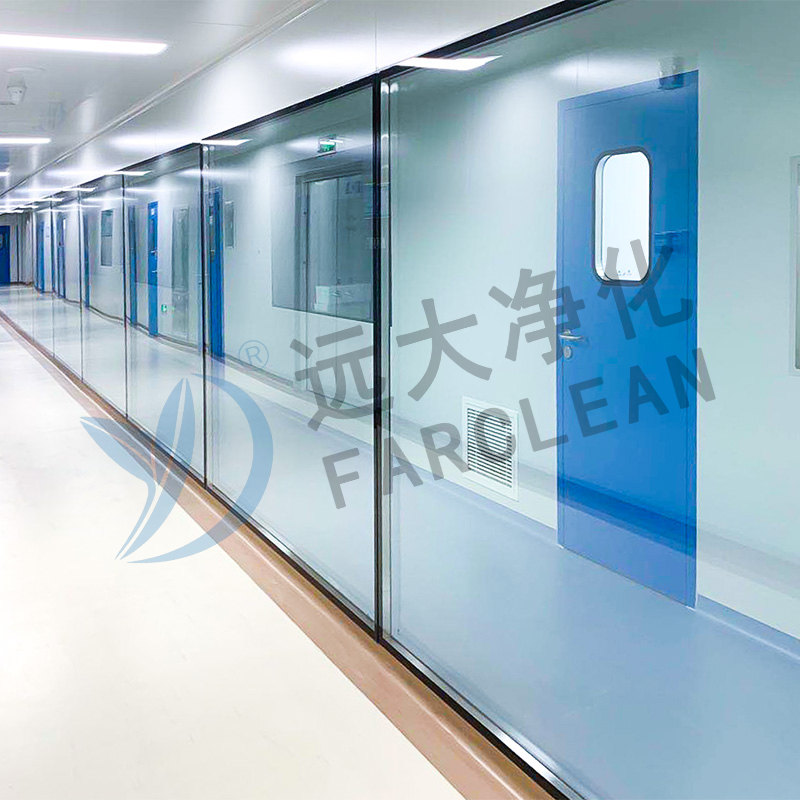
Clean Room Door Types and Their Applications
Several door configurations are used in cleanroom construction, each suited to different traffic patterns, pressure requirements, and ISO classification levels.
Single Leaf Swing Doors
The single leaf swing door is the most common configuration in pharmaceutical, medical device, and food processing cleanrooms. It offers a simple, reliable seal when fitted with perimeter compression gaskets and an automatic door closer that ensures the door returns to the sealed position after every passage. Standard clean room swing doors are typically 900 mm to 1,100 mm wide and 2,100 mm to 2,400 mm tall, sized to accommodate personnel in gowning suits and equipment on hand carts without brushing the frame.
Sliding Clean Room Doors
Sliding doors are preferred where floor space is constrained or where the swing arc of a hinged door would create a workflow obstruction. Hermetically sealed sliding door systems, in which the door panel compresses against a perimeter gasket when fully closed, achieve air leakage rates comparable to swing doors. Automatic sliding doors reduce personnel contact with the door surface, which in turn reduces particle generation from repeated handling. They are widely used in hospital pharmacies, semiconductor fabs, and research laboratories where hands-free operation is valued.
Rapid Roll-Up and High-Speed Doors
For large openings that accommodate forklifts, pallet movers, or frequent material transfer between adjacent cleanroom zones, rapid roll-up doors minimize the time the opening is unsealed. Opening and closing speeds of 1 to 2 meters per second are typical, reducing pressure equalization events that would otherwise draw unfiltered air through the gap. These doors are more common in ISO Class 7 and Class 8 environments where particle standards are less stringent than Grade A or B pharmaceutical zones.
Interlocked Airlock Doors
Airlocks use two sets of clean room doors, one on each side of a buffer corridor, with an electrical interlock that prevents both doors from being open simultaneously. This arrangement maintains the pressure cascade between areas of different cleanliness classifications. Airlocks are a standard requirement for ISO Class 5 and above pharmaceutical manufacturing under EU GMP Annex 1 and are also used in semiconductor fabrication areas and biosafety laboratories.
Clean Room Door Construction and Material Standards
The internal construction and surface finish of a clean room door determine its durability, cleanability, and particle generation profile over its service life.
Door Core Materials
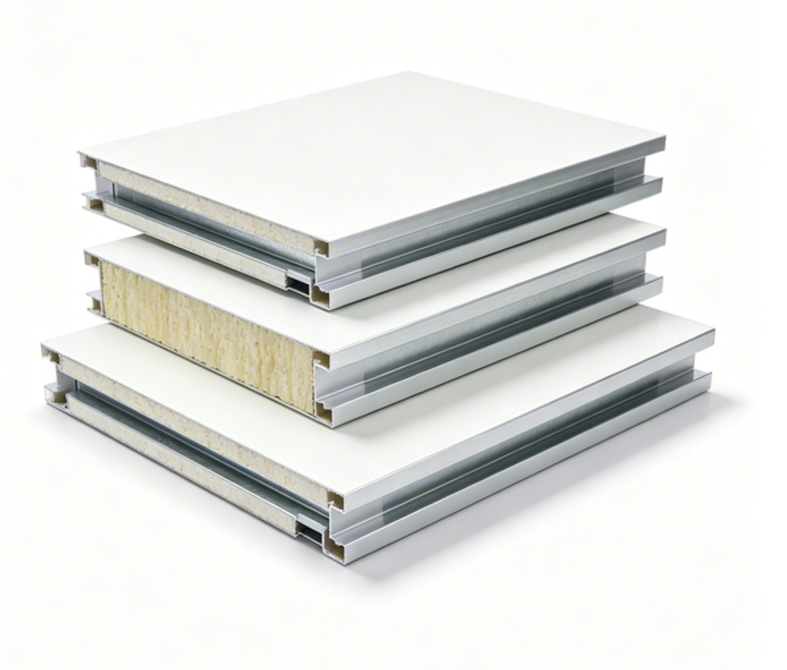
Honeycomb aluminium and mineral board cores are the standard choices for cleanroom doors. Aluminium honeycomb provides a lightweight, rigid panel that resists warping and delamination in high-humidity or frequent-wash environments. Mineral board cores add acoustic insulation and fire resistance, which is relevant where fire compartmentation and cleanroom integrity must be achieved in the same wall assembly. Timber cores, regardless of finish, are not suitable for cleanroom applications because they absorb moisture and eventually delaminate, creating voids and particle sources within the panel.
Facing and Surface Finish
Clean room doors are faced with 304 or 316 grade stainless steel, high-pressure laminate (HPL), or powder-coated galvanized steel. Stainless steel is preferred for the most demanding pharmaceutical and biotech environments because it withstands repeated exposure to isopropanol, hydrogen peroxide vapor, and chlorine-based disinfectants without surface breakdown. HPL faces are cost-effective for ISO Class 7 and 8 environments and offer a wide range of surface finishes including seamless edges that eliminate particle traps at the perimeter. All clean room door faces must be free of through-holes, exposed fasteners, and unsealed joints that could harbor microorganisms or accumulate particles.
Frame and Threshold Design
Clean room door frames are typically extruded aluminium or hollow stainless steel profiles, sealed continuously to the wall panel with non-curing or permanently elastic sealant to eliminate gaps at the perimeter. Raised thresholds are avoided in pharmaceutical cleanrooms to facilitate floor cleaning and prevent pooling of cleaning fluids. Where a threshold is required for pressure sealing, automatic drop-seal mechanisms that lower a rubber seal against the floor when the door closes are used, lifting automatically as the door opens to allow unobstructed traffic.
Clean Room Windows: Functions, Formats, and Glazing Specifications
Clean room windows serve two primary functions: providing visual supervision of operations inside the controlled environment without requiring personnel to enter, and allowing natural or artificial light into spaces where solid wall construction would otherwise create a closed, windowless environment. Both functions impose specific structural and material requirements.
Vision Panel Windows in Doors
The most common clean room window configuration is the vision panel integrated into a clean room door. These are typically 300 mm by 500 mm to 400 mm by 600 mm in size, sufficient for line-of-sight supervision without compromising the structural integrity of the door panel. Vision panels must be flush-mounted on both faces of the door with no protruding frame elements that would create a ledge for particle accumulation. The glazing unit is bonded directly into the door panel using chemically resistant structural adhesive rather than mechanical clips or beads that could loosen over time.
Wall-Mounted Observation Windows
Larger observation windows mounted in cleanroom partition walls allow supervisors, quality personnel, and visitors to observe ongoing manufacturing operations without entering the controlled area. These windows range from single-pane units of 600 mm by 900 mm up to full-height glazed sections of 1,200 mm by 2,400 mm in semiconductor and electronic assembly facilities. The frame system must maintain the same air barrier integrity as the surrounding wall panel, meaning all perimeter joints are continuously sealed and the frame design eliminates horizontal ledges and internal corners that trap particles and resist cleaning.
Pass-Through Window Hatches
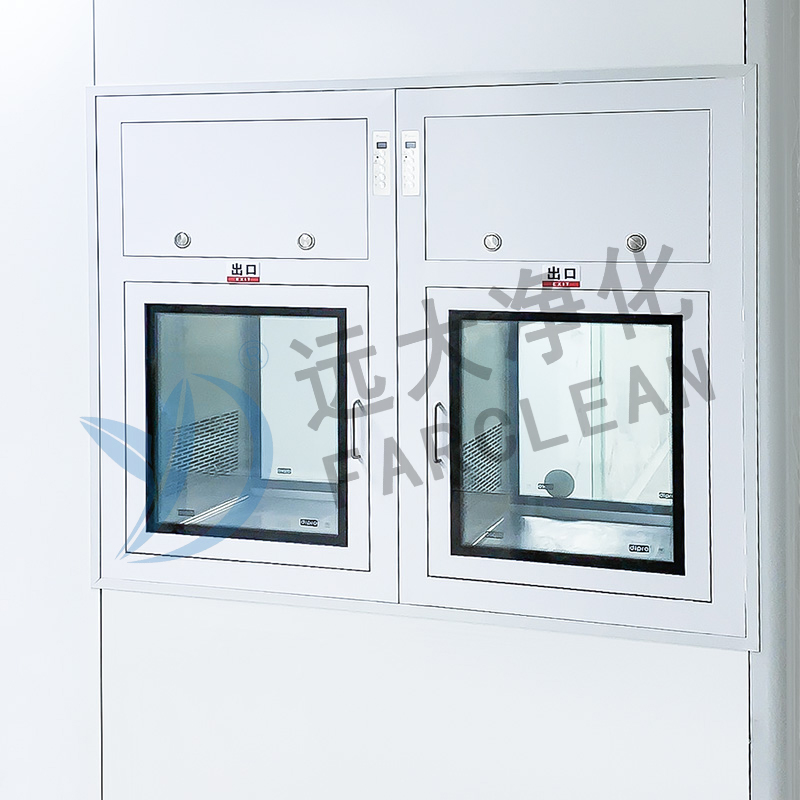
Pass-through windows are small transfer hatches built into cleanroom walls that allow small items, documents, or samples to be passed between controlled and uncontrolled areas without opening a full door. They typically incorporate interlocked double doors on each side, ultraviolet germicidal irradiation inside the transfer chamber, and a sealed glazed panel allowing visual confirmation that the transfer chamber is clear before opening. These units are common in pharmaceutical quality control laboratories and hospital compounding pharmacies.
Glazing Materials for Clean Room Windows
The choice of glazing material affects optical clarity, chemical resistance, thermal performance, and compliance with safety glazing regulations. Three materials dominate cleanroom window specifications.
| Material | Optical Clarity | Chemical Resistance | Impact Resistance | Typical Use |
|---|---|---|---|---|
| Toughened Safety Glass | Excellent | Excellent | Good (shatters safely) | Pharma, food, general cleanrooms |
| Laminated Safety Glass | Very Good | Excellent | Very Good (holds together) | High-security, biosafety labs |
| Polycarbonate | Good (yellows over time) | Moderate (solvent-sensitive) | Excellent | Vision panels, door inserts |
Toughened safety glass is the most widely specified glazing for clean room windows because it combines excellent long-term optical clarity with resistance to the full range of cleanroom disinfectants including hydrogen peroxide vapor at concentrations up to 35 percent. Polycarbonate is lighter and virtually unbreakable, making it practical for door vision panels where accidental impact from carts and equipment is likely, but its susceptibility to surface crazing from solvent-based cleaners limits its use in pharmaceutical environments where isopropanol or acetone are used routinely.
Sealing Systems: The Most Critical Detail in Clean Room Doors and Windows
The sealing system around and within clean room doors and windows determines whether the assembly actually maintains the cleanroom envelope in service. Sealing failures are the single most common cause of pressure differential loss and particle ingress at door and window locations.
- Perimeter door gaskets: Compression gaskets of silicone or EPDM are fitted around the full perimeter of the door leaf. Silicone gaskets are preferred in pharmaceutical and food environments because they withstand repeated autoclaving, broad-spectrum disinfectants, and temperature cycling without permanent compression set. A correctly specified door gasket achieves an air leakage rate of less than 1.5 cubic meters per hour per meter of seal length at 50 Pascals differential pressure.
- Window perimeter sealing: The joint between a clean room window frame and the surrounding wall panel must be continuously sealed with a permanently elastic, non-hardening sealant. Silicone sealant conforming to ISO 11600 Class F25 or higher is the standard specification. The sealant bead must be tooled flush with the wall surface to eliminate ledges, and any exposed sealant must be resistant to the disinfectants used in that specific cleanroom environment.
- Double glazing sealed units: Where thermal insulation or condensation prevention is required, insulated glazing units with warm-edge spacer bars and hermetically sealed perimeter bonds are used. These units must be specified with desiccant-filled spacers that maintain internal humidity below the dew point to prevent internal condensation that would obscure vision and indicate seal failure.
- Flush installation requirement: Both clean room doors and windows must be installed flush with the surrounding wall face on the cleanroom side. Any recess or projection creates a shadow zone that cannot be effectively cleaned and that accumulates particles and microorganisms over time.
ISO Classification Requirements and How They Drive Specification
The ISO cleanliness class of a room directly determines the specification stringency required for its door and window components. Higher classification numbers indicate less stringent environments with higher permitted particle counts, while lower ISO class numbers represent the most demanding conditions.
| ISO Class | Equivalent GMP Grade | Door Surface | Sealing Requirement | Glazing Requirement |
|---|---|---|---|---|
| ISO Class 5 | Grade A/B | 316 stainless steel, electropolished | Full perimeter compression gasket, hermetic | Toughened or laminated safety glass, flush-bonded |
| ISO Class 6 | Grade B | 304 stainless steel or HPL | Full perimeter compression gasket | Toughened safety glass, flush frame |
| ISO Class 7 | Grade C | HPL or powder-coated steel | Compression or brush gasket | Toughened glass or polycarbonate |
| ISO Class 8 | Grade D | HPL or coated steel | Standard compression seal | Standard safety glass or polycarbonate |
Hardware and Accessories That Affect Cleanroom Compliance
Door hardware is frequently overlooked in cleanroom specifications but contributes measurably to both contamination risk and long-term operational reliability.
- Door closers: Overhead hydraulic door closers with adjustable closing force and latching speed are standard on all clean room swing doors. The closing force must be sufficient to compress the perimeter gasket fully but not so high that it creates a safety hazard or makes the door difficult to open with one hand while carrying materials. Overhead closers are preferred over floor-mounted pivots because they avoid creating floor penetrations and recesses that trap contamination.
- Kick plates and protection panels: Stainless steel kick plates extending 300 to 400 mm from the bottom of the door protect the face from cart and trolley damage. Protection panels of matching material cover the lower half of the door in high-traffic areas. These components must be continuously welded or adhesively bonded to the door face with no open joints.
- Access control and interlocks: Electronic access control systems for cleanroom doors must use flush-mounted card readers or keypads with no exposed recesses. Interlock controllers for airlock systems require a monitoring display that shows the status of both doors and prevents simultaneous opening. All cabling entries into the cleanroom side of the door frame must be sealed to maintain the pressure boundary.
- Handles and pull plates: Lever handles are preferred over round knobs in cleanrooms because they can be operated with gloved hands. All hardware must be made from 316 stainless steel in pharmaceutical environments to resist pitting and corrosion from disinfectant contact. Hollow or cast handles with internal voids are not acceptable because they cannot be fully cleaned.
Maintenance and Qualification of Clean Room Doors and Windows
Clean room doors and windows require a defined maintenance and qualification program to sustain their performance over the facility lifecycle. This is not optional in regulated industries. EU GMP Annex 1 and FDA aseptic processing guidance both require documented evidence that the cleanroom envelope, including all penetrations, maintains its intended performance.
- Gasket inspection and replacement: Door perimeter gaskets should be visually inspected at least quarterly for compression set, cracking, or detachment. Silicone gaskets in pharmaceutical environments typically require replacement every 3 to 5 years depending on cleaning frequency and disinfectant aggressiveness. A compressed gasket that no longer returns to its original profile should be replaced immediately regardless of scheduled interval.
- Pressure differential verification: The differential pressure across each clean room door should be monitored continuously and logged as part of environmental monitoring. A sudden or gradual reduction in differential pressure at a specific door location indicates a sealing failure that requires investigation before it is classified as an out-of-specification event in a regulated manufacturing environment.
- Window sealant inspection: Window perimeter sealant should be inspected annually for adhesion loss, cracking, or discoloration that indicates chemical degradation. Any section of sealant showing failure should be completely removed and replaced rather than overcoated, as overcoating leaves the failed substrate in place and the repair will fail prematurely.
- Surface integrity assessment: Clean room door and window faces should be inspected for chips, scratches, or delamination at each scheduled maintenance interval. Damaged surfaces in stainless steel doors can be re-passivated if the damage is superficial. HPL faces with through-damage to the core must be replaced because the exposed substrate will absorb cleaning fluids and become a microbial harbor.
- Hardware function checks: Door closer hydraulic performance, latch engagement, interlock sequencing, and access control function should all be verified at defined intervals and the results recorded in the facility maintenance management system as evidence of ongoing qualification maintenance.