English
 русский
 Español
Clean room doors and windows are built for environments where air quality, particle control, and surface stability are closely managed. These components are not simple building parts. They act as controlled barriers that help separate spaces while keeping internal conditions steady.
In modern industrial environments, the demand for stable separation systems has increased. Doors and windows in these spaces must work quietly in the background, supporting air balance and reducing contamination risks without drawing attention to themselves.
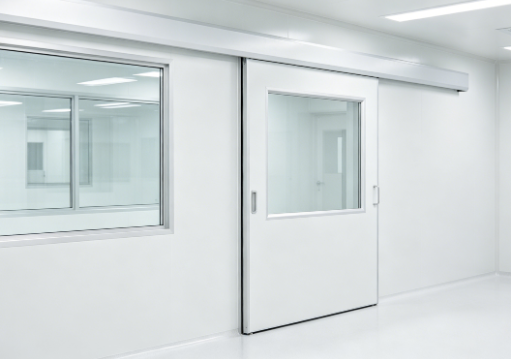
The design approach is often minimal in appearance. Yet behind that simplicity, each detail is shaped by function, repetition, and environmental sensitivity.
Content
- 1 How Do Clean Room Doors and Windows Control Environmental Stability?
- 2 What Role Do Surface Materials Play in Clean Room Doors and Windows?
- 3 Why Is Sealing Design Important for Both Doors and Windows?
- 4 How Do Viewing Windows Support Monitoring Without Disruption?
- 5 How Is Structural Stability Maintained in Doors and Windows?
- 6 How Do Clean Room Doors and Windows Support Smooth Operation?
- 7 Why Is Easy Cleaning a Shared Design Requirement?
- 8 How Do Doors and Windows Work Together in Controlled Environments?
- 9 How Are Design Choices Adapted to Different Controlled Spaces?
How Do Clean Room Doors and Windows Control Environmental Stability?
Clean room systems rely on controlled separation between spaces. Doors and windows play a central role in this process. They help maintain consistent internal conditions while allowing necessary access and visibility.
The structure of both elements is designed to limit uncontrolled exchange between areas. This includes air movement, particle transfer, and pressure imbalance.
In practice, stability depends on how well different parts work together. A door may control access, while a window supports observation. Both must stay aligned with the same environmental logic.
Typical control functions include:
- Limiting air exchange between spaces
- Supporting pressure balance between zones
- Reducing particle movement during operation
- Maintaining consistent internal conditions during frequent use
These functions do not rely on complexity. They depend on steady performance over time.
What Role Do Surface Materials Play in Clean Room Doors and Windows?
Surface materials are one of the visible yet understated parts of design. In controlled environments, surfaces are expected to remain stable under repeated cleaning and contact.
A smooth surface reduces the chance of dust accumulation. When a surface is uneven, small particles can settle and remain difficult to remove. Over time, this can affect cleanliness levels.
Windows and doors often share similar surface expectations. Both need to resist wear from cleaning routines while maintaining consistent appearance and texture.
Surface behavior comparison
| Surface condition | Environmental behavior |
|---|---|
| Smooth and sealed | Easier cleaning, lower residue risk |
| Textured surface | Higher chance of particle retention |
| Porous material | Greater contamination sensitivity |
The goal is not visual perfection. It is long-term stability under repeated use.
Why Is Sealing Design Important for Both Doors and Windows?
Sealing systems influence how air moves between connected spaces. Even small gaps can change airflow direction and reduce environmental control.
In doors, sealing focuses on edges and closing points. In windows, sealing is applied around the frame where glass meets structure. Both follow the same principle: reduce uncontrolled movement.
When the system closes, contact between surfaces must be consistent. Uneven pressure can to weak points in the barrier.
Key sealing characteristics include:
- Continuous contact along frame edges
- Controlled compression when closed
- Reduced air leakage between connected zones
- Stability under repeated opening and closing
Sealing is not only about preventing airflow. It also supports predictable environmental behavior.
How Do Viewing Windows Support Monitoring Without Disruption?
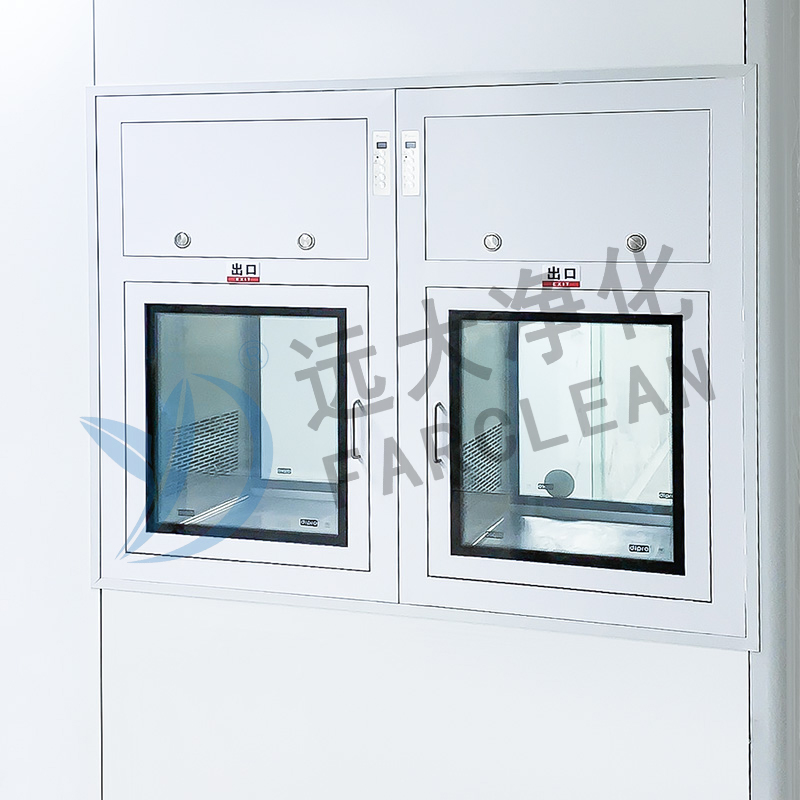
Viewing windows allow observation between controlled spaces. This reduces the need to open doors frequently, which helps maintain stable internal conditions.
Their role is practical rather than decorative. They support visual monitoring while keeping separation intact.
The integration between glass and frame is designed to be smooth. Sharp edges or uneven joins are avoided to reduce dust accumulation and simplify cleaning.
In many environments, observation is part of daily operation. Windows make it possible to check conditions without interrupting controlled airflow.
A simple comparison helps clarify their function:
| Function area | Impact |
|---|---|
| Observation | Allows visual checks without access |
| Separation | Maintains environmental boundary |
| Stability | Reduces unnecessary opening of doors |
Windows are not standalone elements. They work as part of a controlled system.
How Is Structural Stability Maintained in Doors and Windows?
Stability in clean room components is not based on heavy construction. It depends on balance, alignment, and material behavior over time.
For doors, stability is linked to frame support and repeated movement. For windows, it is related to fixed positioning and resistance to environmental changes.
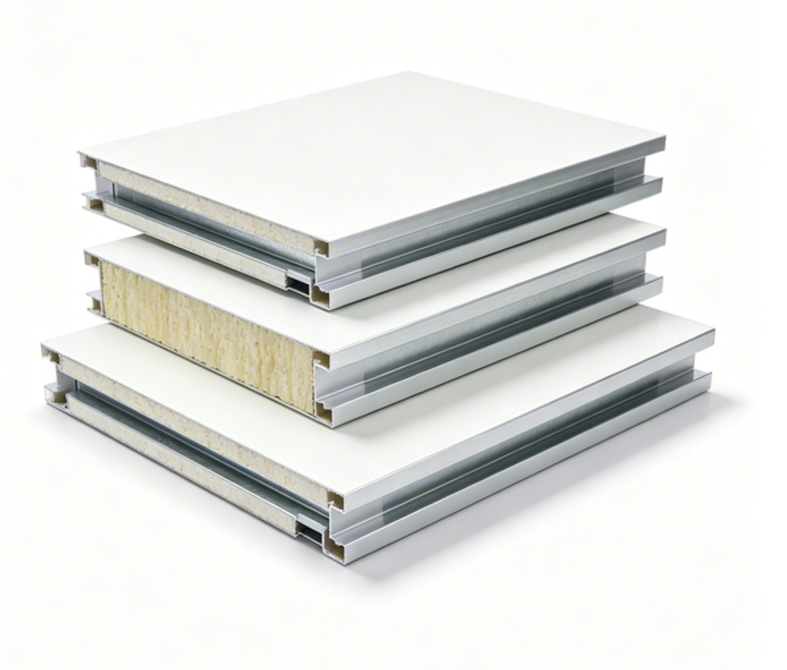
Internal reinforcement helps maintain shape without adding unnecessary weight. This allows both doors and windows to remain stable under continuous use.
A simplified structure overview:
| Component | Stability role |
|---|---|
| Frame system | Maintains alignment |
| Connection points | Handles repeated stress |
| Internal support | Reduces deformation |
| Surface layer | Protects against wear |
Stability is measured over time, not at installation.
How Do Clean Room Doors and Windows Support Smooth Operation?
Operation quality affects how often systems are used and how stable the environment remains. Smooth movement reduces disturbance and improves usability.
For doors, motion must be controlled and predictable. Sudden movement can affect air balance. For windows, operation is usually fixed, but stability during cleaning and inspection is important.
The design avoids unnecessary resistance. Movement should feel steady rather than forced.
Operational characteristics often include:
- Controlled door movement during opening and closing
- Stable hinge behavior under repeated use
- Reduced mechanical resistance
- Balanced structure to prevent misalignment
Smooth operation supports both environmental control and daily usability.
Cleaning is a continuous process in controlled environments. Both doors and windows must support frequent maintenance without structural degradation.
Flat surfaces are easier to clean than complex shapes. When edges are minimized, dust has fewer places to accumulate.
Cleaning design is not only about speed. It is about repeatability. The same process should produce consistent results each time.
Important cleaning considerations include:
- Smooth transitions between components
- Reduced joints and sharp corners
- Stable response to cleaning materials
- Clear visibility for inspection
Windows must also remain transparent over time, while doors must maintain surface integrity under repeated wiping.
How Do Doors and Windows Work Together in Controlled Environments?
Doors and windows are often discussed separately, but in practice they function as a connected system.
Doors manage physical access. Windows support observation. Together, they help maintain environmental control without increasing disturbance.
Their relationship is based on balance. Too many openings can reduce stability. Too few can limit usability. The design process aims to find a middle point where function and control coexist.
In shared environments, their coordination supports:
- Reduced need for unnecessary access
- Improved monitoring without disruption
- Stable separation between zones
- Consistent environmental behavior across spaces
Each element supports the other rather than working independently.
How Are Design Choices Adapted to Different Controlled Spaces?
Not all controlled environments require the same level of separation. Some spaces prioritize frequent access, while others focus more on strict stability.
Design adjustments are made through material selection, sealing behavior, and structural layout rather than changing the core concept.
For example, environments with frequent movement may prioritize smoother operation. Spaces with higher sensitivity may focus more on sealing and surface stability.
Despite these differences, the underlying structure remains consistent. The goal is always controlled separation with minimal disturbance.
Adaptation factors often include:
- Frequency of access between spaces
- Level of environmental sensitivity
- Need for visual monitoring
- Cleaning intensity and routine cycles
- Stability requirements over time
These factors shape how doors and windows are configured within the same design framework.
Clean room doors and windows share a common design philosophy. They focus on controlled separation, stable surfaces, and predictable behavior. Each detail works quietly within a larger system, supporting environments where consistency matters more than appearance.