English
 русский
 Español
Clean room partitions are essential components in controlled environments such as laboratories, pharmaceutical plants, electronics manufacturing, and medical facilities. They divide space, maintain hygiene, and help regulate airflow, dust, and contamination. Installing partitions correctly is crucial to ensure that the clean room functions as designed. Improper installation can compromise cleanliness, airflow, and overall efficiency.
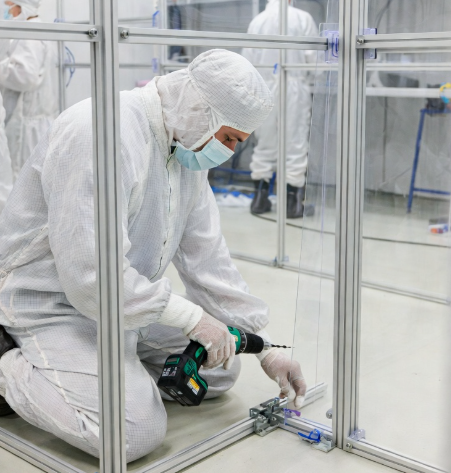
Understanding the installation steps and precautions helps facility managers, construction teams, and maintenance staff create a reliable, durable clean room environment. The following discussion outlines practical guidance in a clear and accessible manner, without relying on overly technical language.
Content
- 1 What Preparations Are Needed Before Installation?
- 2 How Are Floor and Ceiling Tracks Installed?
- 3 How Are Panels Installed in the Tracks?
- 4 How Are Doors and Windows Integrated?
- 5 How Are Seals and Joint Connections Maintained?
- 6 What Safety Precautions Should Be Followed During Installation?
- 7 How Is Quality and Alignment Verified After Installation?
- 8 How Should Maintenance and Follow-Up Be Planned?
What Preparations Are Needed Before Installation?
Thorough preparation before beginning any installation is critical. It sets the stage for smooth progress, precise positioning, and prevents costly fixes or schedule setbacks later.
Make sure to complete these essential pre-installation steps:
- Study the architectural drawings, specifications, and layout plans in detail so you clearly understand the partition layout, door and window positions, and all connection details.
- Perform accurate on-site measurements of the space. Record floor-to-ceiling heights at several points, wall-to-wall dimensions, any floor or ceiling irregularities, and required clearances around HVAC ducts, lighting fixtures, or other obstructions.
- Unpack every delivery immediately and inspect all components. Examine each panel for transit damage, surface flaws, or warping, and verify that all fasteners, trim, seals, gaskets, hardware, and accessories are present and match the order exactly.
- Assemble and stage your tools, equipment, and safety supplies in advance. This includes lifting aids (panel lifters, suction cups, or hoists for heavier units), levels, lasers, measuring tapes, any cutting tools you might need, full PPE (gloves, safety glasses, hard hats), and scaffolding or access platforms.
Keep communication strong and continuous among the design team, general contractor, subcontractors, and installation crew. Everyone needs to stay aligned on important interfaces—such as how the partitions connect to HVAC supply and return paths, pressure differentials, filtration needs, and cleanroom classification requirements—so the completed work performs as intended and satisfies all regulatory standards without last-minute problems.
How Are Floor and Ceiling Tracks Installed?
Floor and ceiling tracks provide the framework that holds partitions in place. Proper alignment ensures stability and maintains clean room integrity.
- Mark track positions carefully according to design drawings.
- Secure tracks with anchors suitable for the floor or ceiling material.
- Verify that tracks are level and aligned vertically.
- Double-check spacing to accommodate panel thickness and door openings.
Accurate track installation prevents gaps and misalignments, which can otherwise allow airflow leakage or dust accumulation.
Common Track Installation Considerations
| Step | Key Point |
|---|---|
| Marking | Use precise measurements to locate tracks |
| Anchoring | Select suitable anchors for surface material |
| Alignment | Ensure floor and ceiling tracks are level |
| Spacing | Allow for panel thickness and doors |
How Are Panels Installed in the Tracks?
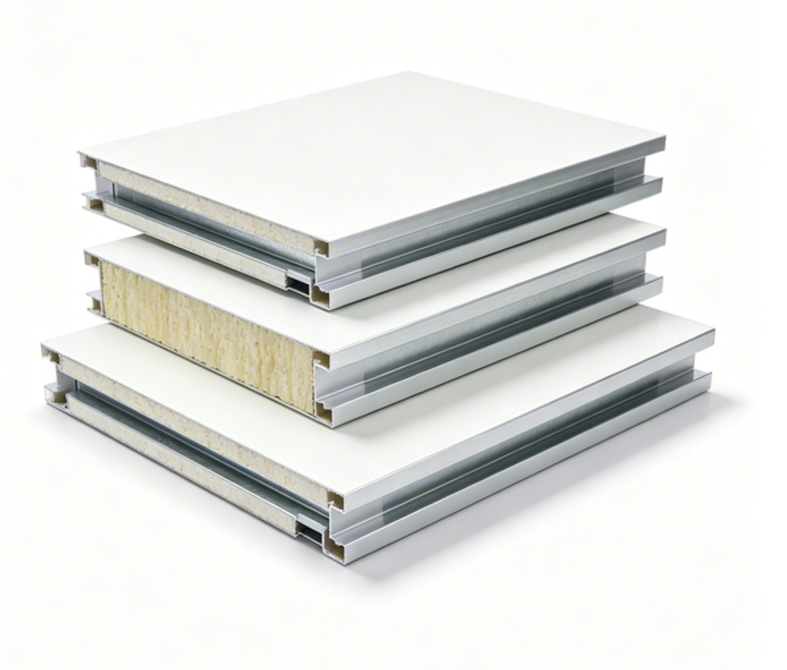
Panel installation in the tracks is the main part of putting up the partitions. Each panel must sit firmly in place while staying perfectly aligned and keeping all surfaces smooth and flush.
Follow these key steps for placing panels in the tracks:
- Lift each panel carefully to prevent any damage to the edges or surface coatings.
- Insert the panels into the floor and ceiling tracks, beginning at the corners and working outward.
- Check and maintain true vertical alignment as you set every panel.
- Apply sealing strips or gaskets exactly where required to form airtight joints.
Paying close attention to every detail during this stage ensures the partitions deliver reliable separation and proper contamination control.
How Are Doors and Windows Integrated?
Doors and windows are integrated into the partitions to provide access, visibility, and efficient workflow. Installing these components correctly ensures full functionality while preserving the required cleanliness standards.
Follow these key steps when installing doors and windows:
- Align door frames exactly with the panels to close off any gaps.
- Verify that hinges and locks function smoothly and engage securely.
- Confirm that windows are completely sealed and sit flush with the partition surfaces.
- Test every door and window for smooth, reliable operation once installed.
Sealing and alignment are especially critical at doors and windows, as these are the areas prone to airflow leaks and potential contamination.
How Are Seals and Joint Connections Maintained?
Seals and joint connections are vital for preserving the airtight integrity and hygienic performance of the partitions. Proper care in these areas stops contamination from breaching the controlled environment.
Follow these essential steps to maintain seals and joint connections:
- Carefully examine every gasket and silicone seal prior to installation to confirm they are free of defects.
- Apply sealant in a consistent, uniform layer along all joints so no gaps remain.
- Make sure the sealing is continuous and uninterrupted where panels meet doors, windows, and each other.
- Perform regular inspections after installation to verify that seals stay complete, secure, and free from damage.
Effective sealing techniques greatly reduce the entry of dust particles and microorganisms, ensuring the cleanroom continues to meet its specified cleanliness and performance standards.
What Safety Precautions Should Be Followed During Installation?
Safety precautions during installation protect installers from injury while also safeguarding the cleanroom partitions and components from damage or contamination.
Follow these essential safety measures throughout the installation process:
- Wear appropriate gloves and protective clothing at all times to avoid contaminating surfaces and to protect hands and skin from cuts, abrasions, or chemical exposure.
- Handle panels, glass inserts, and other fragile components with extra care to prevent scratches, cracks, breakage, or surface damage.
- Use correct lifting techniques and team assistance (or mechanical aids) when moving heavy, large, or tall panels to reduce the risk of strain or dropping.
- Maintain a clean, organized work area by removing debris, tools, and unused materials promptly to eliminate tripping hazards and prevent particles from settling on partition surfaces.
Strictly following these safety practices helps ensure a safe working environment, prevents accidents, and keeps the partitions in condition for meeting cleanroom performance requirements.
How Is Quality and Alignment Verified After Installation?
Once the partitions are installed, a thorough quality and alignment verification process confirms everything is correctly assembled, structurally accurate, and capable of delivering the designed performance, airtightness, and cleanliness standards. These final inspections spot any remaining issues early, allowing immediate corrections before cleanroom certification or use begins.
Complete these critical post-installation verification steps:
- Confirm true vertical plumb and consistent horizontal level on every panel, making sure all panels are straight, square, evenly spaced, and perfectly aligned with adjacent panels and surrounding building elements.
- Inspect joint gaps across the full partition system and verify that seals and gaskets are uniformly compressed, fully seated without distortion, completely continuous, and free from any tears, gaps, or irregularities.
- Fully test the operation of every door and window multiple times to ensure effortless, silent opening and closing, positive and secure latching, complete closure with no play or gaps, and zero air leakage detectable at frames, sills, or thresholds.
- Validate seamless integration with the HVAC and environmental control systems by confirming clear, unobstructed supply and return air paths, correct pressure differential maintenance as specified, proper connection to filtration and directional airflow components, and no evidence of bypass leakage, short-circuiting, or unintended air movement around the partition perimeter.
These detailed quality-assurance checks enable early identification and prompt correction of any alignment errors, sealing deficiencies, or system-interface problems, ensuring the cleanroom achieves full compliance with performance specifications, cleanliness classifications, and all applicable regulatory standards right from initial startup.
How Should Maintenance and Follow-Up Be Planned?
Effective long-term performance of the partitions depends on careful planning for maintenance and regular follow-up once installation is complete. This approach preserves airtightness, structural strength, visual quality, and contamination control throughout the cleanroom's service life.
Adopt these core practices to support reliable ongoing care:
- Set up and stick to a customized cleaning schedule that matches the cleanroom's classification and specific operational demands.
- Carry out scheduled inspections of every seal, gasket, joint, and connection point, checking closely for wear, cracks, loss of compression, loosening, or any other damage.
- Correct even small defects immediately—such as minor seal flaws, loose trim, or surface scratches—to stop them from turning into larger issues that could compromise performance or cleanliness.
- Maintain a complete, dated record of all inspections, cleaning sessions, repairs, and maintenance work, noting observations, actions taken, and the people involved.
Regular follow-up combined with proactive maintenance keeps the partitions aligned with their original design requirements, supports regulatory compliance, and delivers dependable separation and contamination control for the full duration of the cleanroom.
Proper installation of clean room partitions combines planning, precision, and attention to detail. From initial preparation to post-installation maintenance, every step contributes to the effectiveness of the clean room environment. Correct installation ensures partitions maintain cleanliness, airflow control, and structural integrity, supporting the overall operational efficiency of the facility.