English
 русский
 Español
Content
- 1 What Does "Class 1000" Actually Mean?
- 2 Where a Class 1000 / ISO 6 Cleanroom Is the Right Choice
- 3 Design Parameters That Separate a Working ISO 6 Room from a Pretty Room
- 4 Building or Retrofitting a Class 1000 Room: Steps and Pitfalls
- 5 Cost Expectations and Procurement Mistakes
- 6 The Bottom Line for a Class 1000 / ISO 6 Cleanroom
What Does "Class 1000" Actually Mean?
A class 1000 cleanroom is a precisely defined environment, not a marketing label. Under the old US FED STD 209E scale, a class 1000 room allows no more than 1,000 airborne particles of 0.5 microns or larger per cubic foot of air. Under the current ISO 14644-1 system, that same room is classified as ISO 6, with a maximum of 35,200 particles per cubic meter at 0.5 microns.
That number defines almost everything downstream: how much HEPA filtration you need, how many air changes per hour the system must deliver, how tightly the envelope must be sealed, and how strict the gowning and material transfer procedures should be. In short, class 1000 is a performance target that the whole cleanroom system must meet at rest and in operation.
Federal Standard 209E and ISO 6 Equivalence
If you are reviewing older drawings or specifications, you may see "class 1000" written without an ISO reference. The safe conversion is to treat class 1000 as ISO 6. A common mistake is to assume that class 1000 is between class 100 and class 10000 and therefore close to ISO 7; in fact, ISO 6 is one full step cleaner than ISO 7, and it requires a more demanding air change rate and filtration design.
| Particle size | Maximum particles per cubic meter | Approx. per cubic foot |
|---|---|---|
| 0.5 microns or larger | 35,200 | 1,000 |
| 1.0 microns or larger | 8,320 | 236 |
| 5.0 microns or larger | 293 | 8 |
Class 1000 vs. Class 10000 and ISO 7
A class 10000 room, or ISO 7, permits ten times more particles per cubic foot at the same size threshold. In practice, an ISO 6 room is used when the product is sensitive enough that even a small number of 0.5-micron particles can cause a defect or compliance issue. Moving from ISO 7 to ISO 6 usually means more air handling capacity, more HEPA filters, and more attention to pressure cascades and door sealing.
Where a Class 1000 / ISO 6 Cleanroom Is the Right Choice
Class 1000 is not the right classification for every product. It is typically specified for precision electronics, photonics, some medical device assembly steps, pharmaceutical secondary packaging, and certain cosmetic or food lines where purity retention matters. The common thread is a product that can tolerate some particles but cannot tolerate the particle load of a normal factory or laboratory.
Precision Electronics and Optics
In electronics back-end processes, optical components, and sensor production, a 0.5-micron particle can land on a wafer, contact, or lens surface and cause electrical failure or optical distortion. An ISO 6 room creates a protected zone around these steps without requiring the cost and complexity of a full Class 100 / ISO 5 laminar flow cleanroom. For this reason, many electronics lines use ISO 6 for the process area and ISO 7 or 8 for the surrounding space. You can review typical layouts and partition choices in our cleanroom design guidance for the electronics industry.
Pharmaceutical and Biopharma Support Areas
Primary aseptic filling usually requires a Class 100 / ISO 5 environment, but much of the work around it runs at ISO 6. This includes secondary packaging, buffer preparation, component staging, and certain filling lines where the product has been terminally sterilized. In pharmaceuticals, the class 1000 room must also comply with GMP expectations for documentation, cleaning, and material flow. Our biopharmaceutical cleanroom solutions cover the typical layout and component strategy for these zones.
Design Parameters That Separate a Working ISO 6 Room from a Pretty Room
The number of particles in the room is the result of the whole system, not a single filter or door. To hit the class 1000 limit, you need to coordinate air changes, pressurization, envelope sealing, personnel discipline, and material transfer.
Air Changes, Filtration, and Pressure
An ISO 6 room typically requires a high air change rate to dilute and remove particles generated inside the room. Depending on the process heat load and layout, you will often see designed air change rates of 50 to 80 per hour, with HEPA filters mounted in the ceiling and low-wall or ceiling returns that maintain uniform airflow. At this air change rate, the HEPA filters require enough duct pressure and filter area to avoid excessive noise and energy use; for a small room, a ceiling fan-filter unit may be enough, while larger rooms need a central AHU with terminal HEPA filters. The room should also be kept at a positive pressure relative to less clean adjacent spaces, usually around 10 to 15 pascals, to prevent untreated air from entering.
Envelope and Door Sealing
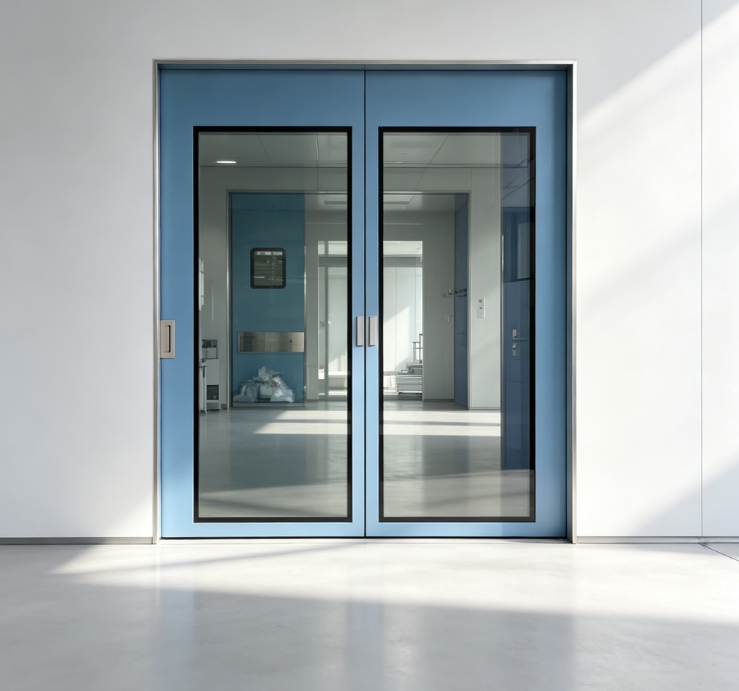
The weakest points in any cleanroom are the places where people and materials pass through. A standard commercial door leaks contaminated air through the gaps between the leaf and frame. For ISO 6, you need a flush machine-made steel cleanroom door with continuous gaskets, an automatic bottom seal, and smooth surfaces that are easy to wipe down. This type of door is a common specification for ISO 6 and ISO 7 rooms, and the hinge, lock, and seal performance should be verified on-site with a smoke test or particle test before acceptance.
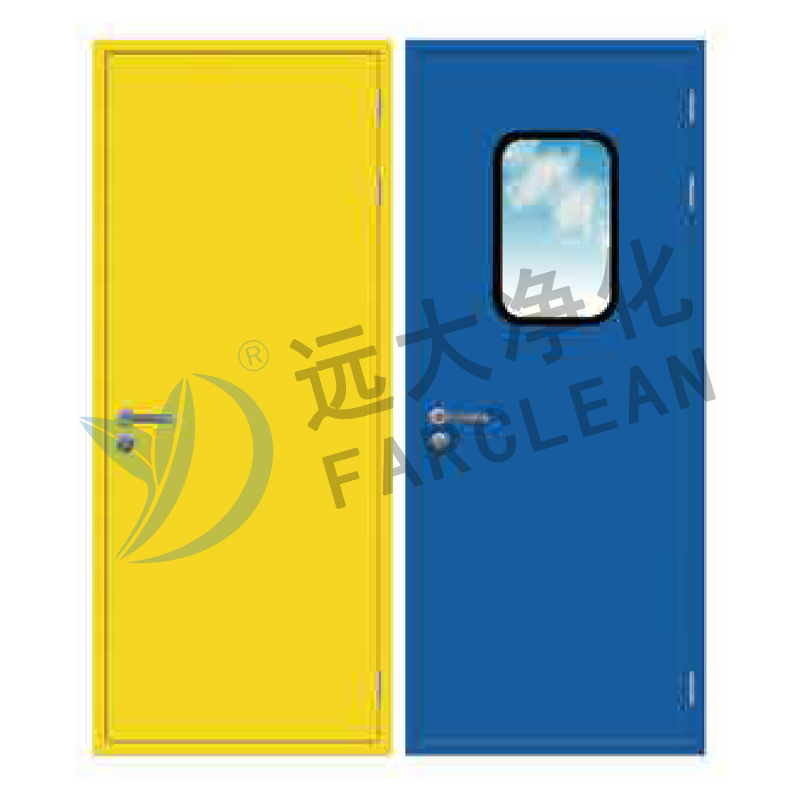 Machine-Made Steel Clean Room Door-FarcleanMachine-Made Steel Clean Room Door-FarcleanView Product →
Personnel and Material Flow
People release millions of particles from skin, clothing, and movements, even when they are gowned. An air shower at the entry to the ISO 6 zone removes loosely attached particles from garments before the staff member walks into the room. A stainless steel personnel air shower with interlocked doors is a practical first barrier for a class 1000 line. If your budget or space is limited, well-designed gowning and airlock rooms can serve a similar role, but for most pharma and electronics projects, the air shower is the safer choice.
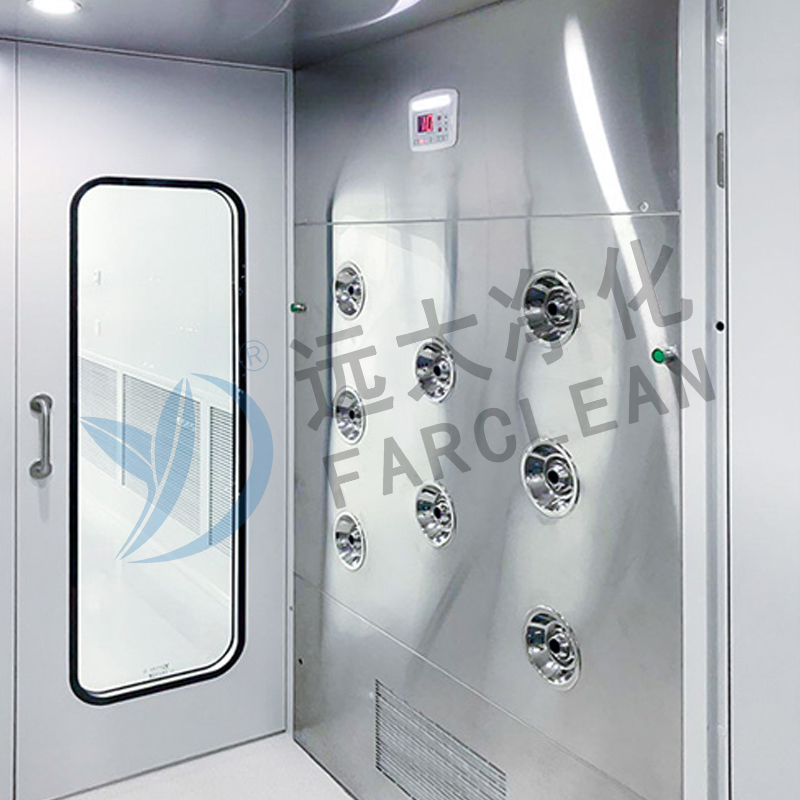 All Stainless-Steel Air Shower Room-FarcleanAll Stainless-Steel Air Shower RoomView Product →
Materials also carry particles in. A pass-through box with interlocked doors prevents the pressure cascade from collapsing and allows you to wipe down or purge the item before it enters the cleanroom. A self-cleaning pass-through box with HEPA or UV treatment adds another layer of control where cleanliness of the product or packaging is important.
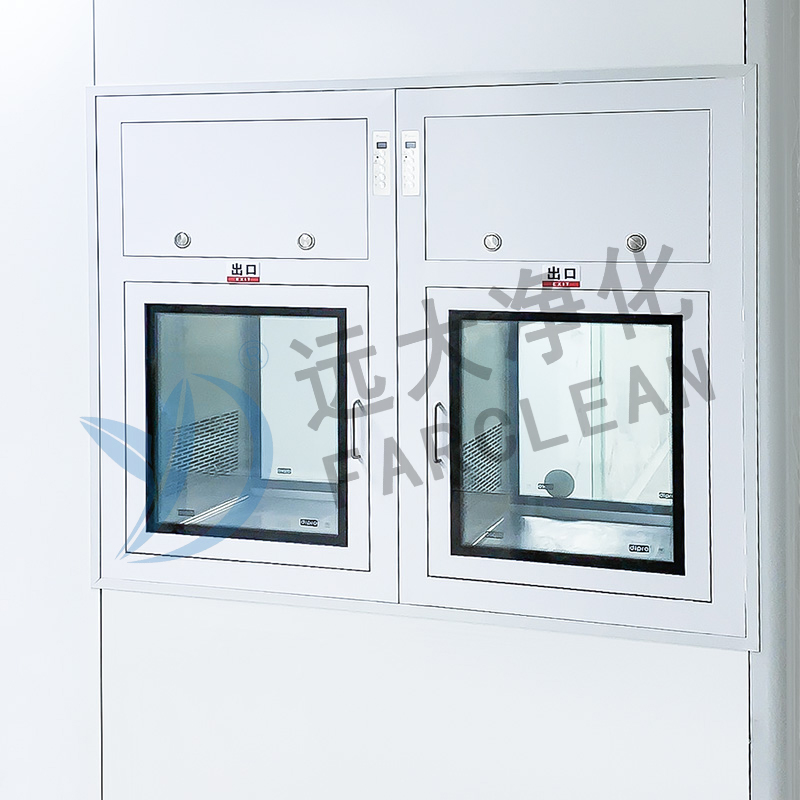 Self-cleaning Pass-through Boxes | Farclean Supplier, ManufacturerFarclean supplies self-cleaning pass-through boxes for pharmaceutical, laboratory, and electronics cleanrooms, improving hygiene, efficie...View Product →
Building or Retrofitting a Class 1000 Room: Steps and Pitfalls
Whether you are building a new cleanroom or upgrading an existing industrial space, the process should follow a logical sequence: define the process flow, set the classification target, choose the envelope and equipment, then verify the finished room.
Planning and Layout
Start with the actual process, not with a target number. Draw the paths for people, materials, finished goods, and waste. Place the most sensitive operation in the cleanest zone, with a controlled corridor and airlocks around it. A common mistake is designing a beautiful ISO 6 room but placing the material entry door next to a forklift path, which makes the whole classification hard to defend during validation.
Installation and Validation
Once you have selected the wall panels, doors, windows, and air handlers, the quality of installation determines whether the room performs to ISO 6. Every panel joint, ceiling penetration, and door seal should be checked for leaks. After installation, you need to measure particle counts, pressure differentials, airflow velocity, and recovery time in both at-rest and operational states. This step is covered in detail in our GMP modular cleanroom installation and validation guide.
Working With an Experienced Supplier
A manufacturer that produces doors, windows, panels, air showers, and pass-through boxes under one roof can simplify procurement and avoid compatibility issues between components. Since 2002, our Suzhou factory has supplied cleanroom components and turnkey installation for pharmaceutical, electronics, food, and academic projects. That experience matters when you need a coherent design, consistent sealing, and a validation result that holds up in an audit.
Cost Expectations and Procurement Mistakes
The cost of an ISO 6 cleanroom is not only the visible hardware. Air handling units, ductwork, controls, and validation are usually the largest line items, and they scale with the air change rate. A class 1000 room will cost more to build and operate than an ISO 7 room because it moves more air and needs more filters.
Where Costs Hide
Be prepared for hidden costs in air balancing, testing, and certification. If the room is retrofitted inside an existing building, the floor flatness, ceiling height, and HVAC space can limit your design. A modular approach that uses prefabricated panels and components can reduce installation time and avoid expensive custom fabrication at the job site. Operating cost also includes filter replacement, energy for the air handling system, and ongoing particle monitoring.
Specifications That Matter
When you compare quotations, check the material thickness, surface finish, gasket material, and hardware quality, not just the total price. A lower-priced door may have the same external appearance but fail a seal test or particle count. Ask for reference installations where the same door or pass-through box has been used in an ISO 6 room; site photos and test reports are useful evidence of actual performance. Also confirm that the supplier can document the complete envelope's performance and provide a clear installation drawing, because a cleanroom classification is a system result, not a component certificate.
The Bottom Line for a Class 1000 / ISO 6 Cleanroom
A class 1000 cleanroom is a well-defined ISO 6 controlled environment with clearly specified particle limits. Getting it right requires coordination between air changes, filtration, pressurization, envelope sealing, personnel procedures, and material transfer. The good news is that these variables are predictable and testable. With the right layout and quality components, an ISO 6 room can deliver stable particle control for years.
If you are evaluating a cleanroom project, start by writing down the classification target, the process flow, and the acceptance criteria. Then compare suppliers on their ability to supply and support the complete system, not just one product category. That approach will save you from the most expensive mistake of all: building a room that looks clean but cannot pass the particle test.