English
 русский
 Español
In the world of making medicines, keeping spaces free from dust and germs is key. Cleanrooms help achieve that by creating areas where air stays pure and work happens without outside interference. For those in the pharmaceutical field, picking the right setup can make a big difference in how smoothly operations run. This piece looks at various cleanroom choices suited to drug manufacturing, weighing what each brings to the table. Think of it as a guide through the decisions teams face when setting up or updating their facilities.
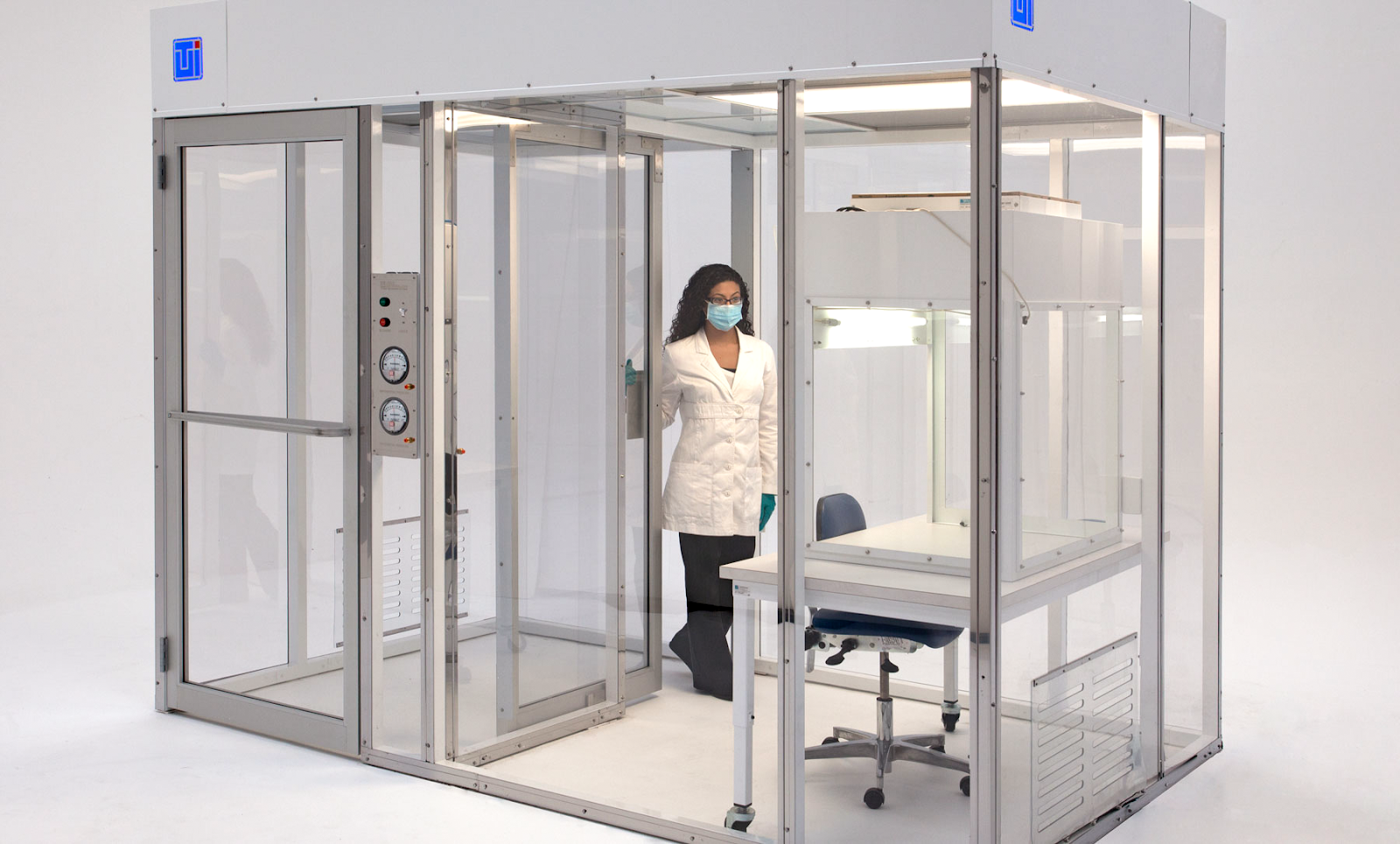
Drug production demands environments that limit particles in the air. Workers mix compounds, fill vials, and package products here. Any stray speck could spoil a batch or harm patients. So, cleanrooms act as shields, controlling airflow and access. But not all cleanrooms are the same. Some fit small labs, others handle large-scale output. The choice depends on scale, budget, and daily needs.
Consider a team starting a new line for tablets. They need space that expands easily if demand grows. Or picture a group working on injectables, where even tiny risks matter more. Each scenario calls for a tailored approach. Let's dive into the main types, seeing how they align with pharmaceutical tasks.
Content
- 1 The Core Question: What Defines a Suitable Solution?
- 2 What are the advantages and disadvantages of modular cleanroom systems?
- 3 Why Traditional Constructed Cleanrooms Still Hold Strong Ground?
- 4 Comparison of solutions for different scenarios
- 5 How to maintain and plan for the long-term use of a cleanroom?
- 6 Which Clean Room Solution Is Suited?
The Core Question: What Defines a Suitable Solution?
Industry discussions often revolve around the characteristics that make a clean room solution suitable for pharmaceutical work. Suitability is not tied to a single feature. It emerges from the interaction of space layout, airflow design, wall and window systems, material flow patterns, and the ease of managing human activity inside restricted zones.
A suitable clean room solution supports:
- Consistent environmental control
- Clear separation between clean and so-called dirty routes
- Smooth transitions between zones
- Straightforward maintenance routines
- Predictable operating costs
- Compatibility with disinfection and daily sanitation
- Efficient inspection and monitoring
These expectations apply across pharmaceutical sectors, including small-scale research rooms and large production suites.
To help facility planners compare their choices, the following table outlines the general considerations that appear frequently in industry conversations.
Common Factors Considered When Choosing Clean Room Solutions
|
Aspect of Consideration |
Influence on Pharmaceutical Work |
|---|---|
| Space layout flexibility | Supports future process adjustments |
| Airflow configuration | Shapes particle movement and environmental stability |
| Internal surface structure | Affects cleaning routines and contamination control |
| Observation visibility | Helps with supervision and workflow awareness |
| Zone segmentation | Organizes material and personnel flow |
| Upgrade potential | Allows gradual improvements over time |
| Installation approach | Impacts project schedule and disruption |
What are the advantages and disadvantages of modular cleanroom systems?
One aspect is flexibility. If a company shifts from pills to liquids, they can rearrange sections. Walls move, doors add, without tearing everything down. This suits firms that test new formulas often. Air systems integrate right into the panels, keeping the flow steady across the room.
Materials play a role too. Panels resist wipes and sprays used daily. No cracks form over time, so germs find no home. For pharma, where checks happen regularly, this ease keeps things running.
Cost enters the picture. Initial outlay might seem high, but savings come from quick install and less downtime. Teams avoid long waits for builders. Plus, these systems scale. Start small, add on as needed.
In practice, a modular room might house blending machines. Operators enter through airlocks, change gear, and work. The setup holds pressure differences, pushing clean air in and dirty out. This guards sensitive steps like sterile filling.
Drawbacks exist. If the site has odd shapes, fitting pieces takes planning. But for standard floors, it works fine.
Why Traditional Constructed Cleanrooms Still Hold Strong Ground?
Even with all the buzz around modular and flexible designs, the classic, site-built cleanroom refuses to fade away, especially in pharmaceutical plants that have been running for decades. There is something reassuring about pouring concrete, welding stainless steel panels into place, and knowing the room will stay exactly where it was built for the next thirty years.
Walk into an older injectable-drug facility and you'll often see it: thick, immovable walls faced with seamless epoxy or welded steel, ceilings that look like they were carved from a single block, floors that slope gently to hidden drains. Nothing flexes, nothing rattles. The whole space feels planted, permanent, almost defiant against change.
The quiet is noticeable too. Solid construction absorbs sound and vibration far better than lightweight panels or curtains. When you're running high-speed filling lines or lyophilizers that hum around the clock, that steadiness keeps the environment calm and predictable. Sensitive weighing stations and analytical balances stay happier when the floor doesn't flinch every time a forklift rolls past in the warehouse next door.
Because everything is built in place, architects and engineers enjoy almost unlimited freedom with the shape. They can follow the curve of an existing column, wrap the cleanroom around legacy equipment that can't be moved, or create odd angles to match the footprint of a 1970s building that was never meant to house an aseptic suite. In renovation projects, this ability to weave the new controlled space into the old structure often saves months of demolition and rebuilding.
Seams and joints tend to be fewer and tighter. Welded stainless walls, coved corners, and poured epoxy floors leave almost nowhere for particles or moisture to hide. Once the room is validated, it tends to stay in control with minimal drift. Many validation teams quietly admit that a well-built traditional cleanroom often needs less frequent re-qualification than lighter systems that expand and contract with temperature cycles.
The structure itself becomes part of the air-handling strategy. Thick insulated walls slow heat transfer, so the HVAC system doesn't fight outdoor swings as hard. That can translate into surprisingly stable temperature and humidity, even during power blips or seasonal extremes.
The trade-off is time and flexibility. Pouring, curing, welding, grinding, and polishing take weeks or months that a modular room finishes in days. Once the concrete sets, moving a wall means jackhammers and dust-control tents. Yet for plants that know their process will stay largely the same for the next decade or two, that long build cycle is simply the price of certainty.
Comparison of solutions for different scenarios
Scenario-Based Comparison of Clean Room Solutions
| Scenario | Considerations | Potential Fit |
|---|---|---|
| Frequent product shifts | Reconfigurable layouts, short downtimes | Modular or hybrid |
| Long-term stability required | Solid structure, consistent environment | Traditional construction |
| Facility expansion planned | Component adjustability, phased building | Modular or hybrid |
| Renovation of older buildings | Custom geometry, smooth integration | Traditional construction |
| Need for enhanced visibility | Observation lines, clean window systems | Modular or hybrid |
| Limited shutdown allowance | Predictable installation | Modular |
| Focus on permanent infrastructure | Structural solidity | Traditional |
How to maintain and plan for the long-term use of a cleanroom?
Maintaining a cleanroom involves daily routines and periodic checks to keep contamination low. Start with a clear schedule.
- Daily cleaning . Wipe down surfaces with approved disinfectants. Use lint-free cloths to avoid shedding fibers.
- Monitor air quality regularly. Use particle counters to track levels. Log readings in a dedicated system. If counts rise, investigate sources like faulty seals or worn filters.
- Change filters on time. HEPA and ULPA filters trap particles but clog over months. Replace them every 6 to 12 months, depending on usage. Test airflow after swaps to confirm even distribution.
- Calibrate equipment yearly. This includes pressure gauges, humidity sensors, and temperature controls. Hire certified technicians for accuracy. Keep records for audits.
For long-term planning, think ahead five to ten years. Assess current setup against future needs. If production scales, ensure space allows expansions like added modules.
- Budget for upgrades. Set aside funds for tech like automated monitoring or UV sanitizers. Factor in rising energy costs for HVAC systems.
- Stay compliant with standards. Review ISO or GMP guidelines annually. Adjust as rules evolve, such as tighter particle limits.
- Inspect structure routinely. Check walls for cracks, seals for wear. Repair small issues early to avoid big shutdowns.
- Document everything. Use digital logs for trends. Spot patterns, like seasonal humidity spikes, and adapt.
| Maintenance Task | Frequency | Responsible Party |
|---|---|---|
| Surface wiping | Daily | Operators |
| Particle monitoring | Weekly | Quality team |
| Filter replacement | 6-12 months | Maintenance crew |
| Equipment calibration | Yearly | External experts |
| Staff training refresh | Quarterly | HR or supervisors |
Which Clean Room Solution Is Suited?
The industry rarely settles on one answer. The suitability of a clean room solution depends on a facility's goals, product types, renovation opportunities, and growth plans.
Some pharmaceutical organizations operate in highly specialized niches and value permanent clean room structures. Others manage dynamic portfolios and prioritize adaptability. Many seek the middle ground: a hybrid structure that offers both solidity and flexibility.
A trend is emerging in which decision-makers begin with modular components and gradually integrate permanent elements as the production line stabilizes. Others prefer starting with a fixed structure and adding modular sections for temporary projects.
What stands out in every discussion is the emphasis on alignment. The clean room must align with the organization's operational rhythm, employee workflows, and long-term ambitions.