English
 русский
 Español
When people design clean rooms, every single element matters a great deal. This includes everything from the air filtration systems right down to the walls and the partitions that divide the space. People often choose materials for these partitions very carefully because those choices affect how clean the area stays, how well it functions day to day, and how the entire environment performs over time. Clean rooms serve as special controlled spaces in fields such as pharmaceuticals, biotechnology, electronics production, and food processing. In these places, keeping contamination under strict control remains essential. The partitions help maintain that control by creating barriers that limit particle movement and support the required airflow patterns.
Content
- 1 What Key Factors Should People Consider When Selecting Materials for Clean Room Partitions?
- 2 Which Materials Do People Most Commonly Use for Clean Room Partitions?
- 3 Are There Other Options Like FRP or Composites?
- 4 How Do Industry Needs Influence Material Choices?
- 5 Why choose YD-Purification's Clean Room Partition?
What Key Factors Should People Consider When Selecting Materials for Clean Room Partitions?
People need to think about several important aspects before they pick any material. These partitions have to handle specific demands in a clean room setting.
- Contamination Prevention: Materials should not release particles, absorb dust, or allow microbes to grow. Smooth, non-porous surfaces help a lot here.
- Compliance with Standards: Choices must align with rules like ISO 14644 classifications or GMP guidelines for pharmaceuticals.
- Durability: The materials face regular cleaning with strong chemicals, high traffic, and sometimes impacts, so they need to last without breaking down.
- Flexibility: Many facilities change layouts over time, so modular options that people can move or reconfigure easily prove useful.
- Insulation Needs: Some clean rooms require control over temperature, humidity, or noise, which means the partitions should provide thermal or acoustic barriers.
- Ease of Maintenance: Surfaces that wipe down quickly and resist stains save time and effort in the long run.
- Cost and Fire Resistance: Budget plays a role, and certain applications demand fire-rated materials for safety.
| Factor | Why It Matters | Examples of Suitable Materials |
|---|---|---|
| Contamination Prevention | Minimizes particle release and bacterial buildup | Stainless Steel, High-Pressure Laminate, FRP |
| Durability | Resists chemicals, wear, and physical damage | Stainless Steel, Aluminum, Polycarbonate |
| Flexibility | Supports layout changes | Modular Aluminum Systems, Softwall Vinyl |
| Insulation | Maintains environmental controls | Sandwich Panels with Rockwool or PU Core |
| Ease of Cleaning | Allows fast, effective disinfection | Glass, Powder-Coated Steel, Polycarbonate |
Which Materials Do People Most Commonly Use for Clean Room Partitions?
Different materials offer varying levels of performance and suitability for clean room applications. Below is a breakdown of the commonly used materials for partitions:
Are Metal Partitions a Good Choice?
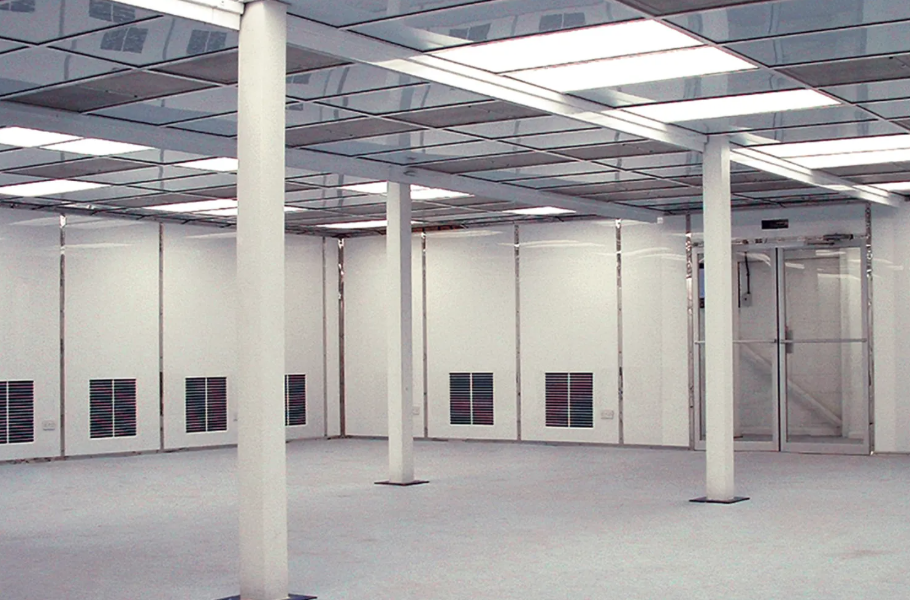
Metals often top the list for partitions. Stainless steel excels with its strong resistance to corrosion, simple cleaning process, and ability to stop bacteria from growing. Pharma and biotech areas frequently use it where hygiene rules stay strict. Aluminum provides a lighter, cheaper option that still fights rust well. Places that reconfigure spaces often choose aluminum because it moves more easily.
Finishes like powder coating or polishing add customization, and these metals work great with frames for doors and windows.
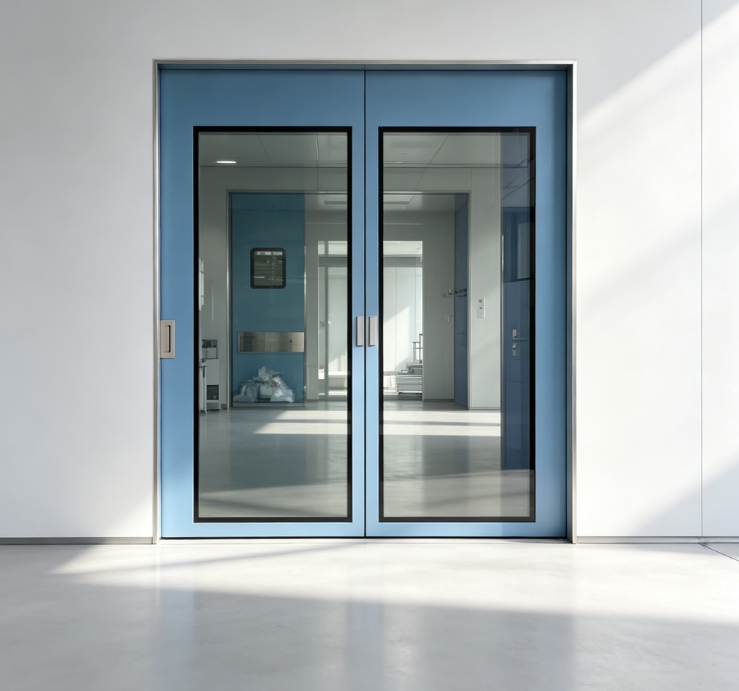
Do Glass Partitions Provide Advantages?
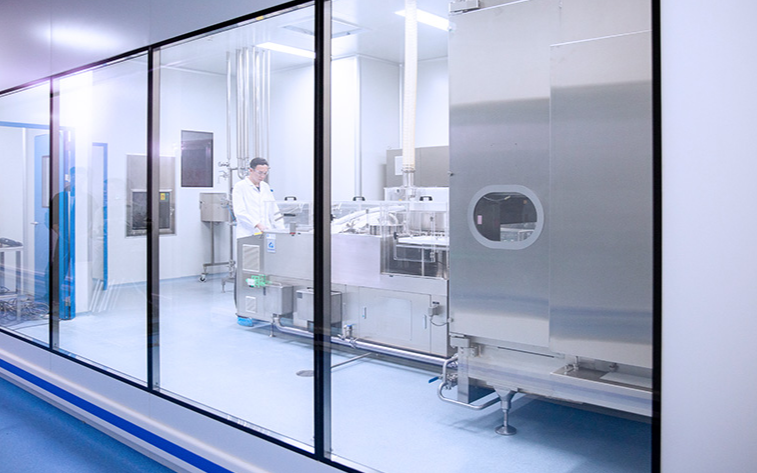
Glass offers clear views that help in many modern setups. It allows oversight of processes and creates an open atmosphere in labs or medical spaces. Tempered or laminated types resist scratches and clean without trapping dirt.
Teams usually add metal frames for support, though. Glass shines where seeing through matters more than blocking sound or heat.
Is Polycarbonate Suitable for Clean Room Applications?
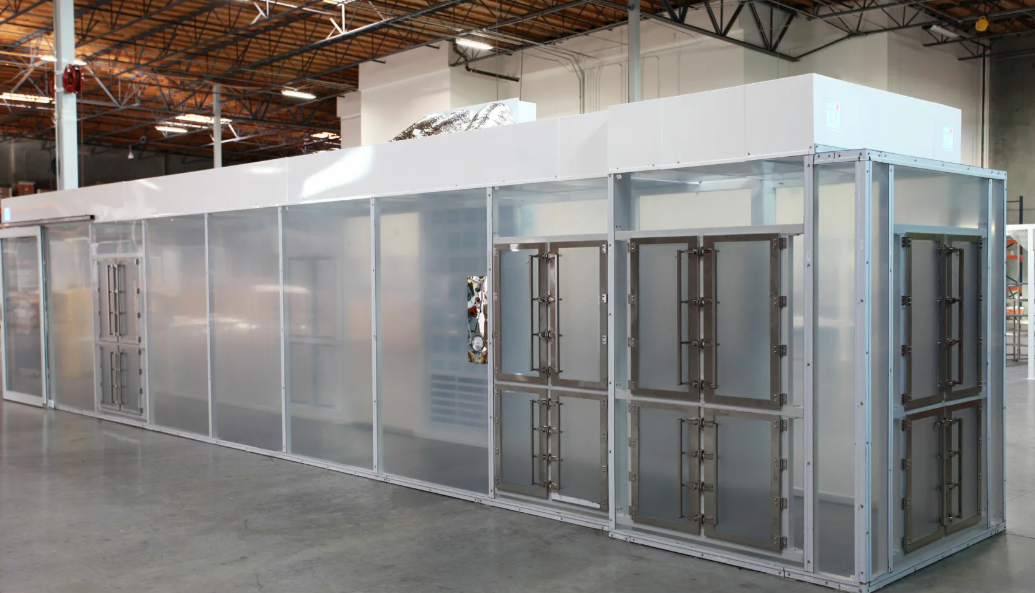
Polycarbonate acts as a strong plastic that provides transparency like glass but resists impacts far better. It stays light, handles scratches and chemicals, and fits areas needing both visibility and toughness. Places with risk of bumps or electronics work often select it for its shatter-resistant qualities.
Static-dissipative versions help in sensitive electronics too.
How Effective Are PVC or Vinyl Options?
PVC panels, including anti-static kinds, offer lower costs and good chemical resistance. They wipe clean fast and come in rigid panels or flexible curtains for temporary walls. Electronics facilities like them for static control.
They might not last as long as metals in heavy-use zones, however.
What Role Do Sandwich Panels Play?
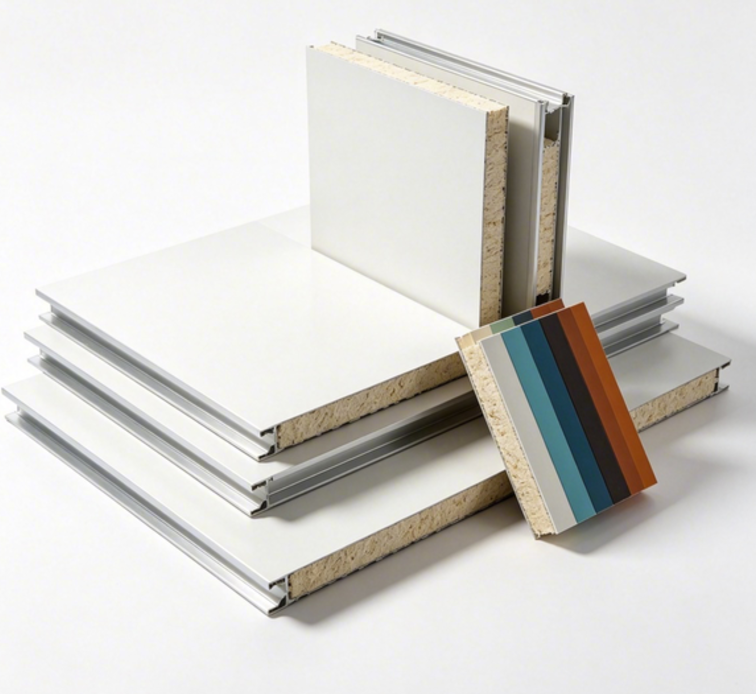
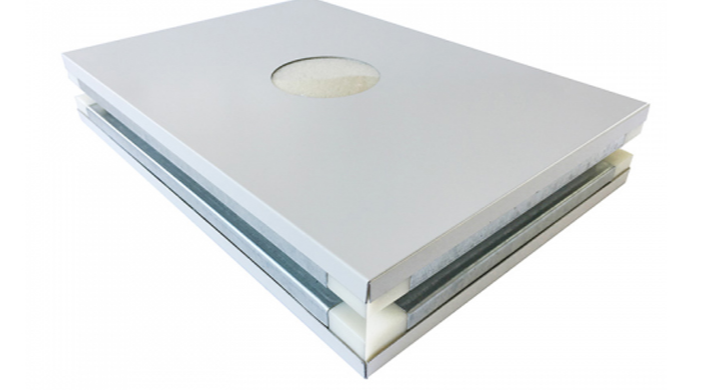
Modular clean rooms commonly feature sandwich panels. These have outer layers of steel, aluminum, or stainless around cores like rockwool, polyurethane, or honeycomb. They deliver strong insulation, fire protection, and structural support while staying relatively light.
Rockwool cores stand out for fire safety, and honeycomb options reduce weight for big areas or ceilings.
Are There Other Options Like FRP or Composites?
Fiberglass-reinforced plastic (FRP) deals well with moisture and tough cleaners, so food processing or wet zones use it often. High-pressure laminate (HPL) on cores gives smooth, customizable finishes.
Vinyl curtains create affordable, temporary softwall barriers for lower cleanliness levels.
| Material Type | Pros | Cons | Best Applications |
|---|---|---|---|
| Stainless Steel | Excellent hygiene, corrosion-resistant, tough | Higher cost, heavier | Pharmaceutical, biotech, sterile areas |
| Aluminum/Powder-Coated | Lightweight, affordable, easy to reconfigure | Less chemical resistance | General industry, changing layouts |
| Glass | Clear visibility, simple cleaning | Limited insulation, needs frames | Labs requiring observation |
| Polycarbonate | High impact resistance, transparent, light | May scratch eventually | Safety-focused visibility zones |
| FRP | Moisture and chemical resistant | Lower strength against impacts | Food processing, wet environments |
| Sandwich Panels | Superior insulation, fire-rated options | Can be thicker | Temperature/humidity controlled spaces |
| PVC/Vinyl | Cost-effective, anti-static available | Less durable long-term | Electronics, temporary divisions |
How Do Industry Needs Influence Material Choices?
Various fields emphasize different features. Pharmaceutical sites often pick stainless steel or HPL for sterilization ease. Electronics lean toward anti-static polycarbonate or aluminum to prevent discharge issues. Food production favors FRP for frequent washdowns.
Humidity levels guide picks—resistant cores avoid problems in damp conditions. Budgets might push toward coated steel instead of stainless, but future expansion plans encourage modular approaches.
Maintenance crews prefer options that survive regular cleaning without damage. Local fire regulations sometimes require non-combustible materials like rockwool-filled panels.
Teams balance all these aspects to select partitions that keep the clean room functioning at its for years. Proper choices support the strict controls these environments need to operate safely and effectively.
Why choose YD-Purification's Clean Room Partition?
Yuanda is a professional manufacturer specializing in cleanroom products such as purification doors, windows, and sandwich panels, with over 20 years of development. We provide a one-stop service from planning, design, and construction to product supply. Choosing YD's cleanroom partition walls offers the following outstanding advantages:
- High Quality and Reliability: The products have a smooth surface, are easy to clean, and have strong sealing properties. They are fire-resistant and corrosion-resistant, meeting strict standards such as GMP and ISO, ensuring the long-term stable operation of the cleanroom.
- Modularity and Flexibility: Supports quick installation, disassembly, and modification, adapting to production changes and reducing construction time and costs.
- Customization Capabilities: Core materials, thickness, color, and size can be customized according to industry needs, perfectly matching different scenarios in pharmaceuticals, electronics, food, and medical industries.
- Comprehensive Solutions: We not only provide partition walls but also offer supporting equipment such as purification doors, windows, air showers, pass-through windows, and FFUs, ensuring system compatibility and overall optimization.
- Rich Experience and Service: With over 20 years of focus on purification engineering, we have our own independent factory and support OEM/ODM, helping customers create high-quality cleanrooms and providing integrated support from consultation to after-sales service.
Choosing Yuanda means choosing a professional, reliable, and efficient cleanroom solution that effectively improves environmental control levels, reduces maintenance costs, and ensures compliance with industry regulations.