English
 русский
 Español
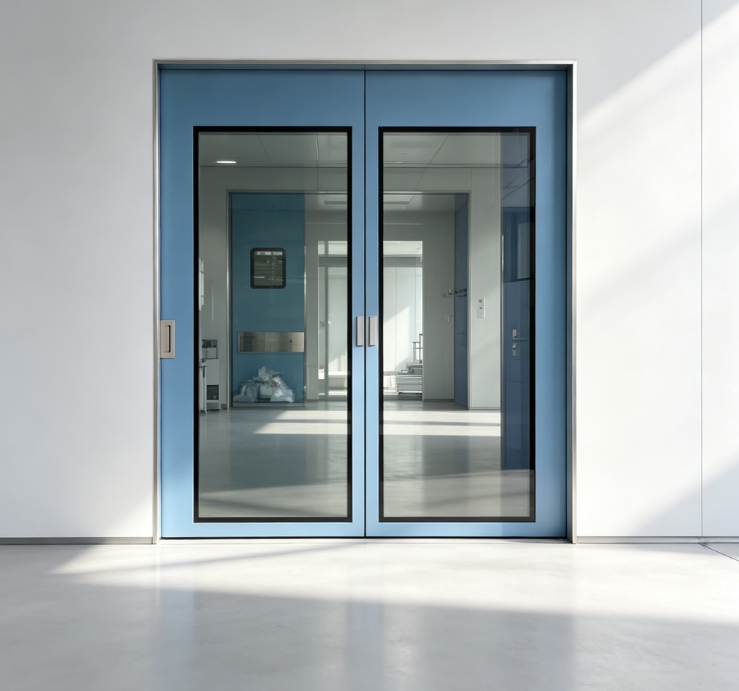
Cleanroom environments are shaped by control. Air, surfaces, movement, and materials all follow a defined order. Even small openings, such as windows, take on a larger role than expected. A China Cleanroom Windows is not only a viewing panel. It becomes part of the barrier between spaces with different conditions.

In many industrial settings, standard windows still appear in offices, storage rooms, or outer zones. Yet inside controlled environments, the choice shifts. Cleanroom windows are designed with a different purpose. Their role is tied to stability, not just visibility.
The difference between these two types is not always obvious at a glance. The surface may look similar. The structure behind it tells a different story.
Content
- 1 Why Do Cleanroom Facilities Require Specialized Windows?
- 2 How Does Structural Design Differ Between the Two?
- 3 What About Surface Finish and Cleanability?
- 4 How Do They Affect Airflow and Environmental Stability?
- 5 Do Cleanroom Windows Offer Better Sealing Performance?
- 6 How Does Installation Approach Influence Performance?
- 7 Where Are Standard Windows Still Suitable?
- 8 What Are the Practical Differences in Daily Use?
- 9 How Do They Support Visibility Without Compromising Control?
- 10 Are There Differences in Long-Term Maintenance?
- 11 Why Are More Facilities Adopting Cleanroom Windows?
Why Do Cleanroom Facilities Require Specialized Windows?
A cleanroom operates under strict internal balance. Air movement is controlled. Particles are managed. Surfaces are kept smooth and easy to maintain.
A standard window does not consider these conditions. It is designed for general use. It allows light in and provides a view out. That is usually enough in most buildings.
In a controlled environment, that is not enough. Every surface must reduce the risk of particle buildup. Every joint must limit gaps where dust could settle. Even a small opening can disturb airflow patterns.
Cleanroom windows are built to fit into this system. They are not added as decoration. They are part of the structure that supports environmental control.
How Does Structural Design Differ Between the Two?
The structure of a window affects how it interacts with its surroundings. Cleanroom windows are often designed to sit flush with walls. This reduces uneven edges where particles might gather.
Standard windows usually have frames that extend outward or inward. These edges are not a problem in everyday spaces. In a cleanroom, they create areas that are harder to maintain.
Another difference lies in how the window connects to the wall. Cleanroom windows are sealed in a way that limits air leakage. The goal is to prevent uncontrolled air exchange between spaces.
Standard windows focus more on basic sealing. They are built to handle weather changes, not controlled airflow conditions.
This difference in design reflects different priorities. One is about general use. The other is about maintaining a stable internal environment.
What About Surface Finish and Cleanability?
Surface finish plays a quiet but important role. In cleanroom environments, surfaces are expected to be easy to clean. Dust should not settle easily. Residue should be removed without difficulty.
Cleanroom windows are designed with smooth surfaces. The edges are often minimized. The goal is to create a continuous plane that can be cleaned quickly.
Standard windows may include grooves, joints, or decorative elements. These features are not harmful in most settings. In a controlled environment, they can become points where particles collect.
Cleaning routines in cleanrooms are frequent. A surface that supports quick cleaning helps maintain consistency. This is where design choices make a visible difference over time.
How Do They Affect Airflow and Environmental Stability?
Airflow inside a cleanroom is carefully managed. It follows a pattern that supports cleanliness. Any interruption can affect how particles move.
Cleanroom windows are designed to sit within this airflow pattern. Their placement and structure help avoid disruption. They do not create unexpected air pockets or turbulence.
Standard windows are not built with airflow control in mind. When used in a controlled space, they may interfere with the movement of air. Even small changes in surface alignment can shift airflow behavior.
This does not mean a standard window always causes issues. It means it is not designed to prevent them.
Maintaining environmental stability depends on many small details. Windows are one of them.
Do Cleanroom Windows Offer Better Sealing Performance?
Sealing is closely related to contamination control. A gap, even a small one, can allow particles to pass through.
Cleanroom windows are installed with attention to sealing consistency. The connection between the window and the wall is treated as a continuous barrier. This helps reduce the chance of leakage.
Standard windows are designed to keep out weather elements like wind or rain. Their sealing approach reflects that purpose. It may not fully align with the needs of controlled environments.
The difference is not always visible. It becomes clear when the environment requires a higher level of control.
How Does Installation Approach Influence Performance?
Installation is not just a technical step. It shapes how the window performs over time.
Cleanroom windows are installed as part of a system. Their position, alignment, and sealing are planned alongside wall panels and airflow paths.
Standard windows are often installed as separate elements. They are fitted into openings without the same level of integration into environmental control systems.
This difference affects long-term performance. A well-integrated window supports the overall structure. A loosely integrated one may require adjustments later.
Installation approach reflects the intended use of the space.
Where Are Standard Windows Still Suitable?
Standard windows still have a place in many facilities. Not every area requires controlled conditions.
They are often used in:
- Administrative offices
- External building areas
- Storage zones without strict environmental control
- Observation rooms outside controlled spaces
In these areas, the focus is on visibility and basic comfort. The demands of contamination control are lower.
Using standard windows in the right context helps balance cost and function. The choice depends on the level of control required in each area.
What Are the Practical Differences in Daily Use?
Daily use reveals how design affects experience. The difference between cleanroom and standard windows becomes clearer during routine operations.
Cleanroom windows support consistent cleaning. Their surfaces are easier to maintain. They do not interrupt movement or workflow.
Standard windows may require more attention in controlled spaces. Cleaning around edges takes time. Sealing may need checking.
The impact is not dramatic in a single moment. It builds over repeated use.
Below is a simplified comparison:
| Aspect | Cleanroom Windows | Standard Windows |
|---|---|---|
| Surface design | Smooth and flush | May include edges and grooves |
| Sealing approach | Integrated with wall system | General sealing for everyday use |
| Airflow impact | Designed to minimize disruption | Not designed for airflow control |
| Cleaning process | Quick and consistent | May require extra effort |
| Application area | Controlled environments | General spaces |
This comparison highlights how each type aligns with its intended use.
How Do They Support Visibility Without Compromising Control?
Visibility remains important in controlled environments. Operators need to observe processes without entering the space.
Cleanroom windows support this need while maintaining separation. They allow visual access without affecting internal conditions.
Standard windows also provide visibility. The difference lies in how they manage the surrounding environment while doing so.
In a cleanroom, visibility must not come at the cost of control. This balance shapes the design of specialized windows.
Are There Differences in Long-Term Maintenance?
Different window types need different upkeep routines after long-term use. Windows made for cleanrooms can be wiped down repeatedly without wearing out their surfaces.
Their special build cuts down hidden gaps where dust can pile up, so keeping them spotless takes much less work.
Ordinary windows act differently in clean production spaces. Dust and grime easily build up along seams and frame edges, which takes extra time to scrub clean.
Good maintenance isn't just about how long the window lasts. It also matters how simple it is to wipe back to a fully clean state after daily use.
Why Are More Facilities Adopting Cleanroom Windows?
As production environments become more controlled, attention shifts to details that were once overlooked. Windows are one of those details.
Facilities are looking for ways to reduce variability. A window that supports stable conditions becomes part of that effort.
The shift is gradual. It often begins in areas with higher control requirements. Over time, the approach spreads to other zones.
This change reflects a broader trend. Cleanroom design is becoming more integrated. Each component plays a role in maintaining balance.
FAQs
What is the main difference between cleanroom windows and standard windows?
Cleanroom windows are designed to support controlled environments, while standard windows are made for general use without specific focus on contamination control.
Can standard windows be used in cleanrooms?
They can be used in less sensitive areas, but they may not fully support strict environmental control requirements.
Are cleanroom windows harder to maintain?
They are usually designed to be easier to clean due to smoother surfaces and reduced edges.
Do cleanroom windows affect airflow?
Yes, they are designed to minimize disruption to airflow patterns inside controlled spaces.
Is installation different for cleanroom windows?
Yes, they are installed as part of a larger system that includes walls and airflow design.
Are cleanroom windows only used in industrial settings?
They are mainly used in controlled environments where cleanliness and stability are important.
Why do cleanroom windows have simpler designs?
Simpler designs reduce areas where particles can settle and make cleaning more efficient.