English
 русский
 Español
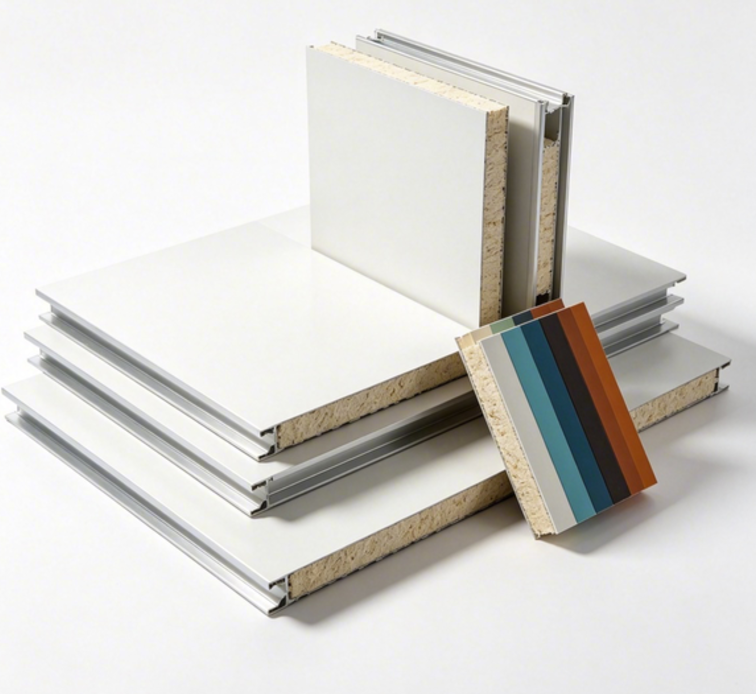
Flat sandwich panels are now commonly seen in industrial buildings of different scales. Walk through modern workshops, storage areas, or controlled production spaces, and this material appears again and again. The reason is not linked to a single advantage. It is more about how the material fits into the rhythm of industrial use.
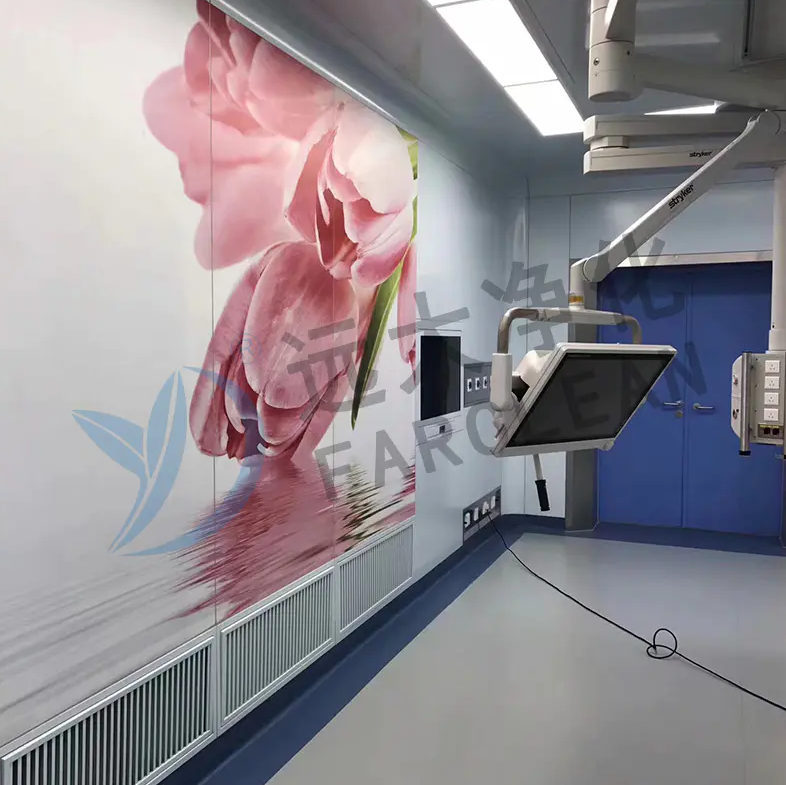
Industrial spaces are not static. They change through daily operation, cleaning routines, equipment movement, and environmental shifts. In such settings, the wall system is not just a background structure. It becomes part of the working environment itself.
Flat sandwich panels are used widely because they respond to these conditions in a steady and predictable way.
Content
- 1 Why do industrial spaces rely on stable wall surfaces?
- 2 How does a flat structure support installation in real projects?
- 3 What happens when surfaces remain consistent over time?
- 4 How do environmental conditions affect panel behavior?
- 5 Why does surface flatness matter beyond appearance?
- 6 How does maintenance become easier with uniform panels?
- 7 What role does long-term surface behavior play?
- 8 Why are flat sandwich panel suitable for large-scale spaces?
- 9 How does structure influence long-term stability?
- 10 Surface and usage behavior overview
- 11 Why do flat sandwich panels remain widely used?
Why do industrial spaces rely on stable wall surfaces?
In many industrial environments, the surface of a wall is exposed to constant interaction. Air moves across it. Dust settles on it. Cleaning tools pass over it repeatedly.
If the surface is uneven or inconsistent, these interactions become harder to manage. Some areas may collect more residue. Some sections may require different cleaning effort.
Flat sandwich panels help reduce this variation. Their surface remains visually and physically uniform across large areas. This makes the environment easier to manage in daily use.
The value is not only in appearance. It is in reducing unnecessary differences that appear during operation.
How does a flat structure support installation in real projects?
Construction inside industrial settings often moves under time pressure. Spaces are expected to become functional without long waiting periods.
Sandwich panels support this type of workflow. Their shape is simple and predictable. During installation, alignment tends to follow a consistent pattern rather than requiring constant adjustment.
This helps reduce uncertainty during assembly. Workers can move across sections with fewer interruptions.
Once installed, the wall surface forms a continuous layer. The space feels organized earlier in the process, which allows operations to begin sooner.
The simplicity of structure becomes a practical advantage during setup.
What happens when surfaces remain consistent over time?
Industrial environments depend heavily on repeatable actions. Cleaning routines, equipment movement, and inspections all follow cycles.
When wall surfaces are consistent, these cycles become easier to maintain. Cleaning tools move in a steady rhythm across the surface. There is less need to adjust technique for different areas.
Flat sandwich panels support this consistency. Their surface does not shift dramatically under normal use. Instead, it holds its form in a stable way over time.
This reduces small variations that often slow down daily routines.
Consistency here does not mean perfection. It means fewer unexpected changes.
How do environmental conditions affect panel behavior?
Factory workspaces never hold perfectly steady conditions. Swings in heat, moving air and shifting moisture levels all alter the indoor atmosphere day in and day out.
All these elements interact with wall materials over months and years. Many materials react unevenly, leaving obvious marks across their surfaces down the line.
Standard sandwich panels handle these shifts much more uniformly. Any expansion or contraction happens slowly over the whole face, instead of popping up on random small spots.
This even reaction stops heavy wear from building up in just one single area fast.
In the end, the panel surface stays consistent and smooth to look at, even after years of regular use.
Why does surface flatness matter beyond appearance?
At first glance, flatness may seem like a visual requirement. In industrial use, it plays a more practical role.
A flat surface allows cleaning to be more predictable. Tools can move without interruption. There are fewer edges or uneven zones where residue might collect.
Flat sandwich panels provide this type of surface condition across wide areas.
Over time, this affects how the entire space is maintained. Cleaning routines become more uniform. Inspection becomes more straightforward.
What appears simple on the surface actually influences how work is done inside the space.
How does maintenance become easier with uniform panels?
Maintenance is a continuous process in industrial environments. It is not limited to fixing issues. It includes routine cleaning, inspection, and monitoring of surface condition.
When wall surfaces are uneven, maintenance becomes fragmented. Some sections require more attention than others. This creates inconsistency in routine work.
Sandwich panels reduce this problem. The surface responds in a similar way across different areas.
This allows maintenance teams to follow a more stable routine. There is less need to adjust methods for each section.
Over time, this creates a more organized maintenance rhythm.
What role does long-term surface behavior play?
Materials in industrial environments are used repeatedly over long periods. They are exposed to cleaning agents, airflow, and physical contact.
Flat sandwich panels are valued because their surface behavior remains relatively stable during long use.
Changes still happen naturally, but they tend to spread evenly rather than concentrate in one area. This avoids uneven visual or functional aging.
When aging is balanced, the space remains visually coherent even after long operation.
This is especially important in large facilities where small differences become more noticeable.
Why are flat sandwich panel suitable for large-scale spaces?
In large industrial buildings, materials are repeated across wide surfaces. Even small inconsistencies can become noticeable when multiplied.
Sandwich panels help reduce this issue by maintaining a uniform appearance across large installations.
When many panels are installed together, the surface behaves like a continuous layer rather than separate sections.
This reduces visual breaks and improves overall spatial consistency.
Large-scale use benefits from materials that behave predictably when repeated.
How does structure influence long-term stability?
Behind the visible surface, the internal structure of sandwich panels plays a key role.
A balanced internal design helps control how the surface reacts to pressure, temperature, and time.
Instead of shifting unevenly, changes remain gradual and spread out.
This reduces sudden differences in surface condition during long-term use.
The structure does not only support strength. It also influences how stable the surface remains in daily operation.
Surface and usage behavior overview
| Industrial factor | Early observation | Long-term behavior pattern |
|---|---|---|
| Surface uniformity | Even visual condition | Stable cleaning response |
| Installation process | Smooth alignment | Consistent wall structure |
| Maintenance routine | Predictable cleaning flow | Stable operational rhythm |
| Environmental response | Minor surface adjustment | Gradual balanced change |
| Large-area application | Consistent installation result | Uniform spatial behavior |
Why do flat sandwich panels remain widely used?
Industrial spaces are becoming more demanding, but the core needs remain stable. Environments still require surfaces that are easy to manage, predictable in behavior, and suitable for long-term use.
Flat sandwich panels meet these expectations in a practical way. They do not rely on complex structure. Instead, they focus on consistency and usability.
Over time, this practical behavior is what keeps them relevant across different types of industrial spaces.
They support the environment quietly, without drawing attention, while helping daily operations stay steady and manageable.