English
 русский
 Español
Cleanroom settings are indispensable for industries that prioritize stable product quality, strict on-site control and standardized daily operations. Healthcare institutions, professional laboratories and precision manufacturing workshops all rely on well-planned cleanroom layouts to sustain stable, qualified working conditions.
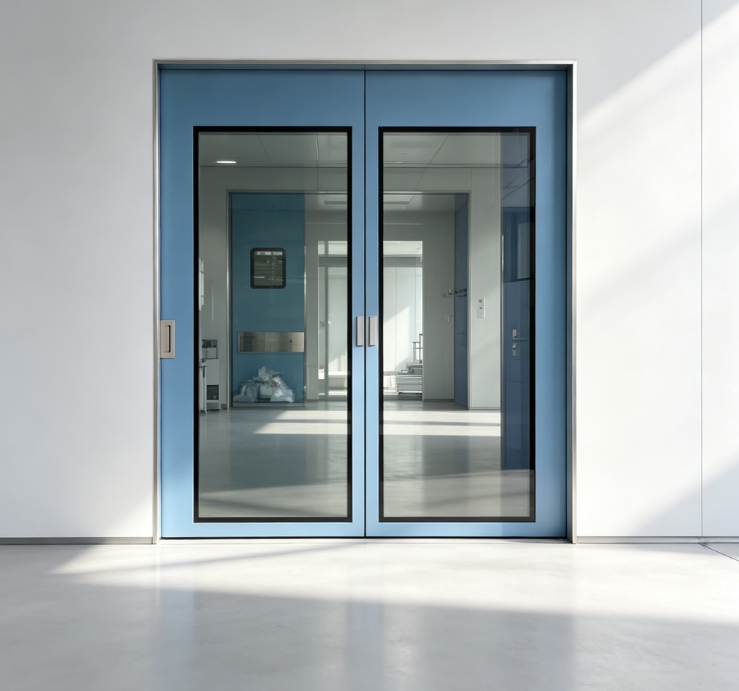
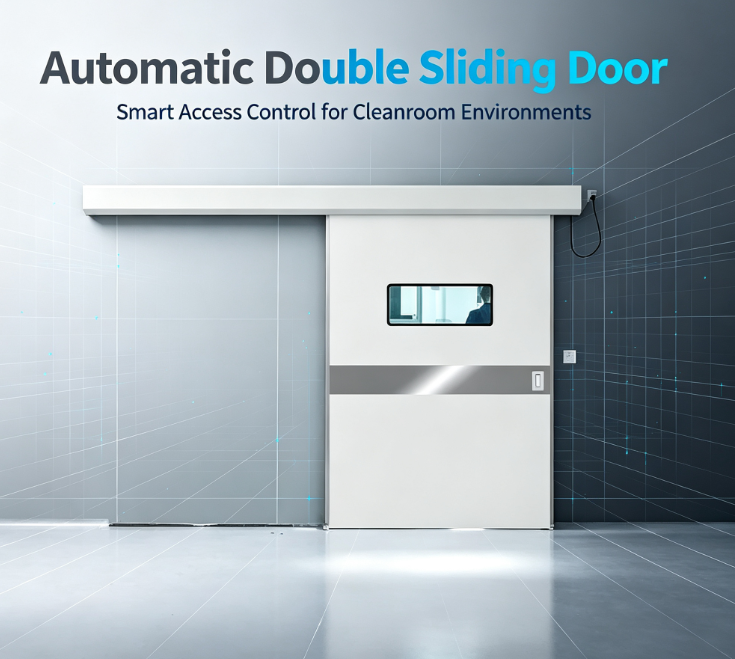
Every structural component inside a cleanroom affects the overall controlled environment, including wall panels, flooring, professional equipment and access systems. As a key access and zoning component, clean room doors play a vital role in regulating personnel and material flow, standardizing on-site layouts, and building qualified working environments.
| Working Space Need | Support From Doors Clean Room |
|---|---|
| Area management | Helps separate different working zones |
| Workplace organization | Supports smoother movement of people and materials |
| Environmental control | Helps maintain planned cleanroom conditions |
| Operational efficiency | Makes daily activities easier to manage |
Content
- 1 Why Are Clean Room Doors Important for Modern Workspaces?
- 2 How Do Clean Room Doors Support Cleaner Working Environments?
- 3 What Role Do Clean Room Doors Play in Workplace Safety?
- 4 How Can Clean Room Doors Improve Workflow Organization?
- 5 What Should Companies Consider When Choosing Clean Room Doors?
- 6 How Are Clean Room Doors Used in Different Industries?
- 7 How Are Clean Room Doors Developing With Modern Facility Needs?
Why Are Clean Room Doors Important for Modern Workspaces?
Clean rooms run under rules far tighter than regular factory or office spaces. Companies have to closely track how staff move around, where raw materials get stored, and every routine task performed inside. This strict oversight keeps production output and lab test results consistent over long stretches of time.
Doors Clean Room sets link up separate work zones smoothly. People and supplies can move through as needed, yet the doors create solid barriers to stop air, particles and contaminants from mixing between different areas.
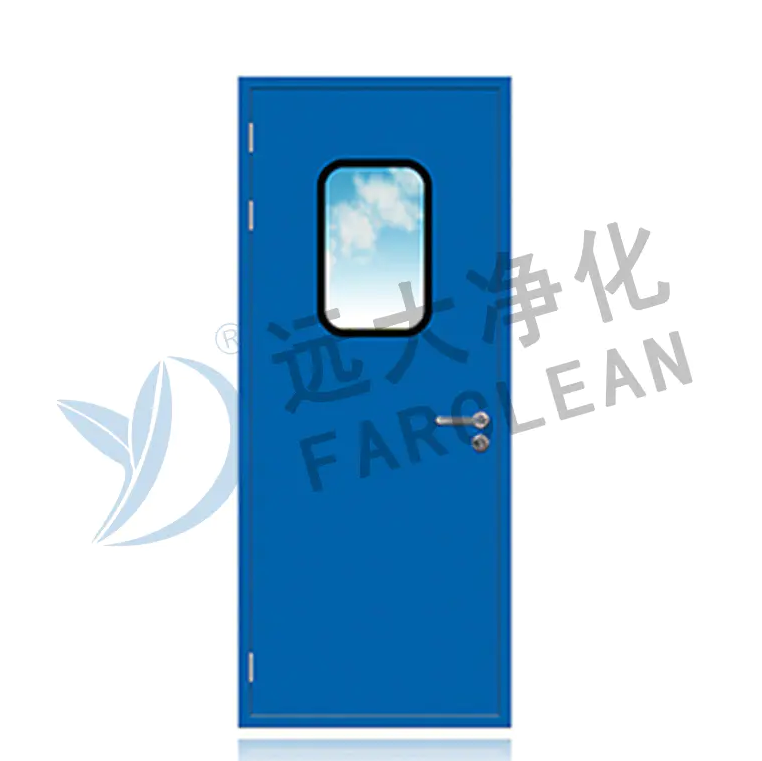
Even small tweaks to how a space is laid out can drastically speed up daily work for manufacturers and research teams. Well-planned door placements mark out clear paths for foot traffic and material transport, cutting down on aimless wandering and messy, disorganized work streams.
Today's facility designers build spaces around real-world usability and flexibility. Business owners tend to pick equipment tailored to their specific daily operations, anything that makes ongoing site maintenance less of a hassle. Clean room doors check both boxes, merging zone separation and controlled entry into one simple, workable solution.
How Do Clean Room Doors Support Cleaner Working Environments?
Maintaining a high-standard clean environment depends on meticulous detail management. Unregulated flow of personnel and materials is one of the main factors affecting indoor cleanliness and operational order.
Clean room doors standardize the transition between different clean areas. By setting clear spatial boundaries, they lay a solid foundation for standardized on-site management and stable environmental quality.
High-quality clean room doors help enterprises achieve precise control in multiple key aspects:
Controlled movement flow
Staff and materials frequently move between different functional zones. Professional door systems formulate standardized passage routes to avoid random flow and chaos.
Scientific space separation
Different working zones have distinct cleanliness and operational requirements. Partition doors effectively isolate independent spaces and refine overall workspace planning.
Standardized daily operation management
Matched with standardized access rules, professional door structures guide employees to follow unified operational procedures for daily work.
Optimized workplace organization
Clear spatial division enables teams to carry out classified work and targeted management, greatly improving overall on-site orderliness.
Cleanroom management is never limited to equipment configuration and material selection. Scientific spatial design and supporting facilities are also core guarantees for smooth daily operations.
What Role Do Clean Room Doors Play in Workplace Safety?
Safety management is a core priority for all professional cleanroom scenarios. A well-organized and zoned workspace can effectively reduce operational risks and help employees complete work tasks safely and efficiently.
Clean room door systems optimize on-site safety management by standardizing personnel movement and spatial division. They clearly mark functional boundaries and form standardized passage paths for daily work.
Multiple tasks often proceed simultaneously in large cleanroom facilities. Clear spatial partitioning avoids operational confusion and mutual interference, greatly improving overall on-site coordination.
| Safety Consideration | How Doors Clean Room Help |
|---|---|
| Area identification | Creates clearer boundaries between spaces |
| Movement planning | Supports organized traffic flow |
| Workplace control | Helps manage access between areas |
| Operational clarity | Makes procedures easier to follow |
A qualified cleanroom environment relies on the coordinated operation of personnel, equipment and facility structures. Clean room doors serve as an indispensable link in this complete operating system.
How Can Clean Room Doors Improve Workflow Organization?
Smooth and standardized workflows are crucial for enterprises that depend on cleanroom production and research. Unreasonable spatial layout and unregulated movement will only complicate daily tasks and reduce overall productivity.
Clean room door systems build a structured and logical workspace layout. Enterprises can reasonably partition functional areas according to actual production and research needs, forming a standardized operational framework.
Optimized door layout brings multiple practical workflow advantages:
Defined movement routes
Employees can clearly grasp entry and exit paths and material transportation routes, eliminating redundant steps and ineffective movement.
Optimized space utilization
Cleanrooms contain multiple independent functional areas. Partition doors maintain clear zoning and prevent cross-contamination and functional confusion.
Better team coordination
Standardized spatial division clarifies the scope of work for each team, making cross-department and cross-position cooperation more efficient.
Guaranteed professional operations
A neat, standardized working environment provides stable conditions for precision production and experimental research, improving overall work experience and efficiency.
Workflow optimization is not just about boosting output value. More importantly, it creates a standardized and orderly working atmosphere for employees to complete all tasks in a regulated manner.
What Should Companies Consider When Choosing Clean Room Doors?
Selecting suitable clean room doors must be based on the actual operational needs of the facility. Different industries and application scenarios have unique requirements for cleanliness, safety and convenience, so one-size-fits-all choices are not applicable.
Enterprises need to fully evaluate the matching degree between door system performance and overall facility layout to ensure it fits long-term operational development.
The core selection factors mainly include the following points:
Practical application requirements
Confirm the specific use scenarios of the doors, and select corresponding door types and performances according to on-site cleanliness standards and operational modes.
Overall facility layout
The door installation position and opening mode must adapt to the internal space layout, ensuring smooth personnel and material passage between zones.
Daily operational convenience
Doors are used frequently every day. Simple and labor-saving operation modes can effectively improve on-site work efficiency.
Long-term maintenance management
Enterprises need to consider the later maintenance difficulty and durability of the doors to reduce long-term operational costs.
Purchasing clean room doors is never just installing a simple partition facility. It is a key investment in building a standardized, safe and efficient workplace operating system.
How Are Clean Room Doors Used in Different Industries?
Cleanroom technology is widely applied in multiple industries. Although the core purposes of cleanrooms vary across fields, the demand for standardized spatial management and orderly operation remains consistent.
In healthcare institutions, clean room doors help build strictly controlled medical working environments to meet high-standard medical and disinfection requirements. In scientific laboratories, they isolate independent experimental spaces to avoid cross-interference between different research projects. In precision manufacturing workshops, these doors standardize production area division and ensure smooth progress of each production link.
| Industry Area | Role of Doors Clean Room |
|---|---|
| Healthcare facilities | Supports organized medical working spaces |
| Laboratories | Helps separate functional areas |
| Manufacturing plants | Supports structured production environments |
| Research facilities | Helps maintain planned workspace layouts |
Regardless of industry differences, all cleanroom scenarios rely on reasonable spatial division and standardized personnel flow management, making clean room doors an essential core facility.
How Are Clean Room Doors Developing With Modern Facility Needs?
With the continuous upgrading of industrial and scientific research standards, modern facility design is shifting toward higher flexibility, standardization and humanization. Cleanroom construction no longer only pursues basic cleanliness, but also focuses on operational efficiency and long-term manageability.
Clean room door systems are also iterating and upgrading to adapt to these new demands. Modern products no longer serve as independent partition facilities, but integrate with the overall facility operating system to jointly undertake environmental control and on-site management tasks.
The future development of cleanroom design will continue to focus on easy management, high efficiency and professional applicability. As key supporting equipment, clean room doors will keep optimizing structural design and functional performance, helping enterprises build cleaner, safer and more standardized modern working spaces.