English
 русский
 Español
Content
- 1 What Is a Clean Room Sandwich Panel?
- 2 The Unique Multi-Layer Construction That Sets These Panels Apart
- 3 Airtightness and Pressure Integrity: A Critical Differentiator
- 4 Hygienic Surface Design and Particle Shedding Prevention
- 5 Comparing Clean Room Sandwich Panel Core Types
- 6 Modular Flexibility and Reconfigurability
- 7 Industries That Rely on Clean Room Sandwich Panels
- 8 Key Specifications to Verify When Selecting Clean Room Sandwich Panels
What Is a Clean Room Sandwich Panel?
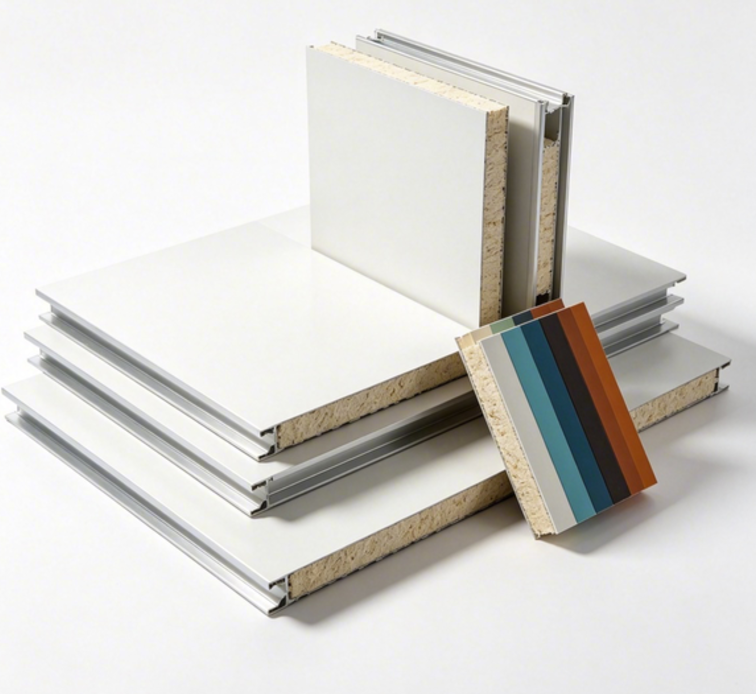
A clean room sandwich panel is a prefabricated, multi-layer building panel engineered specifically for use in controlled environments where airborne contamination, temperature stability, hygiene, and structural integrity must all be maintained to exacting standards. The panel consists of two rigid outer facing sheets — typically galvanized steel, stainless steel, or aluminum — bonded to an insulating core material that provides thermal performance, acoustic damping, and structural rigidity in a single composite element. The result is a self-supporting wall, ceiling, or partition system that can be installed rapidly and reconfigured as facility requirements change, without compromising the environmental controls that define a functioning clean room.
What distinguishes a clean room sandwich panel from standard architectural sandwich panels is the precision with which every material, joint, finish, and dimensional tolerance is specified and controlled. In a clean room environment — whether classified to ISO 1 through ISO 9 under the ISO 14644 standard, or to GMP Grade A through D as required by pharmaceutical regulatory bodies — the building envelope is not merely structural. It is an active component of the contamination control system. Every surface must resist microbial growth, shed no particles, withstand frequent chemical cleaning, and maintain dimensional stability under the positive pressure differentials that prevent contaminant ingress. Standard construction panels designed for industrial or commercial buildings cannot meet these requirements, which is precisely why the clean room sandwich panel exists as a distinct product category.
The Unique Multi-Layer Construction That Sets These Panels Apart
The defining characteristic of a clean room sandwich panel is its composite construction, which integrates multiple performance functions into a single panel thickness typically ranging from 50 mm to 150 mm. Each layer of the panel contributes a specific set of properties, and the interaction between layers is engineered to produce a combined performance profile that no single material could achieve alone.
Outer Facing Sheets
The inner and outer facing sheets form the visible and functional surfaces of the panel. For clean room applications, these are most commonly manufactured from pre-painted galvanized steel with a polyester, epoxy, or PVDF coating applied to the room-facing surface. The coating system must be non-porous, chemically resistant, and capable of withstanding repeated cleaning with isopropyl alcohol, hydrogen peroxide vapor, sodium hypochlorite, and other aggressive disinfectants used in pharmaceutical and semiconductor manufacturing environments. Stainless steel facings — typically Grade 304 or 316L — are specified for the most demanding applications, such as aseptic pharmaceutical production areas or food processing clean rooms, where superior corrosion resistance and the ability to be electropolished to a near-mirror finish are required. Aluminum facings are used where weight reduction is a priority without sacrificing corrosion resistance.
Insulating Core Materials
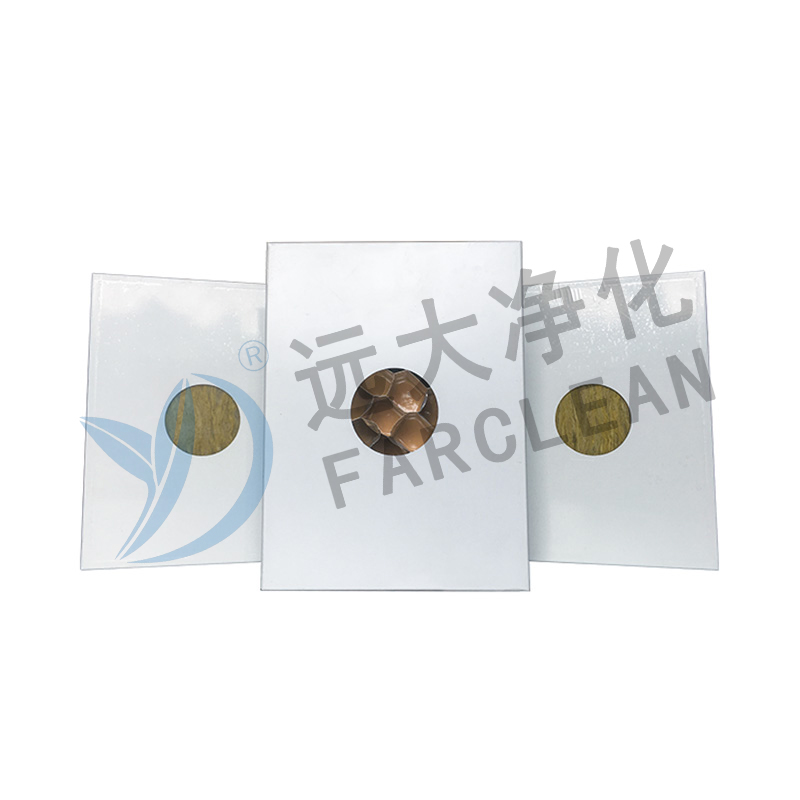
The core material occupies the central zone of the panel and is responsible for thermal insulation, acoustic performance, fire resistance, and a significant portion of the panel's structural rigidity. Clean room sandwich panels are produced with several core types, each suited to different performance priorities. Mineral wool (rock wool) cores provide excellent fire resistance — achieving non-combustible classifications under EN 13501-1 — and are specified in pharmaceutical facilities and hospitals where fire safety regulations are most stringent. Polyurethane (PUR) and polyisocyanurate (PIR) foam cores offer superior thermal insulation values (lower lambda coefficients) for the same panel thickness, making them the preferred choice where energy efficiency and temperature control precision are the primary drivers. Honeycomb aluminum or paper cores provide exceptional strength-to-weight ratios for ceiling panels where structural load-bearing capacity is required without adding excessive weight to the support structure.
Airtightness and Pressure Integrity: A Critical Differentiator
One of the most technically demanding requirements for a clean room building envelope is airtightness. Clean rooms are maintained at positive air pressure relative to adjacent less-controlled spaces, creating a pressure differential that continuously attempts to force air — and any contaminants it carries — outward through any gap, joint, or penetration in the envelope. If the panel system allows air leakage, the pressure differential is compromised and the contamination control strategy fails, regardless of how powerful the HVAC and filtration system is.
Clean room sandwich panels address this requirement through a precisely engineered interlocking joint system. Panels connect to each other and to structural framing members via tongue-and-groove or cam-lock joints that are sealed with continuous beads of approved sealant — typically silicone or polyurethane-based — applied during installation. The joint geometry is designed to accommodate thermal expansion and minor structural movement without breaking the seal, maintaining airtightness over the full service life of the facility. Internal corner joints, ceiling-to-wall junctions, and penetrations for services — electrical conduits, pipework, HVAC ducts — all require purpose-designed trim pieces and gasket systems that maintain the pressure integrity of the envelope at every transition point.
Air leakage testing after installation, using pressurization methods based on EN 13829 or equivalent standards, is standard practice in pharmaceutical and semiconductor clean room commissioning to verify that the as-built envelope meets the specified airtightness class before operational validation begins. Clean room sandwich panel systems from reputable manufacturers are designed and tested to achieve the lowest available leakage classifications under these standards.
Hygienic Surface Design and Particle Shedding Prevention
The surface characteristics of a clean room sandwich panel are engineered with a specificity that has no parallel in standard construction products. Every design decision — from the panel face coating chemistry to the profile of the joint trim — is made with the goal of minimizing particle generation, preventing microbial colonization, and facilitating effective cleaning and disinfection.
- Smooth, Non-Porous Surfaces: The room-facing surface of a clean room panel must have a surface roughness low enough to prevent particle entrapment and biofilm formation. Coated steel panels typically achieve surface roughness values of Ra 0.8 µm or better, while electropolished stainless steel can reach Ra 0.2 µm. These smooth surfaces allow disinfectant solutions to make uniform contact with the entire surface during cleaning cycles, leaving no microscopic recesses where microorganisms can shelter.
- Coved Internal Corners: Right-angle internal corners between walls and floors, and between walls and ceilings, are impossible to clean thoroughly and accumulate particles in dead zones that are shielded from airflow. Clean room sandwich panel systems incorporate pre-formed coved corner sections — typically with a radius of 50 to 100 mm — that eliminate sharp internal corners throughout the facility, allowing cleaning equipment to reach every surface without interruption.
- Flush Panel Faces and Recessed Fixings: Protruding fasteners, exposed screw heads, and surface discontinuities generate turbulence in the laminar airflow patterns that clean rooms use to sweep particles away from critical work zones. Clean room panels are fixed using concealed or recessed fastening systems that maintain a flat, uninterrupted panel face, preserving the predictable airflow patterns on which contamination control depends.
- Chemical Resistance of Coatings: The surface coating must resist degradation — including blistering, chalking, and color change — when exposed to the full range of cleaning agents and disinfectants used in the facility over its operational life. PVDF coatings offer the broadest chemical resistance spectrum and the longest service life, making them the specification of choice for facilities with aggressive cleaning protocols.
Comparing Clean Room Sandwich Panel Core Types
Selecting the correct core material is one of the most consequential decisions in clean room panel specification. The following table provides a structured comparison of the main core options to support informed selection based on project-specific priorities:
| Core Material | Thermal Performance | Fire Resistance | Structural Strength | Best Application |
| Mineral Wool | Good | Excellent (A1/A2) | Good | Pharma, hospitals, high fire-risk zones |
| PUR/PIR Foam | Excellent | Good (B/C class) | Very Good | Cold rooms, temperature-controlled labs |
| Aluminum Honeycomb | Moderate | Very Good | Excellent | Ceiling panels, aerospace clean rooms |
| EPS (Expanded Polystyrene) | Good | Moderate (E class) | Moderate | Electronics, lower-classification clean rooms |
Modular Flexibility and Reconfigurability
One of the most practically valuable and commercially significant features of the clean room sandwich panel system is its inherent modularity. Unlike traditional wet-construction clean room enclosures built from plastered blockwork or poured concrete — which are effectively permanent once constructed — a sandwich panel clean room can be disassembled, extended, reduced, or relocated with a fraction of the time, cost, and disruption required to modify a conventional structure.
Panels are manufactured to standard widths — typically 600 mm, 1,000 mm, or 1,200 mm — with custom lengths cut to suit the facility's floor-to-ceiling height. The interlocking joint system allows panels to be connected and disconnected without damaging the panels themselves, meaning that a clean room built from quality sandwich panels retains significant residual value as a reconfigurable asset. For pharmaceutical manufacturers who must adapt their facility layouts to changing product portfolios, or for electronics manufacturers who need to expand clean room capacity in response to new product lines, this reconfigurability translates directly into lower capital expenditure and faster time-to-production compared to conventional construction approaches.
Installation speed is another key advantage of the modular panel system. A complete clean room enclosure — walls, ceiling, doors, windows, and service penetrations — can typically be installed by a specialist contractor team in a fraction of the time required to build an equivalent space using traditional construction methods. Panels arrive on site pre-fabricated to exact dimensions, requiring only assembly and sealing rather than the multi-trade sequential construction process that conventional building requires. This compressed installation timeline reduces facility commissioning lead times and allows manufacturing operations to begin generating revenue sooner.
Industries That Rely on Clean Room Sandwich Panels
The unique combination of properties offered by clean room sandwich panels makes them the specified building system across a wide range of industries where contamination control is a regulatory requirement or a product quality imperative.
- Pharmaceutical Manufacturing: GMP-regulated drug production facilities require clean rooms classified to ISO 5 through ISO 8 (GMP Grade A through D) for different stages of manufacturing. Clean room sandwich panels with mineral wool cores and stainless steel or PVDF-coated steel facings are the standard specification, meeting both the hygienic surface requirements of GMP guidelines and the fire safety requirements of pharmaceutical facility regulations.
- Semiconductor and Electronics Manufacturing: Wafer fabrication facilities for semiconductor production require the most stringent clean room classifications — ISO 1 to ISO 5 — where even sub-micron particles can destroy entire wafer batches worth millions of dollars. Panel systems in these facilities must be compatible with the ultra-high-efficiency HEPA and ULPA filtration systems and the precise laminar airflow patterns that protect wafer surfaces during processing.
- Medical Device Manufacturing: The production of implantable medical devices, sterile diagnostic equipment, and surgical instruments under ISO 13485 and FDA 21 CFR Part 820 requires clean room environments where both particulate and microbial contamination are rigorously controlled. Panel surfaces must withstand the validated cleaning and sterilization protocols applied during facility qualification.
- Biotechnology and Gene Therapy: The production of biologics, cell therapies, and gene therapies involves working with living biological systems that are exquisitely sensitive to contamination. Clean room sandwich panel enclosures for these applications must achieve and maintain the highest levels of environmental control while also providing the biosafety containment features required when working with biological agents.
- Food and Beverage Processing: High-care and high-risk food production zones — such as ready-to-eat meat processing, infant formula production, and aseptic beverage filling — use clean room sandwich panels to create controlled hygiene zones that prevent cross-contamination between processing areas and protect products from environmental microbiological hazards.
Key Specifications to Verify When Selecting Clean Room Sandwich Panels
Given the critical role that clean room sandwich panels play in the contamination control strategy of a facility, specification and procurement decisions must be made with rigorous technical diligence. The following parameters should be verified against the project's requirements before committing to a panel supplier:
- Surface Coating Certification: Confirm that the room-facing coating has been independently tested and certified for resistance to the specific cleaning agents and disinfectants that will be used in the facility's validated cleaning procedure. Request chemical resistance test reports, not just supplier claims.
- Fire Performance Classification: Verify that the panel system — including both facings and core — carries the required fire classification under the applicable building regulation standard (EN 13501-1 in Europe, UL certification in North America) for the facility's occupancy type and jurisdiction.
- Thermal Transmittance (U-Value): Confirm that the panel thickness and core specification achieve the required U-value for the facility's thermal performance targets, particularly for clean rooms that maintain temperatures significantly above or below ambient to support manufacturing processes.
- Panel Span and Load Capacity: For ceiling panels spanning between structural supports, verify the panel's deflection and load-bearing capacity under the combined weight of the panel itself, any equipment mounted to the ceiling, and the distributed load from the HVAC plenum above.
- Joint System Airtightness Data: Request test data — not just design claims — demonstrating the airtightness performance of the panel joint system under the pressure differentials that the facility will operate at, to confirm that the envelope will achieve the required leakage classification after installation.
The clean room sandwich panel is unique because it consolidates structural, thermal, hygienic, safety, and contamination control functions into a single, pre-engineered building element that standard construction systems are fundamentally unable to replicate. For any facility where the integrity of a controlled environment directly determines product safety, regulatory compliance, and commercial viability, the clean room sandwich panel is not simply a preferred option — it is the engineered solution that makes the controlled environment possible.