English
 русский
 Español
In busy industrial and commercial facilities, doorways between zones see constant traffic — forklifts, pallet jacks, carts, and pedestrians passing through dozens or hundreds of times per shift. Standard hinged or sliding doors are not designed for this kind of repeated, often forceful contact. They bind, crack, lose alignment, and eventually fail, creating safety hazards and maintenance costs that accumulate quickly. Traffic impact doors are engineered specifically for this environment: they absorb impacts, return to position automatically, and continue functioning through thousands of daily cycles without the progressive deterioration that conventional doors experience. Understanding how they work, where they perform best, and what specifications drive the selection decision is essential for any facility manager or procurement specialist evaluating this category of industrial hardware.
Content
- 1 What Defines a Traffic Impact Door
- 2 How the Pivot and Return Mechanism Works
- 3 Panel Materials and Their Performance Trade-Offs
- 4 Typical Applications Across Industries
- 5 Key Specifications to Evaluate During Selection
- 6 Installation Considerations and Frame Requirements
- 7 Maintenance Requirements and Expected Service Life
What Defines a Traffic Impact Door
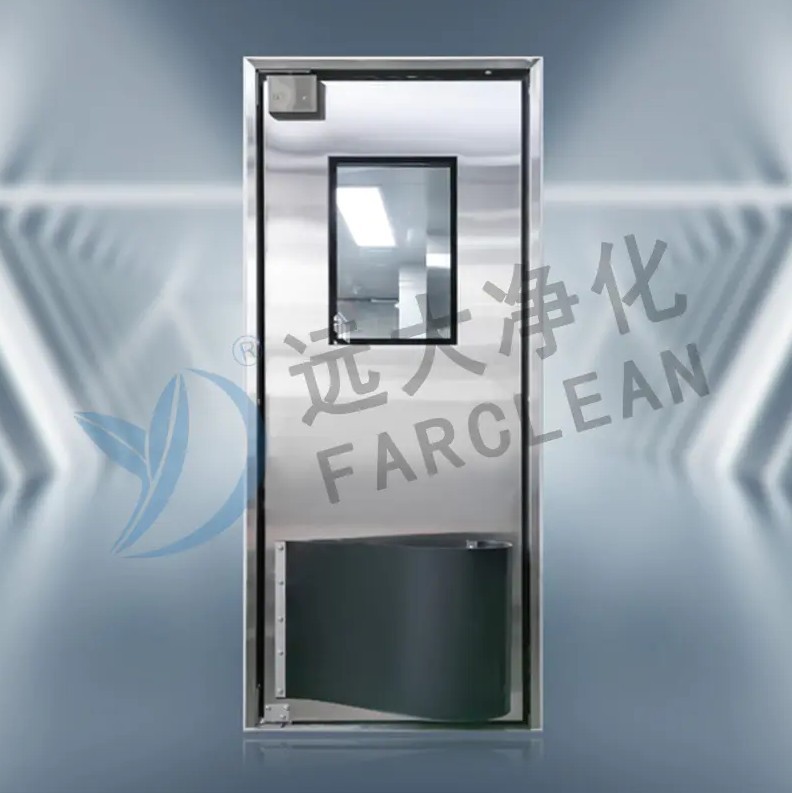
A traffic impact door — also called a swing door, double-acting door, or industrial impact door — is a door panel mounted on a spring-loaded or hydraulic pivot mechanism that allows it to swing freely in both directions and return automatically to the closed position after each use. The defining characteristic that separates impact doors from standard swing doors is their ability to absorb direct contact from vehicles, carts, or equipment without sustaining damage. This is achieved through a combination of flexible panel materials, energy-absorbing pivot systems, and structural designs that distribute impact forces across the panel rather than concentrating them at a single point.
The self-closing action is mechanically critical because it maintains zone separation — temperature, dust, noise, or contamination — between adjacent areas without requiring any action from the person or vehicle passing through. Unlike automatic powered doors that require sensors, actuators, and electrical infrastructure, traffic impact doors are entirely passive mechanical systems. They open when pushed, close when released, and require no power source to operate. This simplicity translates directly into reliability: there is no electrical system to fail, no sensor to misread, and no control board to program or maintain.
How the Pivot and Return Mechanism Works
The performance of a traffic impact door depends fundamentally on the quality and design of its pivot mechanism. There are two principal types used in commercial and industrial applications, each with different performance characteristics suited to different traffic intensities and impact loads.
Spring-Loaded Pivot Mechanisms
Spring-loaded pivots are the most common mechanism in traffic impact doors for light to medium duty applications. A torsion spring or coil spring stores energy as the door panel swings open and releases that energy to drive the panel back to the closed position. The spring tension is typically adjustable — stronger tension produces faster closing and higher resistance to wind pressure, while lighter tension reduces the force required to open the door, which matters in applications where pedestrians or light carts must pass through without difficulty. Spring mechanisms are mechanically straightforward, inexpensive to replace when worn, and perform reliably across a wide temperature range, making them appropriate for refrigerated warehouse entrances, food processing areas, and outdoor-adjacent zones where temperature extremes are a factor.
Hydraulic Damped Pivot Mechanisms
Hydraulic pivot mechanisms combine a spring return force with a hydraulic damper that controls the closing speed, preventing the door from slamming shut after a hard impact or in high-traffic situations where rapid cycling could cause the returning panel to strike an oncoming person or vehicle. The damper absorbs kinetic energy during the closing stroke and releases it gradually, producing a controlled, consistent closing speed regardless of how hard the door was pushed open. Hydraulic mechanisms are heavier and more expensive than spring-only pivots, but they are the correct specification for high-cycle applications, heavy panel weights, and situations where door slamming would create a safety or noise problem.
Panel Materials and Their Performance Trade-Offs
The panel material is the most visible differentiator between traffic impact door products and the specification that most directly affects service life, maintenance requirements, and suitability for specific environments. Each material has strengths and limitations that make it appropriate for some applications and unsuitable for others.
- Polyethylene (PE/HDPE panels): High-density polyethylene is the most widely used panel material in industrial traffic impact doors. It is impact-resistant, chemically inert, easy to clean, and available in food-grade formulations that comply with USDA and FDA requirements for food processing environments. PE panels do not absorb moisture, resist most cleaning chemicals and disinfectants, and can withstand repeated forklift contact without cracking or splintering. Their limitation is stiffness — very large PE panels can flex excessively in wide openings, and they offer limited thermal insulation compared to foam-core alternatives.
- PVC panels: PVC (polyvinyl chloride) panels are lighter than PE and can be formulated to be transparent or translucent, which provides sightline visibility through the door — an important safety feature in high-traffic areas where pedestrians and forklifts share access routes. PVC impact doors are commonly used in food retail, cold storage anteroom areas, and pharmaceutical production zones where visual monitoring of adjacent spaces is a priority. PVC becomes brittle at low temperatures, so it is not recommended for blast freezer or sub-zero applications without a cold-grade formulation.
- Foam-core insulated panels: For applications where thermal separation is a primary requirement — the boundary between a refrigerated warehouse and a loading dock, for example — foam-core panels with steel or aluminum face skins provide substantially higher thermal resistance (R-values of R-8 to R-20 depending on thickness) than solid plastic panels. The foam core also adds acoustic damping, reducing noise transmission between zones. These panels are heavier than solid plastic alternatives and require more robust pivot mechanisms to handle the additional weight through thousands of daily cycles.
- Stainless steel panels: Stainless steel traffic impact doors are specified for applications requiring maximum hygiene, chemical resistance, and durability — pharmaceutical cleanrooms, food processing areas subject to high-pressure washdowns, and chemical handling facilities. Stainless panels are the most durable option available, resistant to virtually all industrial cleaning agents and sanitizers, and easily inspected for cleanliness. They are significantly heavier and more expensive than plastic alternatives, and they conduct cold efficiently, which can be a disadvantage in temperature-sensitive zones.
Typical Applications Across Industries
Traffic impact doors are deployed across a remarkably diverse range of industrial and commercial environments. The unifying factor across all applications is the need for a doorway that handles high-frequency, often forceful passage while maintaining zone separation and requiring minimal maintenance attention.
| Industry | Typical Location | Key Requirement | Recommended Panel |
| Food Processing | Production to packaging transition | Food-grade, washdown resistance | HDPE or stainless steel |
| Cold Storage / Warehousing | Refrigerated to ambient zone boundary | Thermal insulation, low-temp performance | Foam-core insulated panel |
| Distribution Centers | Forklift aisles, zone separators | High impact resistance, visibility | HDPE with vision panel |
| Retail / Supermarkets | Back-of-house to sales floor | Aesthetic finish, visibility, quiet close | PVC or clear acrylic panel |
| Pharmaceutical | Cleanroom ante-rooms, production zones | Chemical resistance, cleanability | Stainless steel |
| Manufacturing | Assembly line zone divisions | Heavy forklift impact, dust control | Heavy-duty HDPE |
Key Specifications to Evaluate During Selection
Selecting a traffic impact door requires matching the door's mechanical and material specifications to the actual conditions of the opening — not simply choosing by price or brand. Several specification parameters are critical to getting the selection right.
Door Width and Panel Configuration
Traffic impact doors are available as single-panel (one panel covering the full opening width) or double-panel (two panels meeting at the center, each covering half the opening width) configurations. Single-panel doors are simpler and create a cleaner seal at the perimeter, but become impractical beyond approximately 1,500mm width because the panel inertia and structural demands become excessive. Double-panel doors are the standard configuration for wide openings — particularly forklift aisles, which commonly require clear openings of 2,500 to 4,000mm — because each panel only needs to swing through half the opening to allow passage. The meeting edge between double panels must be fitted with a flexible seal to maintain the zone separation function when the door is closed.
Vision Panels and Safety Glazing
Vision panels — transparent windows built into the opaque door panel — are a critical safety feature in any location where pedestrians and vehicle traffic share the same doorway. A worker approaching a traffic impact door from one side cannot see a forklift approaching from the other side without a vision panel, creating a collision risk at the threshold. Vision panels are typically manufactured from polycarbonate or tempered glass, positioned at eye level (approximately 1,200–1,600mm from floor level) and sized to provide an adequate sightline across the full width of the opening. In applications where forklift operators are seated at varying heights, a taller vision panel extending from approximately 900mm to 1,800mm provides better coverage. Vision panels must be impact-resistant — a standard glass pane is not an acceptable substitute — and should be replaceable independently of the door panel to minimize the cost of impact damage repair.
Perimeter Sealing and Bottom Seal
The effectiveness of a traffic impact door in maintaining temperature separation, dust control, or contamination barriers depends not only on the panel material but on the quality and design of the perimeter sealing. The top and side edges of the panel should contact flexible brush or bulb seals mounted in the door frame when the door is in the closed position. The bottom edge presents a particular challenge: the door must swing freely without dragging on the floor (which would accelerate pivot wear and make the door difficult to open), while minimizing the gap between the panel bottom edge and the floor surface. Flexible bottom seals — either a rubberized wiper or a brush seal mounted on the panel's lower edge — provide the best compromise, maintaining a near-continuous seal against the floor when the door is closed without creating resistance during the swing cycle.
Installation Considerations and Frame Requirements
A traffic impact door is only as reliable as its installation. The door frame must be structurally adequate to handle the repetitive dynamic loads imposed by thousands of daily impact cycles — a frame that flexes under load will cause the pivot alignment to shift over time, producing binding, uneven closing, and accelerated wear on the pivot mechanism. For masonry or concrete openings, a steel sub-frame welded or anchored to the structural opening provides the rigidity required. For metal-stud partition walls, the framing must be reinforced with full-height steel studs and horizontal blocking to create a rigid pivot mounting point.
Pivot height is a specification that is sometimes overlooked during planning. Most traffic impact doors mount the pivot at floor level (bottom pivot) and at the top of the panel or door frame (top pivot), with the weight of the panel carried by the lower pivot bearing. For heavy panels — foam-core insulated doors or stainless steel panels above approximately 1,800mm height — the bottom pivot bearing must be rated for the full panel weight plus the additional dynamic load created by impact, which can momentarily multiply the static load by a factor of two to three. Specifying an undersized bottom pivot bearing on a heavy-panel door is a common cause of premature pivot failure and is entirely avoidable by confirming the bearing load rating against the calculated panel weight and anticipated impact severity.
Maintenance Requirements and Expected Service Life
One of the strongest arguments for traffic impact doors over powered alternatives is their minimal maintenance requirement. There are no motors to service, no sensors to calibrate, and no control systems to update. The maintenance program for a well-specified traffic impact door consists of a small number of routine tasks that can typically be performed by in-house maintenance staff without specialized training or tools.
- Pivot lubrication: Spring and hydraulic pivot mechanisms require periodic lubrication — typically every three to six months in high-cycle applications — to prevent bearing wear and maintain consistent closing speed. The lubricant type must be compatible with the pivot mechanism material and the operating temperature range; food-grade lubricants are required in food processing environments.
- Spring tension adjustment: Over time, torsion springs relax slightly and the door's closing speed and force decrease. Most spring pivot mechanisms include an adjustment mechanism that allows the spring preload to be increased without replacing the spring, restoring the original closing performance.
- Seal inspection and replacement: Perimeter and bottom seals wear through repeated contact and should be inspected quarterly in high-traffic installations. Worn seals compromise the door's zone separation function and should be replaced before they fail completely — replacement seal strips are inexpensive and straightforward to install.
- Vision panel replacement: Polycarbonate vision panels scratch over time and eventually become too opaque to provide adequate sightlines. Panel replacement every two to four years is typical in forklift traffic environments, and the cost of replacement panels should be factored into the total cost of ownership comparison with alternative door types.
A correctly specified and properly maintained traffic impact door in a medium-duty industrial application can deliver a service life of ten to fifteen years before major component replacement is required. In very high-cycle applications — a busy distribution center processing hundreds of forklift passes per shift — pivot mechanism replacement every five to seven years is a more realistic expectation, but the overall cost of ownership remains substantially lower than powered door alternatives when the elimination of electrical maintenance, sensor replacement, and control system updates is factored into the comparison.