English
 русский
 Español
Cleanliness directly decides product quality and steady output across nearly all precision manufacturing sectors. Any workshop that demands strict controlled environments must take reliable measures to block external pollutants from getting inside.
Staff walking into cleanrooms often bring dust, lint and tiny contaminants stuck to their workwear, equipment or even their everyday clothes. If there's no proper filtering step beforehand, these particles will drift into sensitive production zones and ruin the sterile, stable workspace.
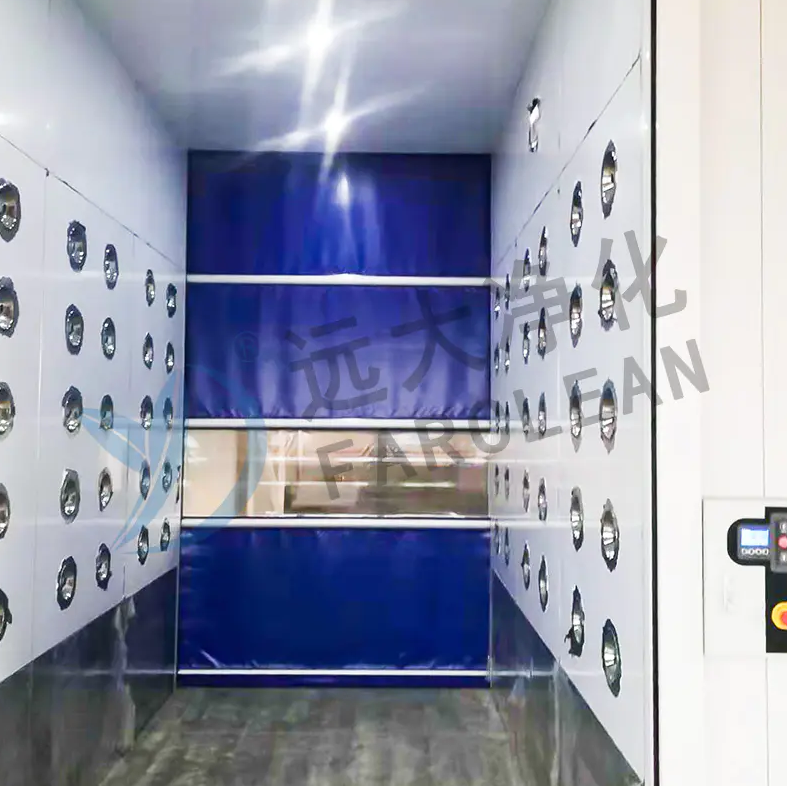
That's exactly why air showers are essential for pollution prevention in clean facilities.
An air shower acts as dedicated cleanroom gear to blast loose particles off personnel and materials before they step into controlled production spaces. It builds a buffer zone separating regular Air Shower Factory areas from high-standard clean workshops.
On the surface, an air shower just looks like a small entry booth, yet its function stretches far beyond a simple doorway. It serves as a key link in the full contamination control workflow.
More industries are prioritizing sanitized, dust-free production standards these days, so air showers are now widely installed in all kinds of manufacturing plants.
Content
- 1 Why Is Contamination Control Important in Cleanroom Environments?
- 2 How Does an Air Shower Help Reduce Contamination?
- 3 What Role Do Air Showers Play in Modern Manufacturing?
- 4 How Do Air Showers Become Part of Cleanroom Entry Management?
- 5 What Factors Should Companies Consider When Using Air Showers?
- 6 How Are Air Showers Changing With Cleanroom Development?
- 7 Why Are Air Showers Important for Future Contamination Control?
Why Is Contamination Control Important in Cleanroom Environments?
Cleanrooms are designed for situations where environmental conditions need careful management. Many industries depend on clean spaces because small particles or unwanted materials may influence production activities.
The purpose of contamination control is to reduce possible sources that can affect the working environment.
Contamination can come from different sources, including:
- People entering production areas
- Equipment movement
- Materials being transferred
- Daily workplace activities
Among these sources, people are often considered an important factor because movement can bring particles into controlled areas.
This does not mean workers create problems intentionally. Human activity is simply a natural part of manufacturing.
A complete contamination control plan usually includes several methods working together. Air showers are one part of this approach.
| Contamination Control Method | Main Purpose |
|---|---|
| Entry management | Helps organize movement into clean areas |
| Protective clothing | Reduces particle transfer |
| Air shower systems | Helps remove particles before entry |
| Regular cleaning procedures | Maintains workplace conditions |
The role of an air shower is to create an additional control point before people enter the cleanroom.
How Does an Air Shower Help Reduce Contamination?
Air showers deliver a dedicated cleaning step right before anyone enters a controlled clean workspace.
Once a staff member steps inside the air shower cabin, strong circulating air strips loose dust and debris off their gowns and exposed skin.
This unit acts as a middle ground between regular factory zones and dust-free production rooms.
This buffer zone makes a huge difference, as it stops unclean outside air from flowing straight into sensitive clean areas.
If there were no air shower in place, workers could walk straight from ordinary workspaces into clean production lines. That would drastically raise the risk of dragging outside contaminants into the cleanroom.
Air showers add a mandatory checkpoint to the entry routine.
It gives time to sweep away surface particles before personnel step into the high-standard clean area.
How well the air shower performs relies on multiple elements: how the unit is built, daily site management rules, and whether staff follow proper operating habits.
Air showers cannot take the place of other cleanroom protocols. Instead, they pair up with all existing hygiene rules to build a complete, well-structured particle control system.
What Role Do Air Showers Play in Modern Manufacturing?
Different industries have different reasons for maintaining clean production environments.
Some products require careful handling because they are sensitive to outside conditions. Other industries use cleanrooms to maintain organized production processes.
Air showers are used in many applications where contamination control is important.
Common application areas include:
| Industry Area | Why Clean Environments Matter |
|---|---|
| Healthcare manufacturing | Supports controlled product handling |
| Electronics production | Helps protect sensitive components |
| Laboratory environments | Supports organized research conditions |
| Precision manufacturing | Helps maintain production consistency |
The growing use of cleanroom technology has increased attention toward supporting equipment such as air showers.
Manufacturers are not only focusing on the main production equipment. They are also looking at the surrounding environment and entry management process.
A cleanroom begins before the production area itself.
The entrance system plays an important role in preparing people and materials before they enter.
How Do Air Showers Become Part of Cleanroom Entry Management?
Entry management is an important part of contamination control.
A cleanroom cannot maintain its environment through internal systems alone. The way people enter and leave the area also influences overall conditions.
Air showers provide a controlled transition area where users can prepare before entering.
This creates a more organized movement process.
A typical cleanroom entry system may involve several steps:
- Preparing before entry
- Passing through the air shower area
- Entering the controlled production zone
- Following workplace procedures
The air shower becomes a connection point between different environments.
This connection helps companies manage movement more effectively.
A well-planned entry process can also improve workplace awareness. When employees pass through a designated cleaning area, they become more aware of contamination control practices.
The equipment supports both physical control and better working habits.
What Factors Should Companies Consider When Using Air Showers?
Selecting and using air shower equipment requires consideration of the working environment and production needs.
Different facilities may have different layouts, workflows, and contamination control goals.
Companies usually consider several aspects before introducing air shower systems.
Workplace Layout
The location of the air shower affects how people move through the facility. A suitable position can make entry procedures smoother.
User Experience
Workers use the equipment regularly, so convenient operation is important.
Maintenance Planning
Like other cleanroom equipment, air showers require regular attention to maintain stable operation.
Production Requirements
The equipment should match the needs of the working environment.
These factors show that air showers are not separate from cleanroom planning. They are part of the overall facility design.
A suitable contamination control approach considers both equipment and human movement.
How Are Air Showers Changing With Cleanroom Development?
Cleanroom environments continue to develop as industries change.
Manufacturers are looking for solutions that provide better organization, easier management, and stronger support for production processes.
Air showers are also evolving with these needs.
Modern facilities are paying more attention to flexible designs and practical operation. Companies want equipment that fits naturally into their workflow.
The focus is moving beyond simple contamination removal.
Manufacturers are considering how equipment connects with the entire production environment.
This includes:
- Easier operation
- Better workflow organization
- Improved user experience
- More flexible applications
Air showers are becoming an important part of cleanroom planning because they help connect different areas within a facility.
Why Are Air Showers Important for Future Contamination Control?
Manufacturing standards keep evolving, yet keeping contaminants under control stays a top priority for nearly every industry.
Maintaining a clean production space relies on balanced coordination between machinery, standard workflows and on-site staff.
Air showers tie all these elements together by adding a regulated checkpoint at cleanroom entrances.
They tackle one of the biggest sources of dust and particles: constant movement between regular factory zones and sterile work areas.
The benefit of an air shower does not only come from the hardware itself. Its real strength lies in how it integrates with a facility's full cleanroom management plan.
Moving forward, cleanroom design will keep prioritizing down-to-earth solutions. These tools need to stabilize workshop conditions without slowing down daily production output.
Since manufacturers keep searching for more reliable ways to cut contamination risks, air showers will stay a core piece of cleanroom upgrades for years to come.