English
 русский
 Español
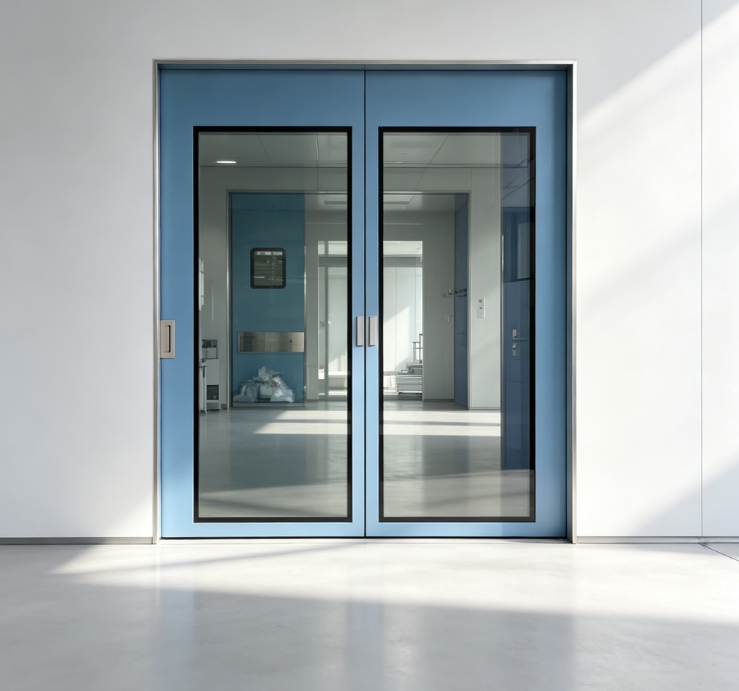
Clean room automatic doors often sit quietly in the background of controlled environments. They open, close, and reset many times a day without drawing attention. Yet behind this simple motion is a system that depends on steady upkeep.
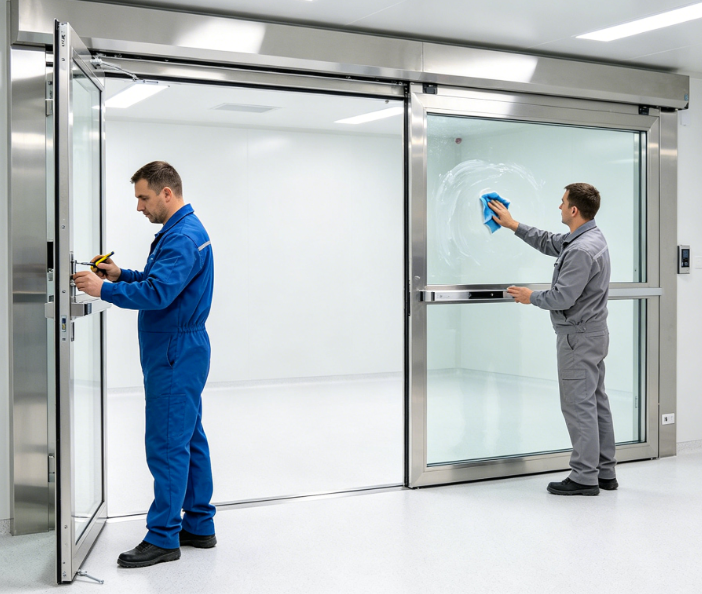
These doors are not only entry points. They help manage airflow, reduce contamination risk, and support stable room conditions. When they work well, they feel almost invisible. When they drift out of condition, the change becomes noticeable quickly.
Maintenance is not a single action. It is a series of small habits that keep the system stable over time.
Content
- 1 Why does maintenance matter for clean room automatic doors ?
- 2 What parts of the door system need regular attention?
- 3 How is daily observation used as a maintenance habit?
- 4 How does cleaning influence long-term performance?
- 5 How does mechanical movement change over time?
- 6 What role do sensors play in long-term stability?
- 7 How is sealing performance maintained?
- 8 How does usage frequency affect maintenance needs?
- 9 How do environmental conditions influence door performance?
- 10 What signs suggest the door needs attention?
- 11 How does routine adjustment support long-term use?
- 12 How is maintenance organized in daily operations?
- 13 How do small actions influence long-term stability?
Why does maintenance matter for clean room automatic doors ?
A clean room depends on control. Air movement, pressure balance, and surface cleanliness all work together. The door sits right at the boundary of that control.
Every opening allows movement between spaces. Every closing restores separation. If the door slows down, does not close fully, or reacts late, the environment can shift.
Wear does not appear suddenly. It builds quietly. A slightly delayed response here. A softer closure there. These small changes add up.
Maintenance helps keep that gradual drift under control. It keeps movement predictable and reduces unexpected interruptions.
What parts of the door system need regular attention?
An automatic door is made of several connected parts. Each one plays a role in daily operation. When one weakens, the rest adjusts around it.
Common areas of focus include:
| Component area | What is observed over time |
|---|---|
| Door movement path | Smooth opening and closing |
| Sealing edges | Contact quality when closed |
| Sensors | Response to motion or presence |
| Drive mechanism | Consistency of movement |
| Surface condition | Cleanliness and visible wear |
None of these parts works alone. They form a chain. If one link changes, the motion feels different.
How is daily observation used as a maintenance habit?
Not all maintenance involves tools or repair work. Much of it begins with observation.
Staff working near the door notice small details. A delay in opening. A slight sound change. A movement that feels less steady than before.
These signals are not always faults. They are early hints.
Daily observation often includes simple checks:
- Does the door open at a steady pace
- Does it close without hesitation
- Does the seal line remain even
- Is there any visible dust or residue buildup
These checks do not interrupt work. They are part of normal movement through the space.
Over time, this quiet attention helps catch changes early.
How does cleaning influence long-term performance?
Clean rooms depend on keeping particle levels as low as possible. Even tiny layers of dust can mess with how equipment works. Door surfaces, edges and surrounding frames slowly pick up dust particles day after day.
Cleaning isn't just about keeping things looking neat. It keeps the door moving properly and maintains a good seal.
People usually use gentle cleaning techniques so they don't scratch or damage the surface. The main point is wiping away dirt without harming the door's structure.
Key spots that need regular cleaning include:
- Door edges that rub against other parts when closing
- Motion‑detecting sensor surfaces
- Tracks and guides the door slides along
- Frame areas where dust easily builds up
When surfaces stay clean, the door shuts evenly every time. Even a little dirt along the edge can stop it from sealing properly.
How does mechanical movement change over time?
very moving part wears down little by little, and clean room doors are no different.
When new, these doors slide smoothly and quietly. As time goes on, small amounts of friction start to show. This doesn't always mean something is broken‑it's just normal wear and tear.
Maintenance is all about keeping that movement steady and balanced.
If the door starts to move slower than usual, simple adjustments can get it back on track. If it slams shut too hard, small tweaks can soften its closing motion.
What matters is steady, reliable movement, not speed. Keeping a consistent working pattern is far more important than making the door open and close quickly.
What role do sensors play in long-term stability?
Sensors act as the door's awareness system. They detect presence and signal when to open or close.
Over time, sensors can shift slightly in response or sensitivity. This may come from dust, alignment changes, or environmental conditions.
When this happens, the door may react too early or too late. Neither is ideal in a controlled space.
Regular attention helps keep sensor response aligned with real conditions.
Simple checks often include:
- Does the door respond without delay
- Does it avoid unnecessary activation
- Does it remain stable under repeated use
When sensors stay consistent, the entire system feels more predictable.
How is sealing performance maintained?
The sealing edge is one of the important parts of a clean room door. It helps separate environments and support air control.
Over time, sealing surfaces may lose uniform contact. This does not always show immediately. It may appear as a small gap or uneven pressure along the edge.
Maintenance here focuses on alignment and surface condition.
If the door does not close evenly, the seal may weaken in certain areas. Adjustments help restore full contact.
The goal is simple: a continuous, even closure across the entire edge.
Even small changes in sealing quality can affect the surrounding environment.
How does usage frequency affect maintenance needs?
Clean room doors often operate many times throughout the day. High usage does not automatically cause problems, but it does influence wear.
Frequent motion creates gradual stress on moving parts. This is expected. Maintenance simply responds to the pace of use.
In busier environments, observation becomes more important. Small changes appear faster when the system is used more often.
Less frequent use does not eliminate maintenance. It only changes the rhythm.
The door still benefits from regular attention, even when movement is limited.
How do environmental conditions influence door performance?
Clean rooms are controlled spaces, but conditions still vary slightly over time.
Temperature changes, humidity shifts, and air pressure balance can all influence door behavior.
These changes are usually subtle. A door may feel slightly heavier or lighter to operate. Closure timing may shift a little.
Maintenance does not try to remove these conditions. It works with them.
Adjustments help the system remain stable even when surroundings change.
The door becomes part of a larger environment rather than a separate mechanism.
What signs suggest the door needs attention?
Certain signals often appear before a visible issue develops. Recognizing them early helps maintain stability.
Common signs include:
- Slight delay in opening or closing
- Uneven sound during movement
- Small gaps when fully closed
- Irregular response from sensors
- Increased vibration during operation
None of these means immediate failure. They simply indicate change.
Early response usually keeps the system running without disruption.
How does routine adjustment support long-term use?
Adjustment is not a one-time action. It happens gradually over the life of the door.
As components settle, small corrections help maintain balance. These may involve alignment, timing, or response settings.
The goal is not to change how the door functions. It is to keep it close to its intended behavior.
Small adjustments prevent larger shifts from forming.
When done regularly, the system feels steady even after long use.
How is maintenance organized in daily operations?
In many clean room environments, maintenance is built into routine activity rather than treated as a separate task.
Observation happens during normal movement. Cleaning fits into scheduled pauses. Adjustments are made when needed rather than at fixed intervals alone.
This approach keeps disruption low.
Staff do not need to stop work completely to maintain the door. Instead, maintenance becomes part of the environment itself.
Over time, this creates a quiet rhythm between use and care.
How do small actions influence long-term stability?
Clean room automatic doors rely on many small details. No single action defines their condition. It is the accumulation of small habits that matters.
A clean surface. A steady sensor. A smooth motion. A properly aligned seal.
Each one contributes to the next.
When these elements stay in balance, the door continues to function without drawing attention.
Maintenance, in this sense, is less about fixing problems and more about keeping conditions steady.
The system remains in motion, responding quietly to its surroundings, adjusting just enough to stay aligned with the space it serves.