English
 русский
 Español
Step inside a working factory and the sound arrives before anything else. It is not one single noise. It is a mix. A low hum from machines. Sudden sharp sounds from tools. Movement layered on movement. After a while, people get used to it, yet the effect never really disappears.

In many industrial areas, this has long been accepted as part of the job. Noise was something to live with, not something to shape. That view has started to shift. More attention is now given to how sound moves, how it reflects, and how it stays within or escapes a space.
Soundproof sandwich panel have quietly entered this conversation. They do not stand out visually. They do not change how machines operate. Still, they influence how the environment feels and functions. Their value often becomes clear only after they are in place.
Content
- 1 Why is noise drawing more attention in industrial spaces?
- 2 How do soundproof sandwich panels actually reduce noise?
- 3 What changes can be noticed during daily operations?
- 4 Can these panels support better working conditions?
- 5 How do soundproof panels fit into flexible industrial layouts?
- 6 Do these panels help protect nearby areas from industrial noise?
- 7 What design details influence installation and upkeep?
- 8 Are soundproof sandwich panels suitable for different industrial settings?
- 9 What challenges might appear during planning and use?
- 10 How do these panels quietly change the industrial environment?
Why is noise drawing more attention in industrial spaces?
There was a time when industrial zones were far from daily life. Distance helped absorb the impact of sound. That is no longer always the case. Workspaces now sit closer to offices, storage areas, and even living environments.
Inside the facility, the layout has also changed. Open plans are more common. Equipment is arranged for flexibility. This creates efficiency, but it also allows sound to travel without many barriers.
Workers notice this more than anyone else. Repeated noise can make communication harder. A simple instruction may need to be repeated. Over time, this slows down small parts of the workflow.
There is also a mental side. Constant sound does not always feel loud, but it can feel tiring. The mind keeps adjusting to it. That quiet effort builds up across the day.
Because of this, noise is no longer treated as background. It becomes something to manage, just like light or airflow.
How do soundproof sandwich panels actually reduce noise?
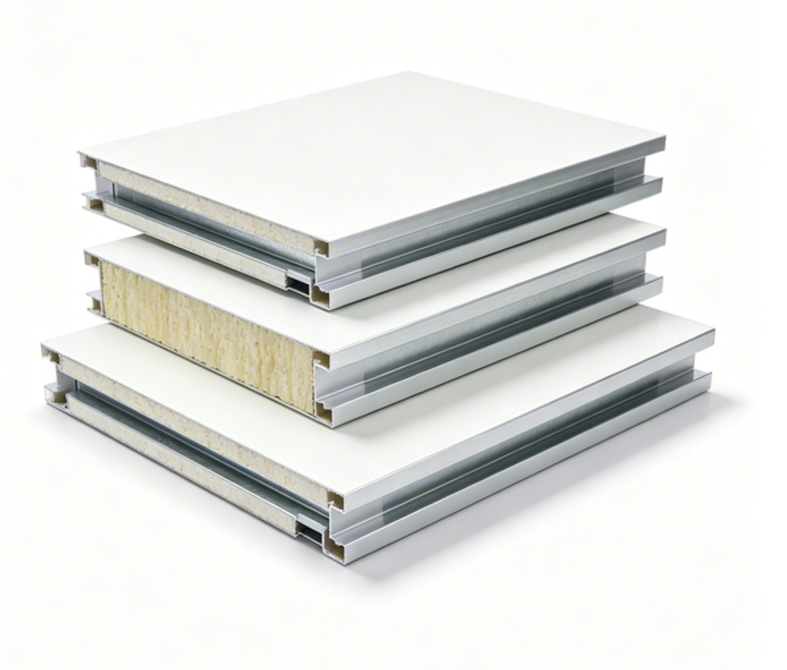
At a glance, these panels look straightforward. A flat surface. Clean edges. Nothing complex. The effect comes from what is inside.
They are built in layers. Each layer interacts with sound in a different way. When sound reaches the surface, part of it is softened. Another part moves inward and slows down. By the time it passes through, it has lost much of its energy.
This process does not block sound in a sudden way. It works gradually. The layers guide sound rather than fight it directly.
There is also the matter of reflection. In open industrial spaces, sound often bounces between hard surfaces. Panels help reduce that bouncing effect. This makes the overall sound feel less sharp.
What matters is not silence. Industrial work still produces noise. The goal is to make it more controlled and less scattered.
What changes can be noticed during daily operations?
The difference is often subtle at first. Machines still run. Activity continues. Yet something feels different.
Conversations become easier to follow. People do not need to raise their voices as much. Instructions move more smoothly from one person to another.
Focus improves in small ways. Tasks that require attention feel less interrupted. Even short moments of quiet between sounds become noticeable.
There is also a shift in how the space feels. Without constant echo, the environment seems more contained. Movement feels more organized.
These changes may seem minor when taken alone. Over a full workday, they begin to add up.
Can these panels support better working conditions?
Working conditions are shaped by more than visible elements. Sound is one of those factors that sits in the background but affects everything.
A controlled sound environment reduces strain. Workers do not need to adjust constantly to sudden noise. This helps maintain a steady pace.
Communication also becomes more reliable. When people can hear each other clearly, fewer mistakes occur. Small misunderstandings are less likely to build into larger problems.
There is also a sense of calm that appears, even in busy settings. It does not remove activity. It simply makes that activity feel more manageable.
Safety is part of this as well. Signals, alerts, and spoken warnings are easier to notice when background noise is not overwhelming.
How do soundproof panels fit into flexible industrial layouts?
Industrial spaces rarely stay fixed. Equipment moves. Production lines change shape. New sections are added over time.
Soundproof sandwich panels work well in this shifting environment. They are often arranged in sections rather than as one solid structure. This allows them to move with the space.
If a certain area becomes louder, panels can be added around it. If a section becomes quieter, they can be adjusted or reduced.
This kind of flexibility helps avoid major reconstruction. Instead of rebuilding walls, changes can be made step by step.
It also supports future planning. A space designed today may be used differently later. Panels make it easier to adapt without starting over.
Do these panels help protect nearby areas from industrial noise?
Sound does not stop at a wall unless something helps contain it. In many industrial settings, noise travels farther than expected.
Soundproof sandwich panels act as a barrier. They reduce how much sound moves beyond the immediate work area. This matters when different zones share the same building.
For example, a control room may sit close to a production area. Without some form of separation, noise can affect both spaces.
The same applies to areas outside the facility. When industrial zones are close to other types of buildings, managing sound becomes more important.
Panels help create a boundary without adding heavy structures. They allow different activities to exist side by side with less interference.
What design details influence installation and upkeep?
The way panels are designed affects how they are used over time.
Installation becomes smoother when panels are consistent in size and shape. Workers can place them without constant adjustment. This reduces delays and keeps the layout uniform.
Connections between panels also matter. A tight but natural fit prevents gaps where sound can pass through. At the same time, panels should not be forced into place.
Maintenance is another area where design plays a role. When panels are arranged in sections, it becomes easier to replace one part without disturbing the rest.
Surface design affects cleaning. A surface that does not hold marks easily requires less effort to maintain.
Below is a simple overview of how design links to practical use:
| Design Element | Practical Effect |
|---|---|
| Layer structure | Helps reduce sound movement |
| Panel joints | Limits sound passing through gaps |
| Surface finish | Makes cleaning easier |
| Section layout | Allows partial replacement |
| Placement design | Guides how sound travels |
Each of these choices may seem small, yet together they shape how the system performs.
Are soundproof sandwich panels suitable for different industrial settings?
Not all industrial environments produce the same kind of noise. Some have constant machine sound. Others have irregular bursts. Some spaces are open, while others are divided.
Soundproof sandwich panels can be adapted to these conditions. Their layered design allows changes in how they are arranged and used.
In areas with steady noise, panels can surround the source to limit spread. In spaces with changing activity, they help manage sound peaks without affecting quieter moments.
Even in storage areas, where noise may be lower, panels can reduce echo and create a more stable environment.
This adaptability is one reason they are used across different types of industrial spaces.
What challenges might appear during planning and use?
Using soundproof panels is not only about placing them around a space. It requires some thought.
Placement is one of the main challenges. Panels need to be positioned where they can actually influence sound. Random placement often leads to uneven results.
Balance is another factor. Too many panels can make a space feel closed. Too few may not make a noticeable difference.
There is also the need to work with existing structures. Panels should fit naturally into the layout. If they conflict with other elements, adjustments become more difficult.
Long-term use adds another layer. As the space changes, panels must continue to perform without constant redesign.
These challenges do not reduce their value. They simply highlight the need for careful planning.
How do these panels quietly change the industrial environment?
The effect of soundproof sandwich panels is not dramatic in appearance. Machines do not look different. The layout may remain the same.
Yet the experience of the space shifts. Noise becomes more contained. Echo is reduced. Movement feels clearer.
People may not always notice this change right away. It becomes apparent over time. Work feels less interrupted. Communication flows more naturally.
The environment remains active, but less overwhelming. Sound is still present, though it feels more controlled.
In industrial areas where activity never fully stops, this quiet adjustment can influence how the space supports daily work.