English
 русский
 Español
Cleanroom facilities depend on controlled environments. Even small particles carried by people, tools, or transported materials can affect internal cleanliness. As logistics activity becomes more frequent inside controlled spaces, attention has shifted toward entry points where contamination risks are higher.
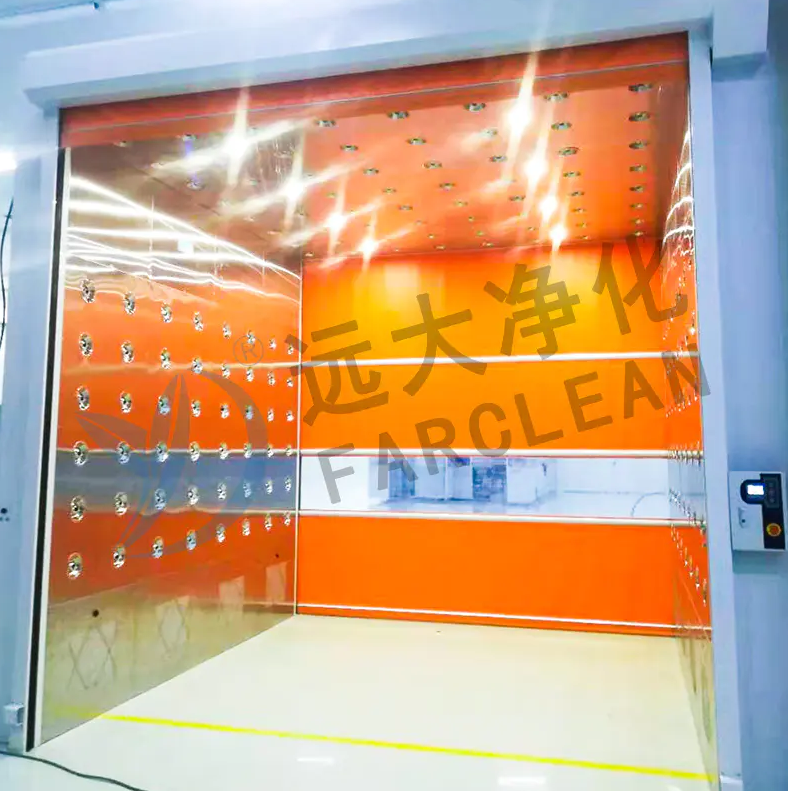
A cargo air shower is often placed at these transition zones. It supports the movement of materials while reducing unwanted particle transfer. The system uses directed airflows to remove loose particles before goods enter a cleaner area. This simple function plays a larger role in maintaining internal stability than it may first appear.
Content
- 1 What Role Does a Cargo Air Shower Play in Controlled Environments?
- 2 How Does It Support Contamination Control During Material Transfer?
- 3 Why Is Airflow Design Important for Cleanroom Entry Points?
- 4 Where Do Cargo Air Showers Fit in Cleanroom Layouts?
- 5 What Benefits Can Be Observed in Daily Operations?
- 6 How Does It Influence Workflow Efficiency?
- 7 Why Are Cleanroom Facilities Increasing Focus on Entry Control?
- 8 How Does It Support Different Types of Material Handling?
- 9 What Makes It Suitable for Controlled Environment Standards?
- 10 How Does It Interact with Internal Air Management Systems?
- 11 What Should Be Considered in Facility Planning?
What Role Does a Cargo Air Shower Play in Controlled Environments?
Air showers work as transition channels for moving goods. They sit between two spaces with different clean standards, one regular area and another that demands much stricter hygiene control.
When goods go inside the unit, strong air blows out from all sides. The air flow knocks loose dust stuck on item surfaces, and those tiny particles get sucked away and trapped by internal filter parts.
This setup keeps outside dirt and pollutants from being brought into sensitive production sections. It also lets materials move continuously without constant delays during transport.
Most production facilities don't treat air showers as an extra separate task. They build them right into daily material delivery routes, which makes regular handling far more convenient.
How Does It Support Contamination Control During Material Transfer?
Material transfer is one of the main sources of contamination risk. Packaging surfaces, pallets, and transport containers often carry dust or microscopic residues from storage and handling.
A air shower reduces this risk through surface cleaning by airflow. The process is physical rather than chemical. No additional substances are introduced. This keeps the process compatible with a wide range of materials.
Some key functions include:
- Removing loose particles from outer surfaces
- Reducing cross-area contamination
- Limiting particle spread during door opening cycles
- Supporting cleaner transitions between zones
The system does not eliminate all contamination risks. Instead, it lowers the probability of particle transfer at a key checkpoint.
Why Is Airflow Design Important for Cleanroom Entry Points?
Airflow direction plays a central role in clean environments. In a air shower, air is not simply released. It is guided through structured paths to reach all exposed surfaces of transported goods.
Different zones inside the chamber work together. Air is pushed from multiple angles. This helps reach surfaces that are often difficult to clean manually during fast operations.
At the same time, collected air is filtered before recirculation or release. This helps maintain internal consistency without introducing external air irregularities.
The balance between airflow strength and distribution is important. Too weak, and particles remain. Too strong, and materials may shift unnecessarily.
Where Do Cargo Air Showers Fit in Cleanroom Layouts?
Air shower units are installed at transition spots inside cleanrooms. These spots connect storage spaces, loading areas and strictly regulated production zones.
Workers do not place these units arbitrarily. Their locations follow the natural path of material transport, so goods get decontaminated exactly where the risk of dust pollution rises.
Typical installation positions cover these areas:
- Gateways leading into controlled production workshops
- Transfer walkways linking storage rooms and processing sections
- Loading junctions for factory internal transport equipment
- Buffer spaces separating outside handling zones and inner material routes
Facilities with heavy daily goods movement often install several air showers side by side. This keeps goods moving steadily without jams or long waiting times.
What Benefits Can Be Observed in Daily Operations?
The use of a cargo air shower influences several operational aspects. The effects are not limited to cleanliness alone. Workflow stability is also impacted.
Reduced surface contamination during movement
Materials often carry particles from external environments. Air shower use helps reduce this transfer before entry.
Improved consistency in material handling
When entry procedures are standardized, movement becomes more predictable. Staff follow a clear flow without additional manual cleaning steps.
Lower dependence on manual cleaning at entry points
Without an air shower, cleaning may depend on manual wiping or checks. These methods can vary between operators. Airflow-based cleaning reduces this variability.
Better separation between clean and non-clean areas
Physical separation is supported by functional separation. The air shower acts as a controlled boundary.
How Does It Influence Workflow Efficiency?
Workflow efficiency is not only about speed. It is also about reducing interruptions and maintaining predictable movement.
Air showers help reduce stoppage points caused by contamination checks. Once installed, materials pass through a defined cleaning stage before entry.
This structure supports smoother logistics inside controlled environments. Movement becomes more linear, with fewer manual interventions.
A simplified comparison can be seen below:
| Without Controlled Entry | With Cargo Air Shower |
|---|---|
| Irregular cleaning steps | Structured airflow cleaning |
| Higher operator variation | Standardized process |
| Frequent entry checks | Reduced manual inspection |
| Variable contamination control | Consistent surface treatment |
The difference is mainly in process stability rather than complexity.
Why Are Cleanroom Facilities Increasing Focus on Entry Control?
Cleanroom design is no longer limited to internal air quality. Entry points have become a major focus because contamination often originates outside controlled zones.
Materials are moved more frequently in modern operations. Packaging types vary. Handling cycles are faster. These changes increase exposure risks.
A air shower provides a predictable control point. It helps reduce variability before items enter sensitive areas.
This shift reflects a broader approach where cleanliness is managed as a continuous flow rather than a static condition.
How Does It Support Different Types of Material Handling?
Items shipped through cleanrooms come in all kinds of forms. Some stay fully wrapped, while others have uncovered surfaces or odd, uneven shapes.
Cargo air showers clean these goods without any physical touch. High-speed air streams hit every surface, no contact required.
This design works well for many common transport scenarios:
- Large batches of packaged goods moving across different workshop areas
- Tools and machinery being moved from repair rooms to production lines
- Boxed containers circulated inside hygienic controlled zones
- Various mixed goods passing through shared entry gateways
No extra structural adjustments are needed. The unit can handle goods of varying sizes and surface conditions naturally.
What Makes It Suitable for Controlled Environment Standards?
Controlled environments require repeatable processes. Variability in entry handling can affect internal balance.
A air shower supports repeatability through fixed cycles. Each use follows a similar pattern of airflow exposure and particle removal.
This consistency helps reduce differences caused by human handling. It also supports documentation of entry procedures, even if the system itself remains simple in design.
Another important aspect is isolation. The chamber acts as a buffer space. This buffer reduces direct transfer between external and internal environments.
How Does It Interact with Internal Air Management Systems?
Cleanroom environments often rely on air circulation systems to maintain internal balance. Entry points must align with this circulation pattern.
A air shower does not replace internal systems. Instead, it supports them by reducing incoming contamination load.
By lowering particle entry at the boundary, internal systems can maintain stability with less fluctuation.
This indirect support is important. It ensures that internal airflow systems are not constantly disrupted by external contamination spikes.
What Should Be Considered in Facility Planning?
When integrating a cargo air shower into a facility layout, placement and flow direction are key considerations.
Material pathways should remain uninterrupted. The system should not create unnecessary detours. Instead, it should sit naturally along existing movement lines.
Space allocation is also important. The chamber needs enough room for smooth entry and exit without congestion.
Operational timing should align with material movement speed. If flow is continuous, the system must support repeated use without delay.
These factors help ensure that the system supports rather than interrupts logistics.
FAQs
What is the main purpose of a cargo air shower?
It helps reduce particle contamination on materials before they enter controlled environments by using directed airflow.
Can it replace manual cleaning methods completely?
It does not fully replace manual cleaning but reduces reliance on it at entry points.
Does it require chemical cleaning agents?
No. The process is based on airflow rather than chemical substances.
Is it used only in industrial environments?
It is mainly used in controlled environments where contamination control is important, especially during material transfer.
Does it affect material integrity?
The system uses air-based cleaning, which generally avoids direct contact with materials.
Can different material sizes pass through it?
Yes. It can support a range of material shapes and packaging types depending on facility design.
Why is placement important in facility layout?
Placement ensures smooth material flow and helps integrate the system into existing logistics paths without disruption.