English
 русский
 Español
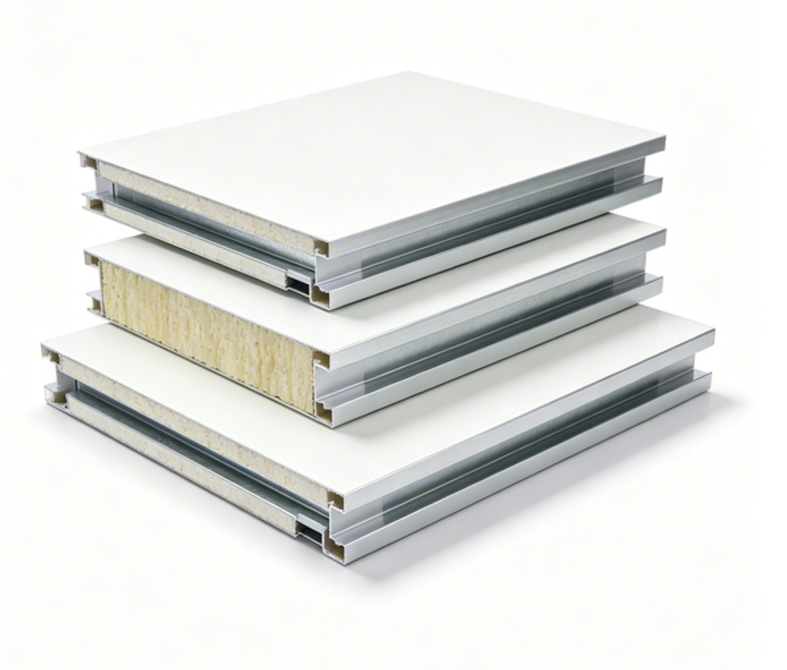
Composite foam sandwich panels are often described in simple terms as layered building materials. That explanation is correct, but it barely captures how the structure actually behaves in real use.

At a glance, the panel looks like a flat board. Nothing unusual. Yet inside, it is arranged in layers that each take on a different role. The real performance comes not from one material, but from how these layers interact over time under pressure, temperature change, and daily handling.
In construction and industrial environments, this type of structure is chosen for balance. Not extreme strength. Not extreme lightness. But something in between that feels stable and manageable across different conditions.
Content
- 1 Why is a layered structure used instead of a solid one?
- 2 What is happening inside the foam core?
- 3 What do the outer layers actually do in practice?
- 4 How do the layers work together under pressure?
- 5 Where does stability come from in this system?
- 6 How does the structure respond to environmental change?
- 7 Why is weight reduced without losing structure?
- 8 Key structural roles of each layer
- 9 How does internal spacing affect performance?
- 10 What makes composite foam sandwich panels adaptable?
Why is a layered structure used instead of a solid one?
A solid material seems straightforward. One piece, one behavior, one structure. But in practice, that simplicity comes with trade-offs.
Weight increases quickly when everything is made from a single dense material. Transport becomes harder. Installation takes more effort. Even small adjustments on-site can become less flexible.
A layered design changes that approach completely.
Instead of asking one material to do everything, the work is divided:
- The outer layers handle direct contact and surface stability
- The inner core supports spacing and internal balance
The result is not just a lighter structure, but a more controlled one. Each part contributes in a different way, and none of them are forced to handle every condition alone.
What is happening inside the foam core?
The foam core is the part most people never see, yet it influences nearly every performance detail.
It is not designed to act like a rigid support beam. Instead, it behaves more like a controlled internal space filled with lightweight structure.
When pressure reaches the panel, the core does not respond with resistance in a traditional sense. It responds by spreading the effect across a wider area. This reduces concentration at any single point.
There is also a slower response to temperature changes. Heat or cold does not move directly through it. The internal structure slows that transfer, creating a buffering effect between environments.
This is why two panels with similar appearance can feel very different in real use. The internal behavior matters more than the surface look.
What do the outer layers actually do in practice?
The outer layers are often the visible part, so they are easy to assume as the "main structure." In reality, their role is more specific.
They act as protective skins. Not just for physical impact, but also for maintaining shape under changing conditions.
When external force is applied, these layers take the first contact. Instead of absorbing everything at one point, they distribute it across the surface. That movement helps prevent localized deformation.
They also define how the panel interacts with its surroundings. Moisture, air exposure, and mechanical contact all meet the outer layer first before anything reaches the core.
So while they look simple, they are doing continuous surface-level work.
How do the layers work together under pressure?
The interesting behavior of composite foam sandwich panels appears when force is applied.
It does not behave like a single rigid object. Instead, it reacts in stages.
A simple way to imagine it:
- The outer layer receives the pressure first.
- The internal foam spreads that pressure outward.
- The opposite outer layer adds resistance from the other side.
This creates a kind of shared load system. No single layer carries everything alone. The stress moves through the structure rather than staying in one place.
That movement is what gives the panel its controlled response. It bends less abruptly and distributes force more evenly than a single solid sheet would in the same situation.
Where does stability come from in this system?
Stability is not created by one strong component. It comes from balance between layers.
If the outer surfaces were too flexible, the structure would lose shape. If the core were too rigid, it would lose its buffering effect. The interaction between them is what matters.
Even small variations in one layer can influence the overall behavior. That is why the structure depends on consistency across the entire panel, not just one section.
Over time, this balance allows the panel to maintain its form under regular use conditions without frequent adjustment.
How does the structure respond to environmental change?
Environmental conditions do not affect all parts of the panel in the same way.
Temperature shifts, for example, are slowed as they pass through layers. Instead of moving quickly from one side to the other, the change becomes gradual.
Moisture exposure is also handled differently. The outer layer reacts first, while the inner core remains protected longer. This delay reduces sudden internal change.
The layered structure essentially creates zones of response rather than a single reaction point.
That separation of roles is one of the key reasons the material behaves consistently in different environments.
Why is weight reduced without losing structure?
One of the noticeable characteristics of composite foam sandwich panels is that they feel lighter than their size might suggest.
This comes from how the internal space is designed.
The foam core contains a large amount of air-like structure inside its volume. This reduces density while still maintaining spacing between outer layers.
Instead of filling the entire interior with solid material, the structure relies on geometry and distribution. Strength is maintained through form rather than mass.
The result is a panel that can cover large surfaces without becoming overly heavy or difficult to handle.
Key structural roles of each layer
| Layer | Main role | Functional contribution |
|---|---|---|
| Outer surface layer | Protection and stability | Handles direct external contact |
| Foam core | Spacing and support | Maintains structure and reduces deformation |
| Composite interaction | Unified behavior | Distributes force across layers |
How does internal spacing affect performance?
Spacing inside the panel is not accidental. It is a functional part of the design.
The distance between outer layers determines how forces move through the structure. Too close, and the buffering effect weakens. Too far, and stability becomes harder to maintain.
Within the foam core, this spacing is continuously supported by internal structure. It holds the outer layers in position while still allowing controlled movement under stress.
This balance is subtle. It is not about stiffness alone, but about controlled separation.
What makes composite foam sandwich panels adaptable?
Adaptability comes from the fact that the structure is modular in behavior, even if it looks uniform externally.
By adjusting how layers are arranged or combined, the panel can respond differently to different environments. Some configurations prioritize surface strength. Others focus more on internal buffering.
This flexibility is why the material appears in a wide range of applications without needing a completely different design each time.
The core idea remains the same, while the behavior can shift depending on how it is constructed and used.
Composite foam sandwich panels work through interaction rather than single-material strength. Their behavior is shaped by how layers share roles, distribute pressure, and respond to environmental change over time.